Nigerian SEC Crypto Exchange Capital Calculator
Calculate Your Minimum Requirements
Enter your proposed paid-up capital to see SEC requirements for Nigerian crypto exchange licensing.
Required Minimums
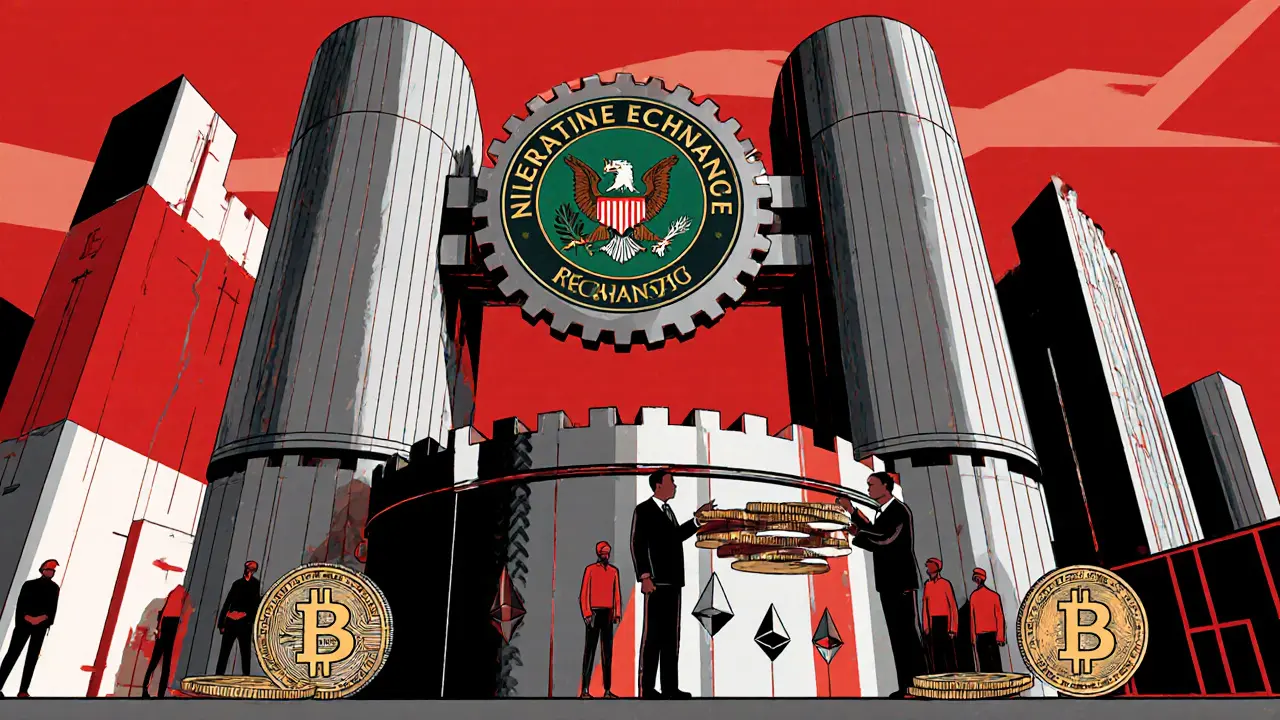
If you're running or planning to launch a crypto exchange in Nigeria, you can't afford to ignore the new rules. As of 2025, the Nigerian SEC has full legal authority over all digital asset trading platforms. No more gray areas. No more operating without permission. If you're handling crypto trades for Nigerians, you're now under the SEC’s microscope-and the bar is high.
You Must Register as a Digital Asset Exchange (DAX)
There’s no such thing as a "casual" crypto exchange in Nigeria anymore. Any platform that lets users buy, sell, or trade digital assets like Bitcoin, Ethereum, or stablecoins must register as a Digital Asset Exchange (DAX) with the Nigerian SEC. This isn’t optional. It’s the law under the Investments and Securities Act (ISA) 2025, which officially brought crypto under securities regulation for the first time.Before 2025, exchanges operated in a legal void. Now, if you’re serving Nigerian customers-even if you’re based overseas-you need SEC approval. That means if your website is in English, accepts Naira payments, or runs ads targeting Nigerian users, you’re subject to the rules. No loopholes. No "we’re just a tech company" excuse.
Minimum Capital: ₦500 Million (About $325,000)
One of the biggest hurdles for new entrants is capital. The SEC requires a minimum paid-up capital of ₦500 million. That’s not a suggestion. It’s a hard requirement. You can hold this capital in bank deposits, fixed assets like property or equipment, or approved quoted securities-but you must prove where the money came from. The SEC will audit your funding sources. If you borrowed from a friend or raised crypto from a private sale, that’s a red flag.And it doesn’t stop there. You also need a fidelity bond equal to at least 25% of your paid-up capital. For the minimum ₦500 million, that’s ₦125 million ($81,000 USD) locked up in an insurance policy that covers theft, fraud, or mismanagement. This bond protects users, not the exchange. If your platform gets hacked or your CEO runs off with funds, the bond pays out to affected customers.
Corporate Paperwork: No Shortcuts
You can’t just file a form online. The SEC demands full corporate documentation:- Certificate of Incorporation from the Corporate Affairs Commission (CAC)
- Memorandum and Articles of Association (MEMART) that explicitly state your business is a crypto exchange
- CAC Forms 1.1 and Form 7 (standard filings for Nigerian companies)
- Audited financial statements or a detailed statement of affairs if you’re a new company
Your MEMART has to say "crypto exchange" in black and white. If it just says "technology services," your application gets rejected. The SEC is looking for intent. They want to know you’re not hiding behind a vague business description.
Anti-Money Laundering and KYC: Non-Negotiable
Every user who signs up must be verified. No anonymous trading. No fake IDs. No using someone else’s passport. The SEC requires full Know Your Customer (KYC) and Anti-Money Laundering (AML) procedures. That means:- Collecting government-issued ID (National ID, driver’s license, or international passport)
- Verifying address with a recent utility bill or bank statement
- Monitoring transaction patterns for unusual activity
- Reporting suspicious transfers to the Financial Intelligence Unit (FIU)
You’re not just following CBN guidelines-you’re under SEC direct supervision. If you fail to detect a money laundering scheme, your license can be revoked. And you could face criminal charges. The SEC has been cracking down hard on platforms that ignored these rules in the past.
Only Two Licensed Exchanges So Far
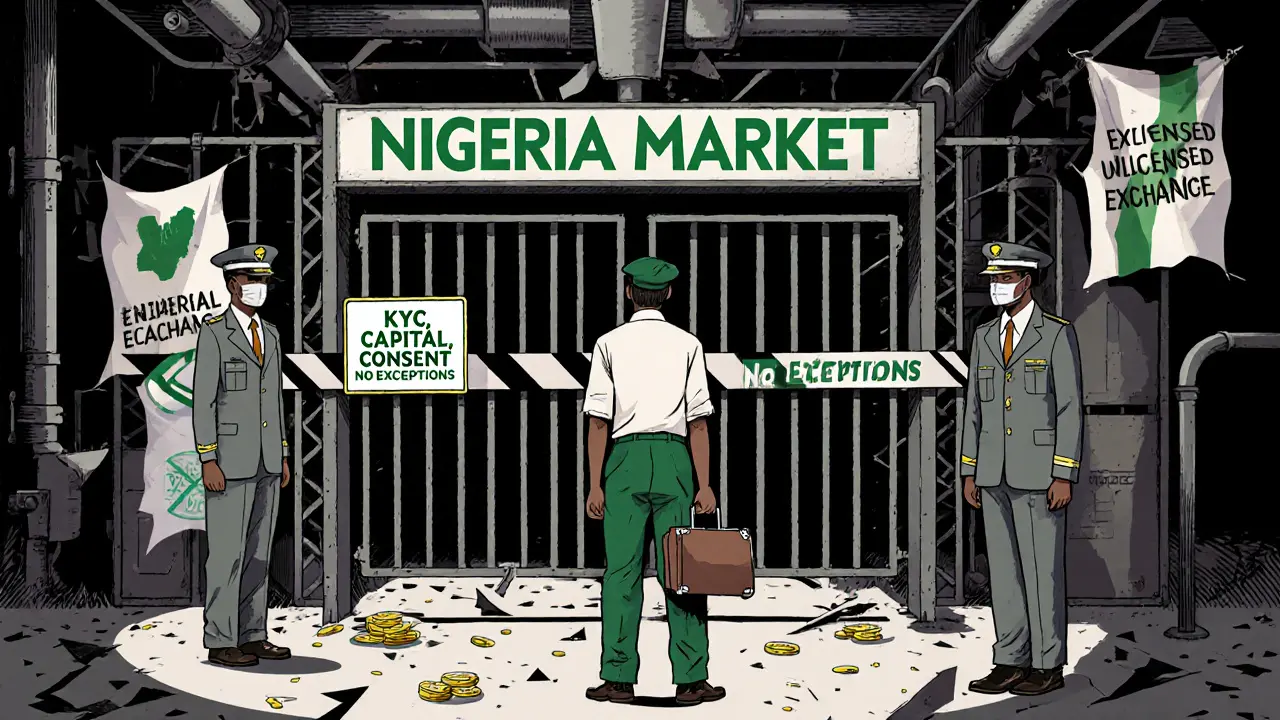
As of late 2025, only two Nigerian crypto platforms have received provisional licenses: Quidax and Busha. Both were part of the SEC’s Accelerated Regulatory Incubation Programme (ARIP), launched in June 2024 to fast-track compliant startups. ARIP was created because the SEC realized the market was too big to ignore-and too risky to leave unregulated.These two companies didn’t just submit paperwork. They spent months building systems that met SEC standards: secure cold storage, real-time transaction monitoring, internal compliance teams, and audit trails for every trade. They also had to pass on-site inspections. If you’re applying now, expect the same level of scrutiny. The SEC is no longer testing the waters. They’re enforcing.
You Can’t List Just Any Coin
Want to add Solana, Dogecoin, or a new meme token to your exchange? Not so fast. The SEC requires all digital assets to get prior approval before being listed. This is called the "No Objection Rule." You must submit detailed documentation for each token: whitepaper, team background, tokenomics, smart contract audit reports, and proof of liquidity.The SEC is especially wary of meme coins and tokens with no real use case. Many rug pulls in Nigeria have come from unregulated exchanges listing these coins. Now, the SEC acts as a gatekeeper. If they think a token is a scam, they’ll block it-even if users demand it.
No Financial Assistance to Users
Here’s a rule most people don’t expect: you cannot give users money to trade. That means no loans, no margin trading, no cash bonuses for signing up, no matching deposits. If you offer a $10 bonus for first-time traders, that’s a violation. If you let users borrow funds to buy crypto, that’s a violation. Even if you think you’re helping users, the SEC sees it as creating systemic risk.This rule targets predatory practices that led to massive losses during the 2022-2023 crypto boom. Many Nigerians borrowed money to buy crypto, then lost everything when prices crashed. The SEC is trying to stop that cycle.
Foreign Exchanges Must Also Comply
If you’re based in the U.S., Singapore, or anywhere else, but you market to Nigerians-you’re still under SEC jurisdiction. That includes:- Running Facebook or Instagram ads targeting Nigeria
- Offering Naira deposits or withdrawals
- Having a .ng domain or Nigerian customer support
- Accepting Nigerian IDs for KYC
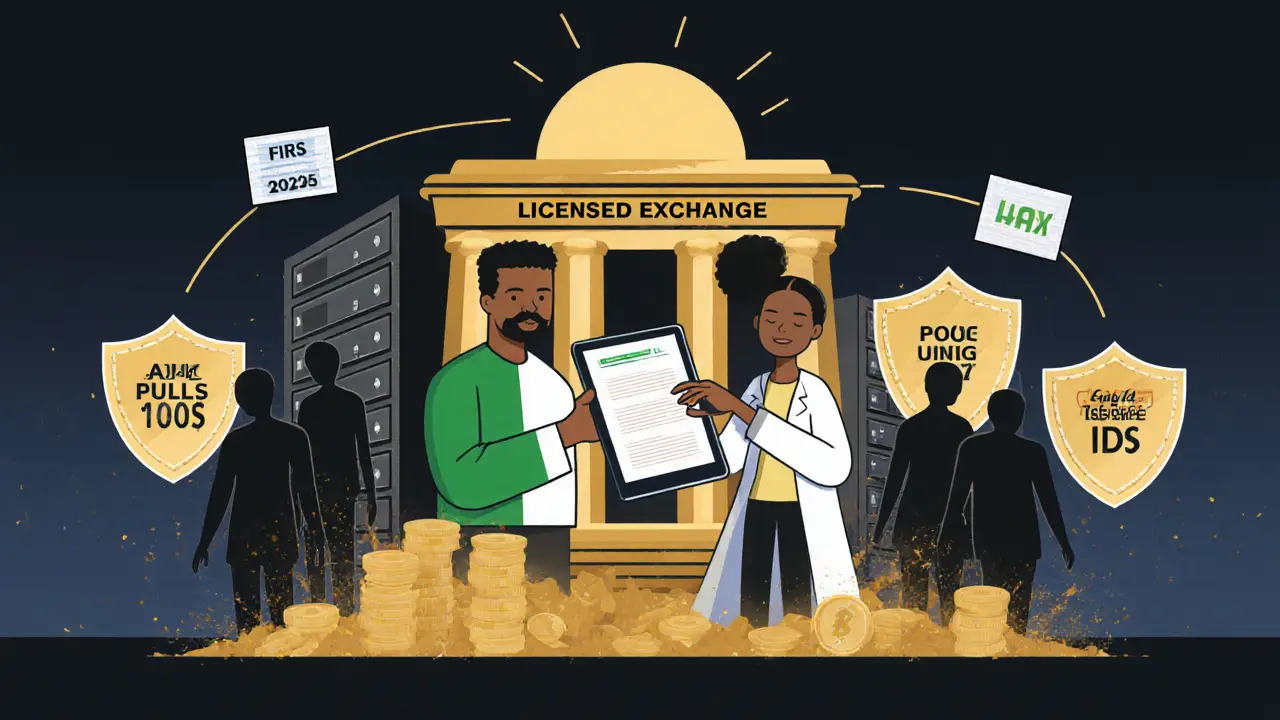
Several offshore exchanges have already been blocked by Nigerian internet providers for ignoring this rule. The SEC doesn’t care where you’re headquartered. If you’re doing business with Nigerians, you play by Nigerian rules.
What Happens If You Don’t Comply?
The penalties are severe. The ISA 2025 introduced new criminal charges for operating an unlicensed exchange. Fines can reach up to ₦1 billion ($650,000 USD), and executives can face jail time. The SEC has also started working with law enforcement to shut down scam platforms-many of which were disguised as crypto exchanges.Plus, unlicensed platforms are being blocked by Nigerian banks and payment processors. Even if you avoid SEC penalties, you won’t be able to move money in or out of Nigeria without a license.
Why This Matters for Users
This isn’t just about businesses. It’s about protecting ordinary Nigerians. A 2024 survey by Busha found that nearly half of Nigerians who don’t use crypto say they’re afraid of scams and theft. The SEC’s new rules are meant to fix that. Licensed exchanges must use cold storage, have insurance, and follow strict security protocols. Your funds are safer now than they’ve ever been.But there’s a trade-off. Compliance adds friction. KYC checks take longer. Withdrawals may take 24-48 hours instead of minutes. Fees are higher because exchanges now have legal teams, auditors, and compliance officers to pay. But for users who care about safety, it’s worth it.
The Road Ahead: More Licenses, More Tax Talk
The SEC has said they’ll issue more provisional licenses in 2025. They’re not holding back. They want to bring the entire market into the light. At the same time, they’re exploring crypto taxation. If you’re trading on a licensed exchange, your transactions can be tracked. That means the Federal Inland Revenue Service (FIRS) could soon start collecting capital gains tax on crypto profits.There’s no official tax rate yet, but the SEC is working with the tax authority to make sure all trades are recorded. If you’re trading on an unlicensed platform, you’re flying blind. On a licensed exchange, you get a transaction history you can use for tax reporting.
Nigeria is moving from a wild west crypto market to a regulated, institutional-grade one. It’s slower. It’s more expensive. But it’s also safer-and more sustainable.
Comments
Sarah Roberge
okay but like... why does the SEC think they can just waltz in and start regulating crypto like it's stocks?? i mean, i get safety and all, but this feels like forcing a square peg into a round hole. also, ₦500 million?? who even has that much lying around?? 🤡
November 30, 2025 at 06:29
Jess Bothun-Berg
This is a disaster. Mandatory fidelity bonds? Audited financials? KYC for every single user? You're not regulating crypto-you're killing it. And don't even get me started on the 'No Objection Rule'-who are they to decide what coins are 'legit'? This isn't oversight-it's censorship. And the fact that they're blocking offshore platforms? Pathetic.
December 1, 2025 at 03:01
Steve Savage
Honestly? I think this is the best thing that’s happened to Nigerian crypto in years. I know it’s a pain, and yeah, the capital requirements are insane-but think about it. For years, people lost everything because exchanges were sketchy as hell. Now, if you’re on Quidax or Busha, you actually have a shot at getting your money back if something goes wrong. It’s slower, sure. But slow is better than dead. And honestly? The no-loans rule? Long overdue. So many people borrowed rent money to buy Dogecoin. This isn’t oppression-it’s protection.
December 2, 2025 at 08:50
Joe B.
Let’s break this down statistically: 500M Naira = ~$325K USD, which is 0.0000002% of Nigeria’s GDP. The fidelity bond requirement at 25% = 125M Naira = ~$81K, which is 3.5x the average annual income of a Nigerian urban worker. The fact that they’re requiring proof of funding source means they’re treating crypto like a bank, not a decentralized asset class. And yet, they’re allowing two exchanges to operate under a regulatory incubator? That’s not regulation-that’s a cartel. Also, the ‘No Objection Rule’ is functionally a ban on any token that isn’t a blue-chip. This isn’t innovation-it’s institutional capture. And yes, I did run the numbers. You’re welcome.
December 3, 2025 at 23:50
Rod Filoteo
This is all a setup. The SEC isn’t protecting users-they’re preparing for mass surveillance. Think about it: transaction histories? Tax tracking? They’re building a financial database for the government. And don’t tell me it’s about safety-because if it was, they’d shut down all the banks that got hacked last year. No. This is about control. And once they have your crypto data, what’s next? Your social media? Your biometrics? They’re normalizing surveillance under the guise of ‘protection’. I’ve seen this movie before. It always ends with the people losing everything.
December 4, 2025 at 00:05
Layla Hu
I’m not against regulation, but I hope they don’t make it so expensive that only big players survive. Small devs and local startups won’t stand a chance. Just… let people try, even if it’s small.
December 5, 2025 at 23:30