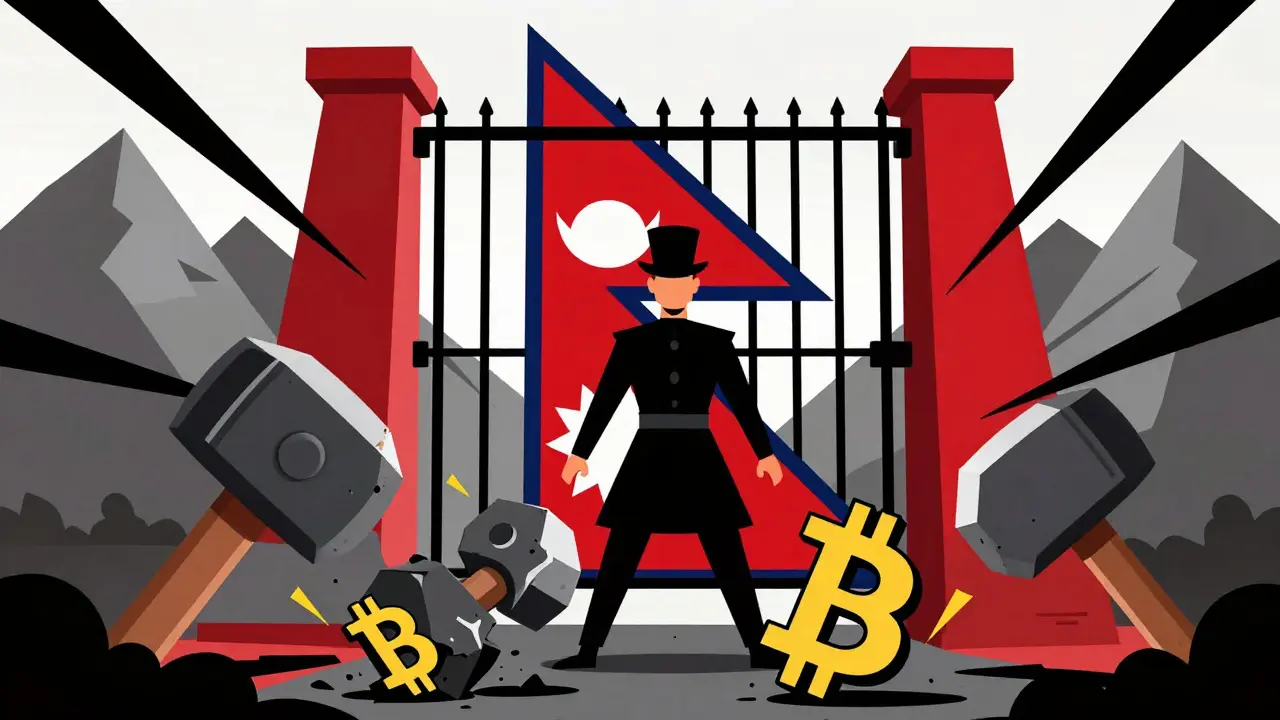
Imagine sending money to a friend abroad using Bitcoin, only to find police at your door. In Nepal, this isn't a worst-case scenario-it's a real legal risk that has landed ordinary citizens in prison. The country enforces one of the strictest cryptocurrency bans in Asia, with specific penalties that can include up to three years behind bars.
If you have connections to Nepal, or if you are a Nepali citizen living abroad, understanding these laws is critical. It’s not just about avoiding fines; it’s about protecting yourself from severe criminal charges. This guide breaks down exactly what triggers these penalties, how the law works, and what you need to know to stay safe.
The Core Legal Framework: Why Crypto Is Banned
To understand the punishment, you first need to understand the crime. In Nepal, using cryptocurrency is illegal. This isn't a gray area or a regulatory gap; it is a complete prohibition enforced by the Nepal Rastra Bank (NRB).
The NRB issued its first public notice banning crypto transactions on May 24, 2017. They reinforced this ban in January 2018, citing major concerns about money laundering, financial instability, and consumer protection. Since then, the government has treated any involvement with digital assets as a violation of national financial security.
The primary law used to prosecute these cases is the Foreign Exchange (Regulation) Act, 1962. Under Section 9(c) of this Act, any unauthorized foreign exchange transaction is illegal. Because cryptocurrencies are treated as unauthorized foreign currency, trading, mining, or even holding them falls under this prohibition.
- No Trading: You cannot buy or sell Bitcoin, Ethereum, or other tokens on exchanges.
- No Mining: Running mining hardware is considered an illegal business activity.
- No Payments: Using crypto to pay for goods or services is prohibited.
The 10 Million NPR Threshold and 3-Year Penalty
Here is where things get serious. Not all crypto violations carry the same weight, but the stakes are high regardless. The specific trigger for a mandatory three-year imprisonment sentence is defined in Section 12 of the Foreign Exchange (Regulation) Act.
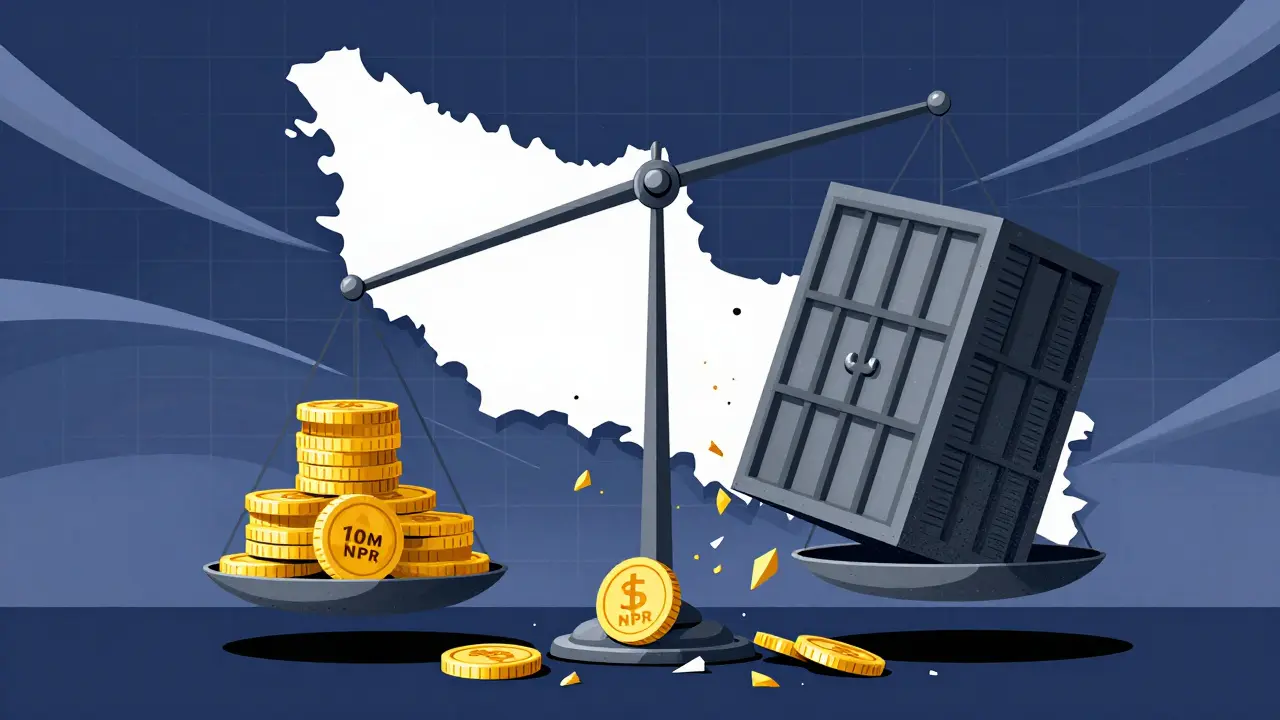
If your transaction involves 10 million Nepalese Rupees (NPR) or more, the law mandates imprisonment for a term not exceeding three years. This is in addition to heavy financial penalties. The fines can range from the amount involved in the transaction up to three times that amount. On top of that, the government can seize all foreign exchange assets related to the offense.
| Violation Type | Legal Basis | Maximum Penalty | Additional Consequences |
|---|---|---|---|
| Large Transaction (≥ 10M NPR) | Foreign Exchange Act, Sec 12 | 3 Years Imprisonment | Fines up to 3x amount; Asset forfeiture |
| Crypto Gambling | National Penal Code, Sec 125 | 3-12 Months Imprisonment | Fines up to NPR 50,000 |
| Unauthorized Digital Transactions | Electronic Transaction Act, Sec 86 | 3 Years Imprisonment | Fines up to NPR 100,000 |
| Failure to Pay Fines | Foreign Exchange Act, Sec 12 | 4 Years Imprisonment | Based on magnitude of offense |
Even if your transaction is below the 10 million NPR threshold, you are still breaking the law. Smaller violations might result in shorter sentences or heavier reliance on fines, but they still open the door to criminal prosecution. The Electronic Transaction Act (ETA) of 2006 is often used alongside the Foreign Exchange Act to add cybercrime charges, which can also carry up to three years in prison.
How Enforcement Works: From Seizure to Court
You might wonder how the government tracks these transactions. Nepal Police’s Central Investigation Bureau (CIB) has become increasingly sophisticated in hunting down crypto users. Here is what typically happens during an investigation:
- Device Seizure: Police routinely confiscate mobile phones, laptops, and hard drives. In a 2023 case study, forensic tools like Cellebrite UFED were used to extract wallet credentials and transaction histories directly from devices.
- Investigative Detention: Suspects can be held for up to 25 days initially. If the case is linked to money laundering, this detention can extend to 90 days while authorities analyze blockchain data.
- Blockchain Analysis: The Department of Revenue Investigation uses digital forensics to trace funds. They look at the value of the cryptocurrency at the time of seizure versus the time of transaction, which can complicate defense strategies.
- Charge Sheet Filing: Government attorneys must file charges within 90 days. However, delays are common due to the complexity of proving transaction values in volatile markets.
A major issue for defendants is the lack of specialized legal representation. Reports indicate that nearly 78% of people accused of crypto crimes do not have lawyers who specialize in digital forensics. This puts them at a significant disadvantage when trying to argue their case in court.

Real-World Cases: Who Gets Caught?
The law affects everyone, from large traders to families trying to send small remittances. Let’s look at some real examples to see how this plays out.
In January 2022, a user known as 'CryptoLoverNP' was arrested after police seized his laptop containing 2.3 BTC. Interestingly, the transaction that triggered the investigation was only worth $5,000-far below the 10 million NPR threshold. However, he was charged under the Electronic Transaction Act and spent 18 months in pretrial detention. His assets were confiscated regardless of the transaction size.
Another case from March 2023 involved a father whose son reported him online. He received a crypto remittance worth 5.2 million NPR (about $38,500). Even though this was also below the 10 million limit, the judge cited "aggravating circumstances" and sentenced him to two years in prison. These cases show that the threshold is not a safety zone; it’s just a marker for the maximum penalty tier.
Contrast this with the Kalopul case in 2022, where prosecutors had to determine whether to use the Bitcoin price at the time of the transaction or the time of seizure. This technicality changed the calculated value, but the defendant still faced imprisonment. The inconsistency in how different courts apply these laws creates a dangerous legal environment.
Nepal vs. The World: A Strict Outlier
It helps to put Nepal’s stance in perspective. Most countries are moving toward regulation, not criminalization.
- India: Allows trading but imposes a 30% tax on gains. No prison time for simple ownership.
- China: Bans transactions and mining but does not criminalize individual holdings.
- Singapore & Thailand: Have established frameworks for licensed exchanges.
- Nepal: One of only 12 countries globally (alongside Egypt, Iraq, and Qatar) that imposes criminal penalties for crypto transactions.
Nepal’s approach is driven by a desire to prevent capital flight. The NRB claims that cryptocurrency caused NPR 2.8 billion ($20.8 million) in unauthorized forex outflows in 2021 alone. With remittances making up 23% of Nepal’s GDP, the government sees crypto as a threat to the national economy. However, critics argue that the ban pushes activity underground rather than stopping it, leading to more fraud and less oversight.
What Should You Do? Practical Advice
If you are a Nepali citizen or have assets in Nepal, the advice is clear: avoid cryptocurrency entirely. There is no legal way to own, trade, or mine crypto in Nepal. The risks far outweigh any potential benefits.
If you are already facing investigation:
- Get Specialized Counsel: Do not rely on general practitioners. You need a lawyer experienced in digital forensics and the Foreign Exchange Act.
- Preserve Evidence: Do not delete transaction histories. Deleting data can lead to additional charges under the Electronic Transaction Act for tampering with evidence.
- Understand the Charges: Know whether you are being charged under the Foreign Exchange Act, the ETA, or both. Overlapping charges are common and can be challenged.
For those outside Nepal, be cautious about sending crypto to friends or family there. Even if you believe the amount is small, the recipient faces serious legal jeopardy. Consider using traditional banking channels or regulated remittance services instead.
Future Outlook: Will the Law Change?
As of early 2024, there is no sign of the ban being lifted. The NRB Governor has stated that the three-year imprisonment provision will remain until "foolproof monitoring" is established. However, the Supreme Court is reviewing a constitutional challenge arguing that Section 12 violates citizens' rights. A ruling is expected later in 2024.
Some analysts predict Nepal may eventually follow India’s model, taxing crypto instead of banning it. But until that happens, the current law stands. The International Monetary Fund has called the policy "economically counterproductive," but domestic political pressure keeps the ban intact.
The bottom line is simple: In Nepal, crypto is a criminal offense. The 10 million NPR threshold triggers a mandatory three-year prison sentence, but even smaller amounts can lead to jail time, asset seizure, and long legal battles. Stay informed, stay compliant, and protect yourself from unnecessary risk.
Is it legal to hold cryptocurrency in Nepal?
No. Holding, trading, mining, or using cryptocurrency for payments is completely illegal in Nepal. The Nepal Rastra Bank has banned all crypto activities since 2017, and violations are prosecuted under the Foreign Exchange (Regulation) Act.
What happens if I transact less than 10 million NPR?
You are still breaking the law. While the 10 million NPR threshold triggers a mandatory three-year imprisonment clause, smaller transactions can still result in imprisonment, fines, and asset seizure under the Electronic Transaction Act or other provisions. Courts have convicted individuals for transactions well below this limit.
Can foreigners be prosecuted for crypto transactions in Nepal?
Yes. If you are physically present in Nepal or conducting transactions involving Nepalese entities or currency, you are subject to local laws. Foreigners have been arrested and detained for crypto-related activities while visiting or residing in Nepal.
Will Nepal legalize cryptocurrency in the future?
There is no immediate plan to legalize crypto. The Nepal Rastra Bank maintains that the ban is necessary to prevent capital flight and money laundering. However, a constitutional challenge is pending before the Supreme Court, which could influence future policy changes.
How do police track cryptocurrency transactions?
Police use digital forensics tools to seize and analyze mobile phones, laptops, and hard drives. They work with the Department of Revenue Investigation to trace blockchain transactions. Tips from informants and monitoring of international remittance patterns also help identify suspects.