
Choosing the right place to trade digital assets feels like walking into a maze with no exit signs. You want safety, you want low fees, and you want your money to actually be there when you click "sell." But in 2026, the landscape has split sharply between two very different worlds: centralized exchanges that hold your keys for you, and decentralized protocols where you are your own bank. This native crypto exchange review breaks down exactly which platform fits your specific trading style, risk tolerance, and technical comfort level.
Quick Summary / Key Takeaways
- Kraken remains the gold standard for security and overall reliability, holding over 95% of funds in cold storage.
- Coinbase is the safest bet for beginners who prioritize ease of use and regulatory compliance over raw feature depth.
- Uniswap dominates the decentralized space, offering non-custodial trading without identity checks but requiring wallet management skills.
- MEXC offers zero maker fees and early access to low-cap altcoins, making it ideal for high-risk, high-reward traders.
- Crypto.com provides the best rewards ecosystem if you are willing to stake their native CRO token to unlock benefits.
The Centralized vs. Decentralized Divide
Before picking a platform, you need to understand the fundamental difference between how these systems operate. A Centralized Exchange (CEX), like Coinbase or Kraken, acts as a middleman. They hold your cryptocurrency in their custody. This means if you forget your password, they can reset it. It also means if they get hacked or go bankrupt, your funds are at risk. In return, you get customer support, fiat on-ramps (buying with dollars), and a familiar interface similar to stock trading apps.
On the other side, a Decentralized Exchange (DEX), such as Uniswap, runs on smart contracts. No company holds your money. You connect your personal wallet, like MetaMask, and trade directly with other users. You keep full control of your assets, but you also bear full responsibility. If you send tokens to the wrong address, they are gone forever. There is no customer service hotline to call.
In 2026, most traders use a hybrid approach. They keep long-term holdings in self-custody wallets or DEXs, while using CEXs for active trading, earning interest, or converting cash to crypto.
Best Overall: Kraken
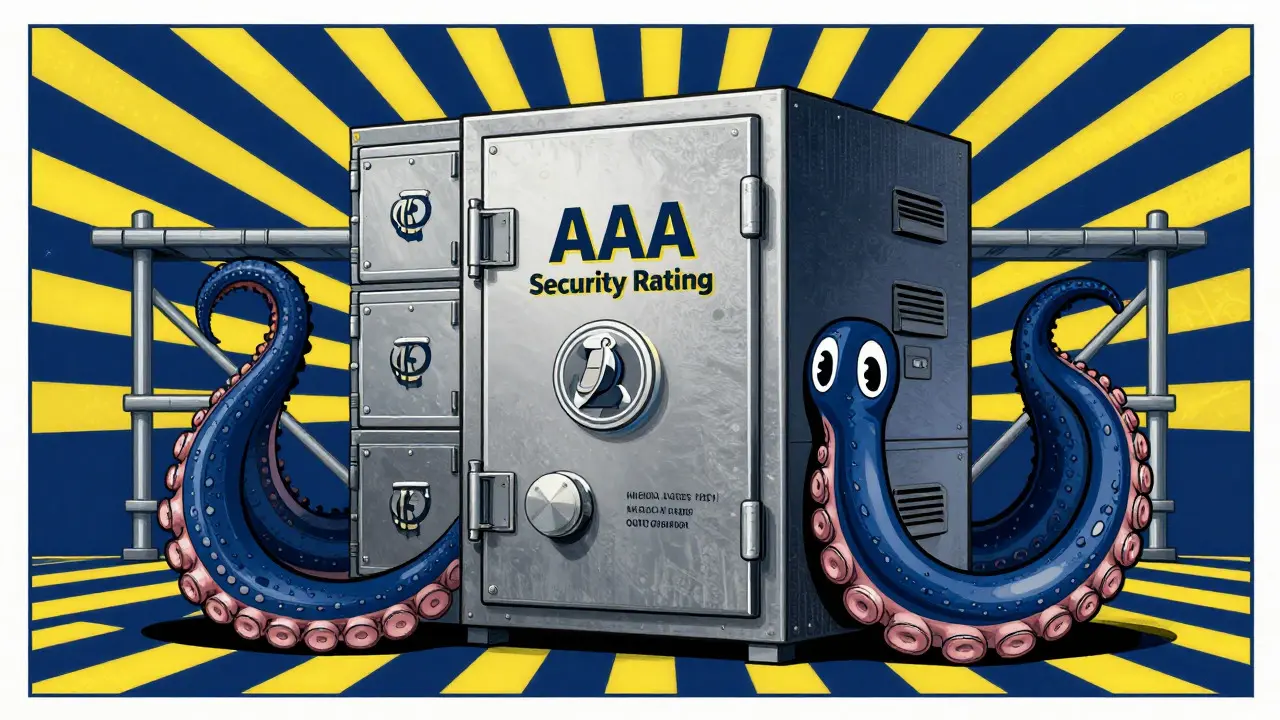
If you value security above all else, Kraken is hard to beat. Founded in 2011, it is one of the oldest platforms in the industry, surviving multiple market crashes and regulatory scrutiny. As of October 2026, it holds a perfect 10/10 Trust Score on CoinGecko and an AAA Security Rating from CER.
Kraken supports over 500 cryptocurrencies and more than 1,000 trading pairs. For advanced users, the Kraken Pro interface offers sophisticated order types, including stop-loss and take-profit orders. The fee structure is competitive, ranging from 0.25% to 0.00% for makers and 0.40% to 0.10% for takers, depending on your volume. Crucially, Kraken keeps over 95% of customer funds in offline cold storage, significantly reducing the risk of online hacks. It is not the prettiest app, but it is the most trustworthy vault for your digital assets.
Best for Beginners: Coinbase
New to crypto? Coinbase is designed specifically for you. It strips away the complex charts and jargon, offering a simple buy/sell interface that feels like using a standard banking app. With strong KYC (Know Your Customer) frameworks and US regulatory compliance, it is one of the safest entry points for new investors.
Coinbase lists more than 250 cryptocurrencies. While the basic interface charges higher fees, experienced users can switch to Coinbase Advanced Trade. This mode lowers fees, provides deeper market insights, and gives you more control over your trades without leaving the platform. Additionally, Coinbase integrates staking rewards and offers a crypto debit card, allowing you to spend your digital assets anywhere Visa is accepted. It is the bridge between traditional finance and the crypto world.
Best Decentralized Exchange: Uniswap
For those who refuse to trust a corporation with their funds, Uniswap is the leader in the DEX space. Recognized as the best decentralized exchange in late 2026, it operates as a non-custodial marketplace. You do not create an account. You do not provide ID. You simply connect your wallet and trade.
Uniswap supports thousands of tokens across more than 11 blockchain networks, including Ethereum, Arbitrum, and Polygon. It uses an automated market maker (AMM) model, meaning you trade against a pool of liquidity provided by other users rather than an order book. The platform charges a 0.3% liquidity fee per trade. While this seems small, it adds up during frequent trading. The downside is the lack of fiat support-you cannot buy Bitcoin with a credit card directly on Uniswap-and there is no customer support if something goes wrong. However, for privacy advocates and DeFi enthusiasts, it is the essential tool.
Best for Altcoins and Low Fees: MEXC
If you are hunting for the next big meme coin or low-cap gem before it hits major exchanges, MEXC is your playground. Founded in 2018, MEXC has built a reputation for listing new tokens faster than almost any other platform. It currently features more than 2,000 cryptocurrency selections.
The standout feature here is the fee structure. MEXC offers zero maker fees and highly competitive taker fees. For active traders, this can save significant capital. The platform also provides high leverage options for futures trading and grid bots for automated strategies. While it lacks the robust regulatory presence of Coinbase, its demo trading environment allows beginners to practice without risking real money. Just remember: many of these low-cap coins are volatile and risky.
Best for Rewards and Ecosystem: Crypto.com
Crypto.com is not just an exchange; it is a lifestyle brand. Rated best for crypto rewards in 2026, it appeals to users who want tangible benefits from their holdings. You can buy and sell 400+ cryptocurrencies, earn interest on stablecoins and Bitcoin, and use their Visa-powered cards.
The catch? To get the best perks, like up to 8% cashback on purchases, you must stake large amounts of their native CRO token. The tiered rewards model can be confusing for newcomers. Trading fees range from 0.25% to 0.08% for makers. Despite the complexity, the integration of a spending card, savings accounts, and a user-friendly app makes it a compelling choice for those who want to live on crypto, not just trade it.

Comparison Table: Top Native Crypto Exchanges
| Platform | Type | Key Feature | Fees (Maker/Taker) | Security Rating |
|---|---|---|---|---|
| Kraken | CEX | Security & Cold Storage | 0.25%-0.00% / 0.40%-0.10% | AAA (CER) |
| Coinbase | CEX | Beginner Friendly | Varies (Higher on Basic) | A+ |
| Uniswap | DEX | Non-Custodial | 0.3% Liquidity Fee | N/A (Smart Contract) |
| MEXC | CEX | Zero Maker Fees | 0% / Competitive | B+ |
| Crypto.com | CEX | Rewards & Card | 0.25%-0.08% / 0.50%-0.18% | AA (CER) |
Specialized Options: Copy Trading and Automation
Not everyone wants to analyze charts themselves. Bitget has carved out a niche with its signature copy trading feature. Launched in 2018, Bitget allows you to automatically follow the trades of experienced professionals. If they buy Bitcoin, your account buys Bitcoin. It simplifies trading for novices but requires careful selection of the traders you follow.
For those who prefer algorithmic precision, Pionex.US is rated best for automated trading in 2026. It comes with 13 built-in trading bots, including grid trading and DCA (Dollar Cost Averaging) bots. With low fees (0.1% maker, 0.5% taker) and a $200 welcome bonus, it is attractive for passive traders. Note that Pionex.US is unavailable in certain US states like New York and Alaska due to local regulations.
Regulatory Landscape and Safety in 2026
The year 2026 has seen tighter regulations globally. Platforms like Gemini and Interactive Brokers Crypto cater to users who demand institutional-grade compliance. Gemini charges higher fees (up to 3.49%) but offers peace of mind through strict adherence to financial laws. Meanwhile, traditional brokers like Fidelity and Robinhood have integrated crypto services, appealing to conservative investors who already trust these brands.
When choosing an exchange, check for proof of reserves. Reputable CEXs publish regular audits showing that user funds are backed 1:1. For DEXs, audit the smart contract history. Tools like CertiK or OpenZeppelin reviews can help verify if a protocol is secure.
How to Choose the Right Platform
Your choice depends on three factors: experience, asset type, and activity level.
- New User: Start with Coinbase or Kraken. Their interfaces guide you, and their customer support is responsive.
- Active Trader: Use Kraken Pro, OKX, or MEXC for lower fees and advanced charting tools.
- DeFi Enthusiast: Stick with Uniswap or PancakeSwap to maintain self-custody and access new tokens early.
- Passive Investor: Consider Crypto.com or Bitpanda for staking rewards and easy fiat integration.
Remember, diversification applies to exchanges too. Do not keep all your eggs in one basket. Use a CEX for daily trading and a hardware wallet or DEX for long-term storage.
Is it safer to use a centralized or decentralized exchange?
It depends on your definition of safety. Centralized exchanges (CEXs) protect you from user error (like losing passwords) but expose you to hacking risks and insolvency. Decentralized exchanges (DEXs) eliminate counterparty risk since you hold your own keys, but you are vulnerable to smart contract bugs and phishing scams. For most users, a mix of both is optimal.
Which exchange has the lowest fees in 2026?
MEXC offers zero maker fees, making it one of the cheapest options for limit orders. Kraken and Binance also offer very competitive fee structures for high-volume traders. For DEXs, fees vary by network congestion, but Uniswap typically charges a flat 0.3% liquidity fee.
Do I need to verify my identity to use Uniswap?
No. Uniswap is a non-custodial decentralized exchange. You only need a compatible crypto wallet (like MetaMask). However, if you buy crypto on a CEX first to transfer to Uniswap, you will likely need to complete KYC verification on the CEX.
What is the best exchange for buying Bitcoin with a credit card?
Coinbase and Crypto.com offer the smoothest experience for buying Bitcoin with a credit card. Both platforms integrate directly with payment processors, though credit card purchases often incur higher processing fees compared to bank transfers.
Are decentralized exchanges legal in the United States?
Yes, using DEXs is generally legal in the US. However, tax reporting requirements still apply. Since DEXs do not issue 1099 forms, users must track their own transactions for IRS reporting. Some states may have specific restrictions on certain tokens traded on DEXs.
Comments
Leah Humphrey
Look, I skimmed this because reading technical specs gives me a migraine, but the part about Kraken being the 'gold standard' is just corporate fluff designed to make you feel safe while they siphon off your liquidity. The whole CEX vs DEX debate is tired; it's not about security, it's about who controls the narrative. You guys are still using platforms that require KYC in 2026? That’s basically handing over your digital identity on a silver platter. Uniswap might be annoying with its gas fees and slippage, but at least you aren't begging a support bot for help when the server crashes during a dump. This review feels like it was written by someone who has never actually lost money to a rug pull or a frozen account.
August 15, 2026 at 14:24
Jay Johhnston
I appreciate the balanced perspective here. It is interesting how the landscape has evolved to accommodate both traditional finance habits and decentralized ideals. For those of us who prefer a structured approach, Coinbase remains a reliable entry point, especially with the regulatory clarity we now have. However, I agree that diversification across exchange types is prudent risk management.
August 16, 2026 at 09:49
Niall O'Rourke
oh look another listicle pretending to know what best means
you people are so naive thinking kraken is safe because some rating agency said so
trust no one
just keep it in cold storage and forget about trading
these exchanges are all casinos with better marketing
and don't get me started on uniswap interface it's a nightmare for anyone who isn't a dev
but sure read more articles like this and stay poor
August 16, 2026 at 10:19
Jillian Groskreutz
You are absolutely missing the forest for the trees! The distinction between maker and taker fees is crucial for high-frequency traders, yet this article glosses over the impact of network congestion on DEX liquidity pools. Furthermore, claiming MEXC is ideal for 'high-risk' traders without mentioning their history of delisting tokens overnight is negligent journalism! If you are serious about portfolio optimization, you need to understand the spread dynamics on Kraken Pro versus the slippage tolerance on Uniswap V3. It is not just about 'ease of use'; it is about execution efficiency! Wake up!
August 17, 2026 at 12:38
Carmene Jackson
Ugh, why does everything have to be so complicated? I just want to buy Bitcoin and sleep at night. Reading about smart contracts and cold storage percentages makes my head spin. I tried setting up MetaMask last week and felt like an idiot. Can someone just tell me which button to click to not lose my life savings? This whole crypto thing is exhausting.
August 19, 2026 at 03:46
Jennifer Ulmer
It seems like the core issue is trust. We are asking ourselves who we can rely on in a digital world. Perhaps the answer is not finding the perfect platform, but understanding our own relationship with risk. Some of us find comfort in structure, others in freedom. Both paths have merit if approached with mindfulness.
August 19, 2026 at 09:37
Jade Brown
Let's cut through the noise: this review is a masterclass in mediocrity wrapped in SEO-friendly jargon. The author clearly hasn't touched a ledger in years. Talking about 'hybrid approaches' is cute until you realize that most retail investors are getting rekt by impermanent loss on DEXs or margin calls on CEXs. The real alpha isn't in these top-tier platforms; it's in the obscure L2 chains where the whales haven't looked yet. But sure, keep telling everyone to park their bags in Coinbase Advanced Trade like it's a savings account. Meanwhile, the market makers are laughing all the way to the bank. The fee structures mentioned here are outdated before they're even published. You need to analyze the order book depth, not just the headline rates. This is financial advice for sheep.
August 21, 2026 at 03:18
Stephanie Millar
Fascinating insights! It is remarkable how the regulatory frameworks in the UK and EU are beginning to mirror the US stance on custody solutions. I found the section on Crypto.com particularly intriguing, as the staking mechanisms do offer a tangible yield that traditional banking simply cannot match. However, one must remain vigilant regarding the volatility of the underlying assets. Excellent summary overall!
August 21, 2026 at 11:36