
For years, Malta was known as the "Blockchain Island." But if you think that label means anything goes, you are dangerously mistaken. The reality on the ground in Valletta is strict, detailed, and heavily monitored. The Malta Financial Services Authority (MFSA) has shifted from a pioneering but somewhat experimental regulator to one of Europe's most rigorous supervisors.
If you are looking to launch a crypto project or operate an exchange in Malta today, you aren't just dealing with local laws. You are navigating a complex hybrid system where the old Virtual Financial Assets Act (VFAA) meets the new European Union-wide Markets in Crypto-Assets Regulation (MiCA). This article breaks down exactly what these rules mean for your business, the specific restrictions you face, and how to avoid costly compliance errors.
The Shift from VFAA to MiCA: Why It Matters
To understand the current restrictions, you have to look at the transition. Since November 2018, Malta operated under the Virtual Financial Assets Act. It was groundbreaking at the time. However, by late 2024, the landscape changed dramatically with the enactment of the Markets in Crypto-Assets Act (Chapter 647 of the Laws of Malta). This national law implements the EU’s MiCA framework.
This isn't just a name change. The MFSA now supervises entities under two distinct tracks depending on their activity:
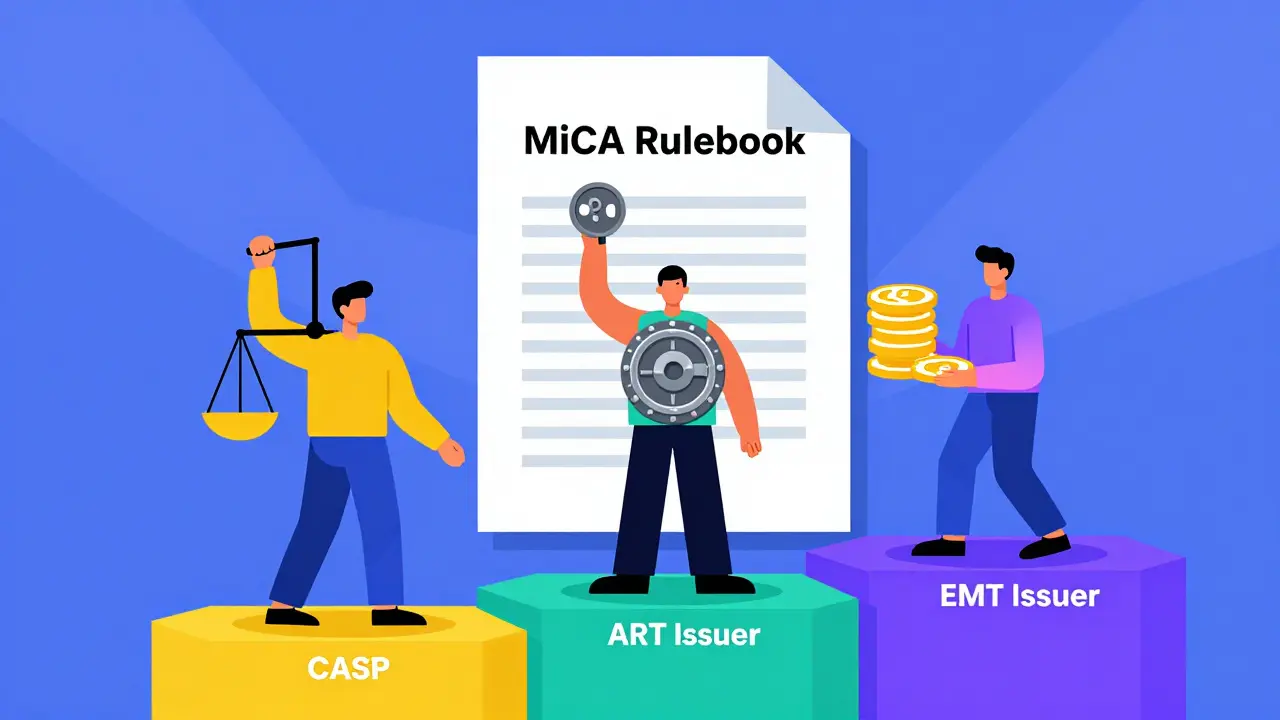
- Crypto-Asset Service Providers (CASPs): Exchanges, custodians, and wallet providers fall here. They need authorization under the new MiCA-aligned rules.
- Issuers of Tokens: If you are issuing Asset-Referenced Tokens (ARTs), Electronic Money Tokens (EMTs), or other utility tokens, you face different scrutiny levels.
The key takeaway? The days of vague guidance are over. The MFSA published the MiCA Rulebook in March 2025. This document provides the technical specifications that supplement the primary legislation. If you are still operating based on 2019 interpretations of the VFAA, you are likely non-compliant.
Who Needs a License? The Three Categories
The MFSA does not issue a single "crypto license." Instead, they categorize entities based on risk and function. Understanding which bucket you fall into is the first step in avoiding regulatory penalties.
| Entity Type | Description | Key Restriction/Requirement |
|---|---|---|
| CASPs | Exchanges, custody services, trading platforms. | Must demonstrate robust conflict of interest management and market conduct protocols. |
| ART Issuers | Issuers of Asset-Referenced Tokens (stablecoins pegged to multiple assets). | Subject to highest scrutiny due to systemic importance; requires significant capital reserves. |
| EMT Issuers | Issuers of Electronic Money Tokens (pegged to a single fiat currency). | Must comply with both MiCA and the Financial Institutions Act for additional consumer protection. |
Note that issuers of generic utility tokens (those that do not fit ART or EMT definitions) also require authorization, but the process differs. The MFSA emphasizes that "other" crypto-assets still carry obligations regarding whitepaper transparency and investor protection.
Whitepapers and Market Conduct: The Paperwork Trap
One of the most common pitfalls for startups is underestimating the whitepaper requirement. Under Title 2 of the MiCA Rulebook, you cannot simply publish a PDF on your website. You must submit a notification to the MFSA.
The authority checks for:
- Risk Disclosure: Are you clearly explaining what could go wrong? Generic disclaimers are rejected.
- Project Viability: Is there a realistic roadmap? The MFSA looks for substance, not hype.
- Conflict of Interest Management: This is a major focus area. In June 2025, the MFSA held a workshop titled "Building a Compliant Crypto Future," where officials like Sarah Pulis (Head of Conduct Supervision) stressed that identifying and disclosing conflicts is a fundamental expectation.
If your whitepaper fails this check, your token offering can be blocked before it launches. This is a hard restriction designed to protect retail investors from scams and vaporware.
Anti-Money Laundering (AML): The FIAU Connection
You might think the MFSA is your only boss. Think again. The Financial Intelligence Analysis Unit (FIAU) enforces stringent AML requirements for all crypto businesses in Malta.
This creates a dual-supervision environment. While the MFSA handles market conduct and licensing, the FIAU watches your transaction flows. If you fail KYC (Know Your Customer) standards, the FIAU can freeze operations regardless of your MFSA license status. This integration ensures that Malta remains compliant with global financial security standards, making it harder for illicit actors to use Maltese entities as a gateway.
Costs and Fees: What to Expect
Compliance is expensive. The MFSA established comprehensive fee structures under the Markets in Crypto-Assets Act (Fees) Regulations, 2024 (L.N. 295 of 2024). These fees are proportional to the size and risk of your entity.
Expect costs in three areas:
- Application Fees: Paid when submitting your license request.
- Annual Supervisory Fees: Recurring costs based on your revenue and asset volume.
- Inspection Costs: If the MFSA conducts on-site audits, you may bear some of the associated costs.
These fees ensure the sustainability of the supervisory body but add a significant overhead for small startups. Budget accordingly during your feasibility study.

Malta vs. Other EU Jurisdictions: The Early Mover Advantage
Why choose Malta over Estonia or Lithuania? The answer lies in experience. Most EU countries are implementing MiCA for the first time in 2024-2025. Malta has been regulating crypto since 2018. This six-year head start means the MFSA has a sophisticated understanding of the industry.
Regulatory professionals note that Malta’s approach is proactive rather than reactive. The publication "Changing Dynamics of Crypto Regulation 2025" released by the MFSA in August 2025 demonstrates deep insight into evolving market conditions. For operators, this translates to clearer expectations. You know what the regulator wants because they have told you repeatedly through workshops and guidance notes.
However, this clarity comes with complexity. Navigating both EU-level MiCA requirements and Malta’s national implementation details requires specialized legal expertise. Many companies hire local compliance consultants to bridge this gap.
Practical Steps for Compliance
If you are ready to proceed, follow this roadmap:
- Classify Your Token: Determine if it is an ART, EMT, or utility token. This dictates your license type.
- Draft a Compliant Whitepaper: Ensure it meets MiCA Rulebook Title 2 standards. Focus on risk disclosure and conflict management.
- Engage Local Counsel: Hire lawyers familiar with both the VFAA legacy and the new MiCA Act.
- Prepare for Dual Supervision: Set up AML/KYC systems that satisfy both the MFSA and the FIAU.
- Attend Workshops: Participate in MFSA industry events. These sessions provide direct insights into supervisory priorities.
Remember, the MFSA grants licenses based on merit and readiness. There is no fast track. Rushing the application often leads to rejection or delays.
Future Outlook: What’s Next?
The regulatory framework is still maturing. The MFSA continues to refine its supervisory approach based on practical implementation experience. Future updates will likely incorporate lessons learned from the initial MiCA rollout period.
Long-term, Malta’s position looks strong. The combination of established infrastructure, experienced personnel, and ongoing industry engagement makes it a favorable jurisdiction for serious players. However, casual entrants should beware. The restrictions are real, the fees are substantial, and the supervision is intense. Only commit if you are prepared for a high-standard, compliant operation.
What is the difference between the VFAA and MiCA in Malta?
The Virtual Financial Assets Act (VFAA) was Malta's original crypto law from 2018. MiCA (Markets in Crypto-Assets Regulation) is the new EU-wide framework implemented in Malta via the Markets in Crypto-Assets Act in late 2024. MiCA replaces many VFAA provisions with standardized EU rules, focusing more on consumer protection and market integrity.
Do I need an MFSA license to hold crypto in Malta?
No. Individual investors do not need a license to buy, sell, or hold crypto assets. Licenses are required for businesses providing services such as exchanges, custody, or issuing tokens (CASPs and issuers).
How long does it take to get a CASP license in Malta?
The timeline varies based on complexity and completeness of the application. Typically, it can take several months. The MFSA conducts thorough due diligence, including background checks on directors and assessment of technical infrastructure.
What are the main restrictions for stablecoin issuers in Malta?
Stablecoin issuers (ARTs and EMTs) face the strictest regulations. They must maintain significant reserve assets, undergo regular audits, and comply with high capital requirements. EMT issuers also must adhere to the Financial Institutions Act for additional consumer safeguards.
Can foreign companies operate in Malta without a local presence?
Generally, no. To obtain an MFSA license, you typically need a registered office in Malta and qualified individuals residing in the EU/EEA who manage the company. Remote-only operations are rarely approved due to supervision requirements.
Comments
DJ Maleko
Wow, look at all this bureaucratic nonsense they are forcing on the crypto space 🙄 It is absolutely hilarious how people think strict rules will stop innovation when it clearly just kills it 💀 The MFSA is basically putting a speed bump in front of a Ferrari and acting like they saved the day from crashing 😂 You guys really believe that 'compliance' is going to make your token worth anything? Please. The market doesn't care about your whitepaper risks or your conflict of interest management workshops 📉 It cares about liquidity and hype, which you have completely destroyed with these endless fees and dual-supervision nightmares 🤡 Who has time to deal with the FIAU AND the MFSA while trying to code? Nobody. This is why Malta is losing its edge to places that actually understand freedom 🚫🔗
July 3, 2026 at 16:24
Tawny Holmes
The distinction between ARTs and EMTs is critical for capital allocation strategies.
July 3, 2026 at 18:48
Linda Hilliard
Oh, darling, do try to keep up with the rest of us who actually read the MiCA Rulebook instead of just skimming headlines like a peasant :P The reality is that if you cannot navigate the nuances of Title 2 regarding whitepaper transparency, you simply do not belong in this sophisticated ecosystem. It is not about 'killing innovation' as some hysterical luddites claim; it is about filtering out the incompetent amateurs who treat financial instruments like casino chips. The MFSA’s requirement for robust conflict-of-interest management is merely the baseline for professional conduct, yet here we are, debating whether basic due diligence is too much to ask. If your project relies on 'hype' rather than substantive utility and regulatory adherence, then yes, you should be blocked. The fact that you find the fee structures burdensome suggests your business model was fundamentally flawed from inception. True elites understand that compliance is the price of admission to the serious table, not an obstacle to be railed against with emoji-laden tantrums. Those who survive this transition will be the only ones left standing when the dust settles, and frankly, I am quite eager to see who qualifies. Do not mistake rigor for hostility; it is simply quality control. :D
July 5, 2026 at 11:20
Erika Pozzetto
I must concur with the previous sentiment regarding the necessity of stringent oversight mechanisms within the burgeoning digital asset landscape because without such comprehensive frameworks the integrity of the entire financial system could potentially be compromised by unscrupulous actors who seek to exploit regulatory loopholes for their own nefarious gain thereby undermining public trust and confidence in these novel technologies which are inherently complex and require a high degree of sophistication to manage effectively so it is imperative that all stakeholders engage in meaningful dialogue about the long-term implications of these regulations rather than dismissing them outright based on short-term inconveniences or misunderstandings about the nature of modern financial supervision which is designed to protect consumers and ensure market stability across borders especially in an interconnected global economy where cross-border transactions are becoming increasingly common and therefore require harmonized standards to prevent regulatory arbitrage and ensure a level playing field for all participants regardless of their jurisdictional location or corporate structure which ultimately benefits everyone involved in the process by fostering greater transparency accountability and resilience throughout the value chain thus contributing to sustainable growth and development over time rather than speculative bubbles that burst inevitably causing widespread harm to innocent investors who were misled by false promises or exaggerated claims about potential returns without adequate risk disclosures being provided upfront before any funds were committed to projects that may never materialize as intended due to lack of viable business models or technical feasibility studies conducted properly according to industry best practices established by leading experts in the field who have dedicated years of research and experience understanding how these systems work under various stress conditions and scenarios including extreme volatility events black swan occurrences cyber security breaches operational failures governance issues legal challenges political pressures economic downturns social unrest environmental concerns technological disruptions competitive threats strategic missteps execution errors communication breakdowns cultural mismatches organizational silos resource constraints talent shortages funding gaps partnership conflicts intellectual property disputes trademark infringements patent violations copyright issues data privacy violations anti-money laundering sanctions evasion tax evasion fraud money laundering terrorist financing proliferation financing human trafficking wildlife trafficking drug trafficking arms trafficking counterfeit goods smuggling corruption bribery extortion kidnapping ransomware attacks phishing scams identity theft account takeover credential stuffing brute force attacks dictionary attacks rainbow table attacks hash cracking salting peppering key derivation functions password managers two-factor authentication multi-factor authentication biometric verification behavioral analytics machine learning algorithms artificial intelligence neural networks deep learning reinforcement learning supervised learning unsupervised learning semi-supervised learning transfer learning meta-learning federated learning differential privacy homomorphic encryption zero-knowledge proofs secure multi-party computation trusted execution environments hardware security modules smart cards USB tokens YubiKeys FIDO standards WebAuthn CTAP protocols OAuth OpenID Connect SAML LDAP Kerberos NTLM Digest Basic Auth API keys JWT tokens session cookies CSRF tokens XSS protection SQL injection prevention command injection mitigation buffer overflow detection integer overflow handling format string vulnerabilities race conditions TOCTOU issues deadlocks livelocks starvation priority inversion resource leaks memory leaks file descriptor leaks socket leaks thread leaks process leaks semaphore leaks mutex locks condition variables barriers atomic operations lock-free programming wait-free programming obstruction-free programming non-blocking algorithms concurrent data structures parallel computing distributed systems cloud computing serverless architecture microservices monoliths service mesh sidecar proxies ingress controllers egress gateways load balancers reverse proxies CDN caching DNS resolution IP addressing subnetting routing switching bridging VLANs VRFs MPLS BGP OSPF EIGRP RIP IS-IS STP RSTP MSTP PVST+ UplinkFast BackboneFast PortFast BPDU Guard Root Guard Loop Guard UDLD FDP LACP EtherChannel Port Aggregation Link Aggregation Control Protocol Spanning Tree Protocol Rapid Spanning Tree Protocol Multiple Spanning Tree Protocol Per-VLAN Spanning Tree Plus UplinkFast Feature BackboneFast Feature PortFast Feature BPDU Guard Feature Root Guard Feature Loop Guard Feature Unidirectional Link Detection Feature Fiber Distributed Data Interface Feature Link Aggregation Control Protocol Feature EtherChannel Feature Port Aggregation Feature
July 7, 2026 at 00:32
Winston Lacewing
You people are literally destroying the soul of finance with this endless paperwork and moral policing 😭 It is absolutely tragic how we went from free exchange to needing a license to hold a wallet 📜 The MFSA thinks they are saving us but they are just creating a new class of privileged insiders who can afford the lawyers while the rest of us get locked out 🚪😡 And don't get me started on the AML requirements-it is pure surveillance state nonsense disguised as safety 👮♂️💸 We are supposed to be building a decentralized future not begging bureaucrats for permission to exist 😤 Every time I see another workshop announcement I want to scream because it is just more jargon to confuse us into submission 🤯 The fact that they charge inspection costs on top of everything else is the final insult to injury 🤬 This is not regulation this is extortion wrapped in a nice suit 🧥💼 I feel sick every time I log into my dashboard knowing there is someone watching my every move 📉👀 How can we innovate when we are paralyzed by fear of getting shut down for a minor technicality? 😨 It is a complete disaster and no one seems to care except those profiting off our compliance struggles 🤑💔
July 8, 2026 at 16:58
Kristine Lawson
Actually, the premise that regulation stifles innovation is fundamentally flawed; indeed, clear regulatory boundaries often foster greater investment confidence among institutional players who previously remained hesitant due to ambiguity. Furthermore, the assertion that individual investors require licenses is demonstrably false, as explicitly stated in the FAQ section, which indicates a selective reading of the source material by certain commenters above. One might suggest that those complaining about the complexity would benefit from engaging with the actual text of the Markets in Crypto-Assets Act rather than relying on hearsay or emotional reactions. The dual-supervision model involving both the MFSA and the FIAU is not an arbitrary imposition but a necessary safeguard against systemic risks associated with illicit financial flows, which remain a significant concern globally. To dismiss these measures as mere 'bureaucratic nonsense' ignores the historical context of financial crises precipitated by unchecked speculation and inadequate oversight. Moreover, the fee structures are proportional to risk and size, ensuring that smaller entities are not disproportionately burdened compared to larger institutions, although the initial outlay remains substantial. It is also worth noting that Malta's early adoption provides a unique advantage in terms of regulatory clarity, which many other jurisdictions are still struggling to achieve. Therefore, rather than lamenting the loss of the 'wild west' era, perhaps we should appreciate the emergence of a mature, stable environment conducive to long-term sustainability. After all, true progress requires discipline, not chaos. ;)
July 10, 2026 at 00:17
Russ Fincham
Look, I am just a regular guy trying to figure out if I can run my small exchange without going bankrupt on legal fees. The article says 'budget accordingly' but that is vague as hell. Is it thousands or millions? Also, does the 'local presence' rule mean I have to move my whole team to Valletta or just set up a mailbox? Because moving offices is not exactly cheap either. I hate how complicated this is. I just want to trade coins, not write a thesis on conflict of interest management. But hey, if the suits say jump, I guess I better start packing my bags. Just seems like a lot of hoops to jump through for what used to be a simple online transaction. Maybe I should just stick to buying Bitcoin on Coinbase and forget about launching my own platform. The risk/reward ratio seems totally skewed right now.
July 10, 2026 at 08:31
Anuj Kashyap
One must ponder the philosophical implications of centralizing authority in the name of decentralization 🤔 It is ironic, isn't it? We built blockchain to escape the very bureaucracy we are now embracing with open arms in Malta 🏛️ The MFSA acts as the new priestly class, interpreting the sacred texts of MiCA for the layperson 📜 Perhaps this is the natural evolution of society-chaos giving way to order, even if that order feels suffocating 🌊 But let us not lose sight of the empathy required here; these regulators are likely doing their best to protect vulnerable souls from the wolves of Wall Street 🐺❤️ Yet, in doing so, they may be inadvertently protecting the status quo rather than enabling true disruption 🔄 It is a delicate balance, walking the line between safety and stagnation ⚖️ I suppose we shall see if the 'early mover advantage' translates to genuine prosperity or merely expensive compliance theater 🎭 Only time will tell if this rigid structure can bend enough to accommodate the wild spirit of crypto 🦋 Or if it will crush it entirely under the weight of its own red tape 📉
July 12, 2026 at 00:59
Tracy Marshall
its obvious they are tracking every single transaction to build a profile on you for the next phase of the great reset dont you see it coming?? the mfsa is just a front for deeper agencies collecting data on who holds what assets so they can freeze accounts when the currency collapses again they call it aml but its really anti-liberty measure designed to strip away your sovereignty bit by bit until you have nothing left but government issued digital tokens that can be turned off remotely like a light switch its terrifying how blind most people are to this conspiracy they think its about safety but its about control total domination of the financial sector by unelected officials who answer to no one except their masters in brussels and beyond wake up sheeple before its too late and your life savings vanish into thin air controlled by algorithms you cant see or challenge
July 13, 2026 at 20:08