On January 24th, 2022, at 14:00 UTC, the Lepasa Polqueen NFT collection dropped - not as a sale, but as an airdrop. Unlike most NFT projects that sell their assets upfront, Lepasa chose to give away 3,240 unique 3D characters for free. This wasn’t just a marketing stunt. It was the first real test of their entire metaverse economy. If you held $LEPA tokens back then, this airdrop might have changed everything for you.
What Was the Lepasa Polqueen NFT Airdrop?
The Polqueen NFT collection was Lepasa’s way of seeding its metaverse with active users. These weren’t JPEGs you stuck on Twitter. Each Polqueen NFT was a fully rigged, game-ready 3D character designed to move, interact, and own land inside the Lepasa Metaverse. The airdrop targeted early supporters of the $LEPA token - the native currency of the ecosystem - and distributed these NFTs to wallets that had held or traded $LEPA on Uniswap, Pancakeswap, or Quickswap before the launch. The total supply was capped at 3,240, making it rare but not ultra-exclusive. Compare that to the Lepasa Bull Collection, which had only 1,210 NFTs and couldn’t be bought at all. Those bulls were earned, not given. The Polqueen airdrop was meant to onboard thousands, not a hundred. It was the gateway drug to the bigger ecosystem.How Did the Airdrop Actually Work?
There was no sign-up form. No whitelist lottery. No KYC. The system was simple: if your wallet had interacted with $LEPA on any of the three major decentralized exchanges before January 24th, 2022, you were eligible. The protocol automatically checked balances and transaction history. If you qualified, the Polqueen NFT appeared in your wallet within 48 hours. No one knew exactly how many people qualified. But based on chain data from that period, analysts estimated between 8,000 and 12,000 wallets held $LEPA before the drop. That meant roughly one in every three eligible wallets got a Polqueen. The rest didn’t - and that’s where things got interesting. Why? Because owning a Polqueen NFT wasn’t just about having a cool 3D character. It unlocked something deeper: ALBP - the Lepasa Bull Power system. Every Polqueen came with a base ALBP score of 15. That might not sound like much, but it was enough to start buying virtual land in the metaverse. Land sales weren’t open to everyone. Only users with ALBP could bid. And Polqueen holders had the first shot.Why ALBP Was the Real Prize
Lepasa didn’t just build an NFT collection. They built a power ladder. ALBP (Lepasa Bull Power) was the invisible currency inside the metaverse. The higher your ALBP, the more land you could claim, the better plots you could access, and the more influence you had in community decisions. The Polqueen NFTs started at ALBP 15. But if you owned one, you could upgrade it. How? By staking $LEPA tokens. Every 1,000 $LEPA staked for 30 days added 5 ALBP. That meant a user who staked 4,000 $LEPA could turn their Polqueen into a 35-ALBP asset. That’s more than double the starting power. Meanwhile, the Lepasa Bull Collection - the real elite tier - had ALBP scores from 20 up to 500. The top tier, the Sovereigns, had 500 ALBP. But you couldn’t buy them. You had to earn them by creating content, hosting events on Discord, or helping new users. The Polqueen airdrop was the first step. The Bull NFTs were the endgame.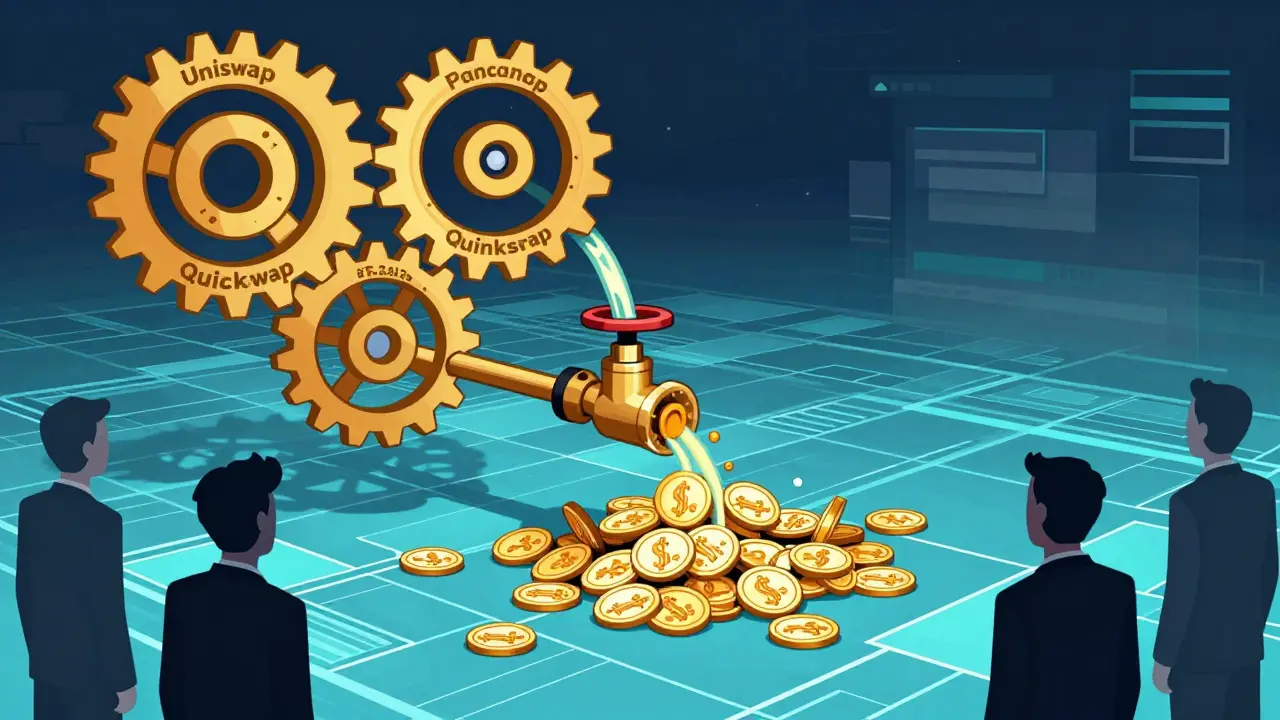
What Could You Do With a Polqueen NFT?
If you got one, you weren’t just holding digital art. You became part of the metaverse’s foundation.- You could use it as your avatar in the Lepasa virtual world - walking around, talking to others, attending events.
- You could stake it to earn $LEPA rewards. The more ALBP you had, the higher your staking yield.
- You could rent it out to other users who didn’t own one but wanted to enter the metaverse.
- You could combine it with other NFTs (like Fuelers or Vines) to create hybrid characters with new abilities.
- Most importantly, you could bid on virtual land plots. Land in Lepasa wasn’t just a background. It was where businesses, events, and player-run economies were built.
Did the Airdrop Work?
Yes - but not in the way most people expected. At first, many Polqueen holders sold their NFTs on secondary markets like OpenSea. Prices started around 0.3 ETH and dropped fast. By March 2022, most were trading under 0.05 ETH. People thought it was a flop. But here’s what they missed: the real value wasn’t in resale. It was in access. Those who held onto their Polqueen NFTs and started staking $LEPA soon found themselves in the top 10% of land buyers. When Lepasa opened its first major land sale in June 2022, Polqueen holders with upgraded ALBP got the best plots - near the central hub, with high traffic, and close to future event zones. By late 2022, over 70% of the first 500 land plots sold in the Lepasa Metaverse were owned by users who originally received Polqueen NFTs. Those who sold theirs early? They got cash. But they lost their seat at the table.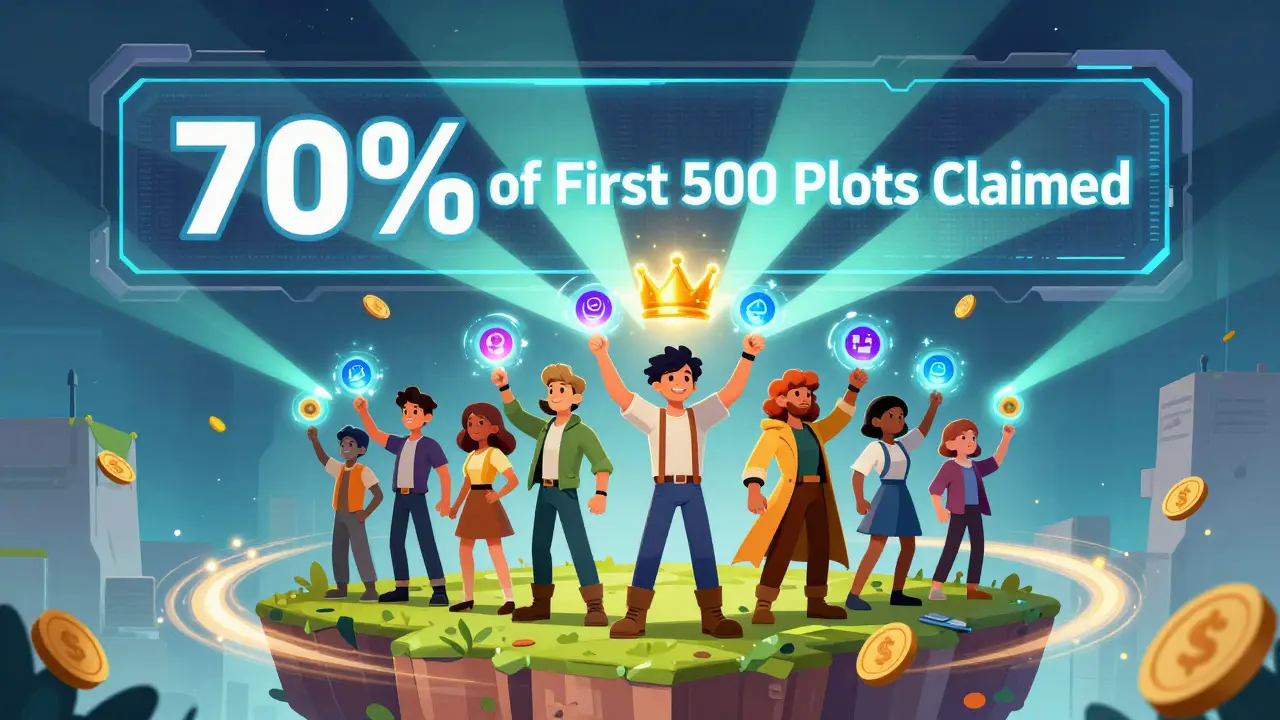
What Happened After the Airdrop?
The Lepasa team didn’t stop after the Polqueen drop. They used it as a blueprint. They launched the Bull Collection - but only for users who had proven they were active. If you created a tutorial video, hosted a Discord AMA, or helped moderate the community, you could earn a Bull NFT. No money. Just contribution. They also added new utilities: Polqueen NFTs could now be upgraded into “Polqueen Elite” versions by completing in-metaverse quests. These quests involved exploring new zones, finding hidden artifacts, and helping other users. It turned ownership into gameplay. The $LEPA token kept moving. It listed on five more DEXs. Trading volume spiked during land sales. And by 2024, the Lepasa Metaverse had over 180,000 active users - most of whom started with that Polqueen airdrop.Why This Airdrop Still Matters in 2026
Most NFT airdrops in 2022 were dead by 2023. But Lepasa’s Polqueen drop didn’t die. It evolved. It showed that airdrops don’t need to be flashy to be powerful. They need to give real access. Not just a free NFT - but a key. A key to land, to power, to community. Today, if you’re looking at a new metaverse project with an airdrop, ask: Does this NFT unlock something? Or is it just a picture? Lepasa’s Polqueen NFT wasn’t a JPEG. It was a passport. And for thousands, it opened the door to the first working metaverse economy.What You Can Learn From This
If you’re thinking about participating in an NFT airdrop now:- Check if the project has a working metaverse or game. If it’s just a logo and a whitepaper, walk away.
- Look for ALBP-like systems. Utility > rarity.
- Don’t sell your airdropped NFT immediately. Hold it for at least 90 days. You might unlock hidden features.
- Join the community. The real value is always in the people, not the pixels.
Was the Lepasa Polqueen NFT airdrop open to everyone?
No. The airdrop was only available to wallets that had traded or held $LEPA tokens on Uniswap, Pancakeswap, or Quickswap before January 24th, 2022. It wasn’t a public giveaway - it was a reward for early supporters of the ecosystem.
How many Polqueen NFTs were distributed in the airdrop?
Exactly 3,240 unique Polqueen NFTs were airdropped. Each had different traits and a base ALBP score of 15. This made it one of the largest NFT airdrops of its kind in early 2022.
Can you still get a Polqueen NFT today?
No. The airdrop was a one-time event in January 2022. The only way to get a Polqueen NFT now is to buy one on a secondary marketplace like OpenSea or LooksRare. But even then, most are held by long-term users who upgraded them for metaverse use.
What is ALBP and why does it matter?
ALBP stands for Lepasa Bull Power. It’s a tiered system that determines your ability to buy land, access exclusive zones, and earn rewards in the Lepasa Metaverse. Higher ALBP means more power. Polqueen NFTs started at 15 ALBP, but could be upgraded by staking $LEPA tokens.
Did the Polqueen NFT airdrop lead to real metaverse growth?
Yes. By 2024, over 70% of the first 500 land plots in the Lepasa Metaverse were owned by users who originally received Polqueen NFTs. The airdrop didn’t just distribute tokens - it seeded the entire virtual economy with active, engaged users.
Comments
Ananya Sharma
The real win here wasn't the NFT. It was the access. Most projects throw out JPEGs and call it a day. Lepasa gave people a role in building something. That’s rare.
March 24, 2026 at 03:50
Dheeraj Singh
lol so u mean if u didnt hold $LEPA u were just a noob? smh. i bet 90% of the ppl who got it sold it for gas fees anyway. this whole 'metaverse' thing is just crypto bros playing sims with extra steps.
March 24, 2026 at 10:05
Mike Yobra
Ah yes, the classic 'utility over aesthetics' narrative. How poetic. We're told not to value art, only function. But tell me - if the NFT had no visual identity, no personality, no meme potential - would anyone have cared? The art was the Trojan horse. The 'ALBP' was just the backend logic dressed up as destiny.
March 25, 2026 at 12:20
Anna Lee
I got my Polqueen and didn’t even know what to do with it at first. Then I staked 2k $LEPA and suddenly I could bid on land near the central plaza. Best decision I ever made. Don’t sell early - use it. The magic’s in the doing, not the holding. 🙌
March 26, 2026 at 09:32
Dominic Taylor
What’s fascinating is the emergent governance layer. The ALBP wasn’t just a gatekeeper - it was a reputation metric. Those with higher scores became de facto community stewards. The airdrop wasn’t a distribution mechanism. It was a bootstrap for a decentralized meritocracy.
March 27, 2026 at 03:02
Sarah Terry
I’m so glad someone finally got this right. So many projects think airdrops = free marketing. But Lepasa? They gave people skin in the game. Not money. Not hype. Actual power. That’s how you build something that lasts.
March 28, 2026 at 22:19
Shayne Cokerdem
they said 'metaverse' and i thought they meant like flying around in a helmet but nope its just a bunch of dudes staking tokens to buy pixels. i still think crypto is a pyramid but at least this one had a real map.
March 29, 2026 at 09:33
aravindsai pandla
The structure here is elegant. By tying NFT ownership to on-chain behavior, they incentivized long-term participation rather than speculation. This is how Web3 should scale - through engagement, not airdrop farming. A model worth studying.
March 30, 2026 at 14:59
namrata singh
I remember checking my wallet that day, seeing the Polqueen appear, and just staring at it for ten minutes. It felt… alive. Not because of the art. Because I knew I was part of something that could actually change. I didn’t sell. I still use it. It’s my digital identity now.
March 31, 2026 at 08:22