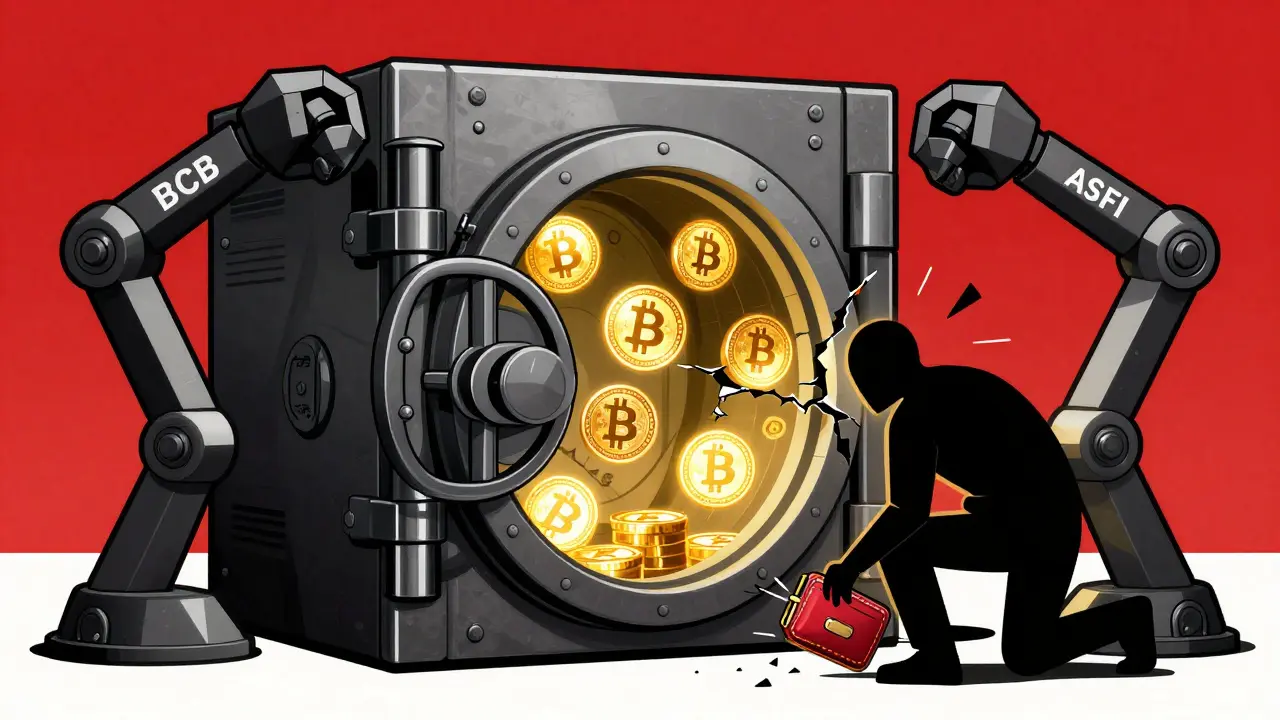
Back in 2014, Bolivia made headlines by banning all cryptocurrency trading. If you bought Bitcoin or sent Ethereum back then, you were breaking the law. But things changed dramatically in June 2024. The Central Bank of Bolivia lifted the ban with Resolution No. 082/2024, turning crypto from a criminal act into a regulated financial activity. Today, you can legally trade crypto in Bolivia - but only if you follow the rules. Break them, and you could face serious consequences.
What’s Legal Now? The New Rules
Under Bolivia’s updated system, owning and trading cryptocurrencies is no longer illegal. Stablecoins like USDT and USDC are widely used and accepted. But here’s the catch: they’re not legal tender. You can’t walk into a grocery store and pay with Bitcoin. The only official currency is the boliviano. Crypto transactions are allowed, but only through licensed banks and authorized electronic payment systems. That means if you want to buy USDT, sell ETH, or pay a freelancer with a stablecoin, you must use a bank that’s registered with the Central Bank of Bolivia (BCB). Platforms like Binance can’t process payments directly - they work through approved financial intermediaries. The government didn’t just lift the ban. They built a monitoring system. Banks must report every crypto transaction daily. They cross-check users against international sanctions lists. Suspicious activity triggers an automatic alert to the Financial Investigations Unit. This isn’t about stopping crypto - it’s about controlling it.Who Gets Punished? The Real Risk Areas
The biggest mistake people make today is assuming crypto is free game. It’s not. The penalties aren’t for owning crypto. They’re for bypassing the system. If you use a peer-to-peer app to send USDT directly to someone without going through a licensed bank, you’re violating the law. Same if you run a business that accepts crypto outside the approved channels. Even if you’re just helping a friend convert crypto to bolivianos via an unregistered exchange, you could be flagged. The government doesn’t publish exact fine amounts. That’s intentional. Penalties are applied case by case, based on severity, intent, and repeat offenses. For individuals, this could mean account freezes, mandatory reporting, or even criminal investigation if linked to money laundering. For businesses, the stakes are higher: license revocation, fines, or being blacklisted from the financial system. In 2025, the focus is on enforcement against unlicensed intermediaries, not everyday traders. But that doesn’t mean you’re safe if you ignore the rules. The system is designed to catch anyone who tries to slip through the cracks.Taxation: No Capital Gains, But Business Profits Are Taxed
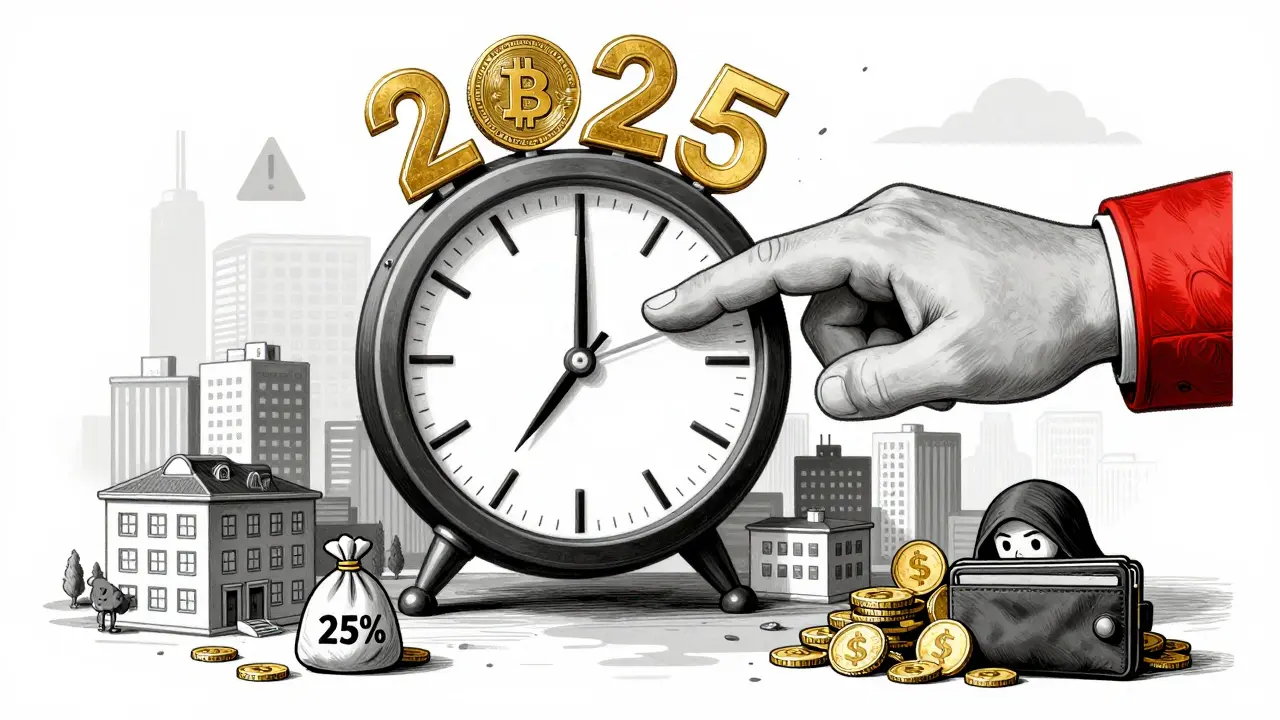
Here’s one area where Bolivia is surprisingly friendly: taxes. If you’re an individual buying and selling crypto for personal gain, you don’t pay capital gains tax. That’s rare in Latin America. You can trade USDT for ETH, cash out to bolivianos, and keep all the profit - no tax forms, no reporting required. But if you’re running a business - mining, staking, operating a crypto exchange, or accepting crypto as payment - you owe corporate income tax. The rate is 25%. That applies to any profit generated from crypto activities, even if you’re using stablecoins. The tax authority tracks these through bank reports and mandatory business filings. So if you’re just trading on the side, you’re in the clear. But if you’re turning crypto into a side hustle or full-time job, you need to register as a business and report your earnings. Failing to do so can lead to tax penalties, audits, or even fraud charges.
Who’s Regulating This? The Key Players
Bolivia didn’t just throw a law together. They built a layered oversight system. The Central Bank of Bolivia (BCB) is the main authority. They set the rules for payment channels, approve licensed institutions, and monitor transaction volumes. In the first half of 2025, they recorded $294 million in crypto transactions - up 630% from early 2024. The Financial System Supervisory Authority (ASFI) watches financial institutions to make sure they’re following BCB rules. They audit banks that offer crypto services and can shut down non-compliant ones. The Financial Investigations Unit handles suspicious activity reports. If someone sends $10,000 in USDT to an unknown recipient, this unit gets notified. They work with international agencies to track cross-border flows. And then there’s Banco Bisa, one of Bolivia’s largest banks. Since October 2024, they’ve been offering custody services for USDT. That’s a big deal - it means the country’s financial institutions are fully on board with the new system.What Happens If You Get Caught?
There’s no public list of fines. But based on how the system works, here’s what you can expect if you violate the rules:- First offense (small amount, no intent to evade): Account freeze, mandatory compliance training, and a warning. No criminal record.
- Repeated violations or large sums: Bank account closure, asset seizure, and reporting to ASFI for possible civil penalties.
- Businesses operating without license: Immediate shutdown, fines up to 20% of annual revenue, and potential criminal charges for money laundering.
- Linking crypto to fraud or sanctions evasion: Full criminal investigation, possible jail time.
How to Stay Safe in 2025
If you want to trade crypto in Bolivia without risking penalties, follow these steps:- Only use banks or financial institutions approved by the BCB. Check their official website for the current list.
- Never send crypto directly to another person’s wallet. Always route it through a licensed platform.
- If you’re running a business that accepts crypto, register with ASFI and pay the 25% corporate tax.
- Keep records of all transactions - even if you’re not taxed, the bank will report them.
- Avoid peer-to-peer apps like LocalBitcoins or Paxful. They’re not licensed and are high-risk.
Why Bolivia Changed Its Mind
The 2014 ban didn’t stop crypto use - it just drove it underground. People still bought Bitcoin. They still used USDT to send money to family abroad. The ban made it harder, riskier, and more expensive. By 2023, the government realized they were losing control. People were using unregulated channels. Scams were growing. Remittances were flowing through shadow networks. The solution wasn’t more bans - it was regulation. They looked at El Salvador’s model, signed a cooperation deal with their digital asset commission, and built something more practical: a system that lets crypto exist - but only where it can be seen, tracked, and controlled. It’s not perfect. But it’s working. Transaction volumes are soaring. Banks are investing in crypto services. And the government now has real visibility into the market.What’s Next?
Bolivia is moving toward deeper integration. Expect more banks to launch stablecoin services in 2025. More businesses will start using USDT for payroll and supplier payments - legally, through approved channels. The government may also introduce a digital boliviano, a central bank digital currency (CBDC), to compete with stablecoins. That could change the landscape again. For now, the message is clear: crypto is legal - but only if you use the system. Don’t try to outsmart it. The penalties aren’t always public, but they’re real.Is it legal to own Bitcoin in Bolivia in 2025?
Yes, owning Bitcoin and other cryptocurrencies is legal in Bolivia as of June 2024. The previous ban was officially lifted. However, you cannot use Bitcoin as payment for goods or services unless it’s processed through a licensed bank or authorized electronic payment system.
Can I use USDT to pay bills in Bolivia?
You cannot use USDT directly to pay bills at utilities or government offices. The boliviano is the only legal tender for official payments. However, businesses can legally use USDT for payroll and invoicing - but only if they process the transactions through a bank approved by the Central Bank of Bolivia.
Do I have to pay taxes on crypto profits in Bolivia?
Individuals who trade crypto for personal gain do not pay capital gains tax. However, if you operate a business involving crypto - such as mining, staking, or running an exchange - you must pay a 25% corporate income tax on your profits. The tax authority tracks business activity through bank reports.
What happens if I send crypto to someone without using a bank?
Sending crypto directly outside approved banking channels is a violation of Bolivia’s 2024 regulations. You could face account freezes, mandatory reporting to regulators, or even criminal investigation if the transaction is flagged as suspicious or linked to money laundering. Always use licensed institutions to move crypto.
Are Binance and other exchanges legal in Bolivia?
Binance and other exchanges are not directly licensed to operate in Bolivia. However, users can access them through approved financial intermediaries - like banks offering custody services. Transactions must still flow through regulated channels. Using exchanges directly for peer-to-peer transfers is risky and violates the law.
Can I mine cryptocurrency in Bolivia?
Yes, you can mine cryptocurrency in Bolivia. However, if you’re doing it as a business - even on a small scale - you must register as a legal entity and pay the 25% corporate income tax on any profits. Personal mining for your own use is not taxed, but you still need to report income if you sell the mined coins through a licensed bank.
Comments
Shari Heglin
The notion that Bolivia has ‘liberalized’ crypto is misleading. This isn’t freedom-it’s surveillance dressed in regulatory finery. Every transaction is monitored, every wallet traced, every peer-to-peer transfer criminalized under the guise of ‘financial stability.’ The state didn’t lift a ban; it replaced one form of control with a more sophisticated one. The absence of capital gains tax is a bait. The real cost is privacy-and that’s been surrendered wholesale.
December 5, 2025 at 03:22
Britney Power
One must observe, with the precision of a macroeconomic anthropologist, that Bolivia’s regulatory architecture constitutes a fascinating case study in authoritarian pragmatism. The state, having witnessed the destabilizing potential of decentralized finance, has opted not for prohibition-but for institutional co-option. The 630% surge in transaction volume is not indicative of market vitality, but of systemic capture: private actors are now mere conduits for state surveillance. The 25% corporate tax, while ostensibly reasonable, functions as a de facto entry fee for any meaningful participation-effectively excluding the unbanked, the under-resourced, and the ideologically inconvenient. One cannot help but note the irony: a nation that once outlawed crypto now monetizes its monitoring.
December 5, 2025 at 18:01
ashi chopra
I live in India and I’ve watched this unfold from afar. It’s so sad how governments fear what they don’t understand. Crypto isn’t the enemy-it’s people trying to build something better. But when rules are written to control instead of empower, everyone loses. I hope Bolivia finds balance. Not control. Not fear. Just fairness.
December 7, 2025 at 12:21
Darlene Johnson
Let’s be real-this is just the beginning. They’re testing the waters with stablecoins because they know CBDCs are coming. This whole ‘licensed banks only’ thing? It’s a Trojan horse. They’re gathering biometric data, transaction histories, behavioral patterns. In five years, your crypto activity will determine your credit score, your travel permissions, even your ability to get a job. This isn’t regulation. It’s digital authoritarianism with a smile.
December 8, 2025 at 07:31
samuel goodge
There’s a philosophical tension here, isn’t there? On one hand: freedom from state currency monopolies; on the other: freedom from untraceable, unaccountable chaos. Bolivia has chosen the latter-not out of malice, but out of necessity. The 2014 ban was a failure of imagination; the 2024 framework is a failure of trust. The state refuses to believe individuals can self-regulate, so it builds walls around the garden. Yet, the fact that individuals still transact-through licensed channels, no less-suggests that the desire for financial autonomy is stronger than the machinery of control. Perhaps the real victory isn’t in legality, but in persistence.
December 9, 2025 at 00:08
Vidyut Arcot
Big picture: Bolivia got smart. Instead of fighting crypto, they made it work within their system. If you’re just trading on the side? No tax, no hassle. If you’re running a business? Pay your 25% and stay compliant. It’s not perfect, but it’s practical. Stop seeing regulation as oppression-see it as structure. And if you’re using P2P apps? You’re asking for trouble. Play the game right, and you’re golden.
December 10, 2025 at 15:30
Ankit Varshney
Just don’t use unlicensed platforms. That’s it.
December 12, 2025 at 14:15