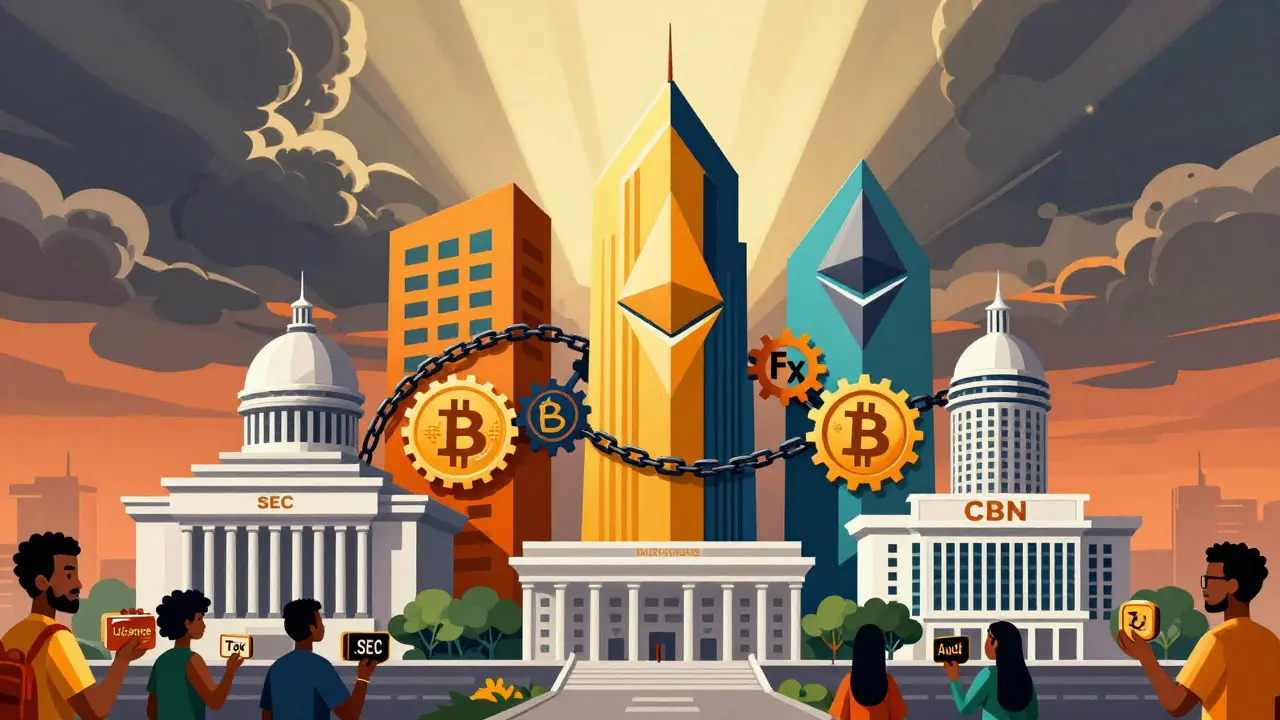
For years, if you traded crypto in Nigeria, you did it in the shadows. Banks blocked transactions. Accounts got frozen. No one knew if you were breaking the law-or just caught in the middle of a bureaucratic mess. That changed in 2025. Today, cryptocurrency in Nigeria isn’t just tolerated-it’s regulated.
What Changed in 2025?
The big shift came when President Bola Ahmed Tinubu signed the Investments and Securities Act (ISA) 2025. This wasn’t a tweak. It was a complete rewrite of how Nigeria treats digital assets. For the first time, cryptocurrencies like Bitcoin, Ethereum, and even NFTs used for investment are legally recognized as securities. That means they’re now under the same rules as stocks, bonds, and mutual funds. The Securities and Exchange Commission (SEC) became the main watchdog. Before 2025, the Central Bank of Nigeria (CBN) was the only voice in the room-and it had banned banks from dealing with crypto. That ban was lifted in December 2023, but without clear rules, banks still didn’t know what to do. The ISA 2025 fixed that. Now, the SEC sets the rules, and the CBN handles the banking side. Two agencies, one goal: bring crypto out of the dark.Who Needs a License?
If you run a crypto exchange, wallet service, or any platform that lets people buy, sell, or trade digital assets in Nigeria, you need a license. These are called Virtual Asset Service Providers (VASPs). The SEC has two main licensing categories: one for exchanges, another for custody and storage services. Both require:- A minimum paid-up capital of ₦500 million ($334,000)
- A fidelity bond to protect users’ funds
- Registration with the Corporate Affairs Commission (CAC)
- A physical office in Nigeria
- Nigerian nationals in key management roles
What About Peer-to-Peer Trading?
If you’re just buying Bitcoin from a friend using P2P apps like Paxful or LocalBitcoins, you’re not breaking the law. The regulations target businesses, not individuals. But here’s the catch: if you’re doing it at scale-running a P2P operation, advertising it as a service, or taking a cut-you’re now a VASP and need a license. The SEC hasn’t cracked down on casual traders. But they’ve made it clear: if you’re profiting from facilitating trades, you’re in their crosshairs. Telecom records can be accessed during investigations. If you’re flagged for suspicious activity, your phone number and transaction history might be pulled. That’s new. And it’s meant to stop scams.
What About NFTs and Tokens?
Not all digital assets are treated the same. If you’re buying an NFT of a digital artwork for fun? Fine. But if that NFT is sold as an investment-promising royalties, profit-sharing, or future value-it’s a security. That means it falls under SEC rules. The same goes for tokens issued by startups. If they’re marketed as a way to earn returns, they’re regulated. This is a big deal. Many Nigerian startups tried to raise money by selling tokens in 2021 and 2022. Those projects were often scams. Now, if you want to launch a token, you have to file a full disclosure document with the SEC. No more vague whitepapers. No more promises of 10x returns. If you lie, you go to jail.Taxes Are Now Official
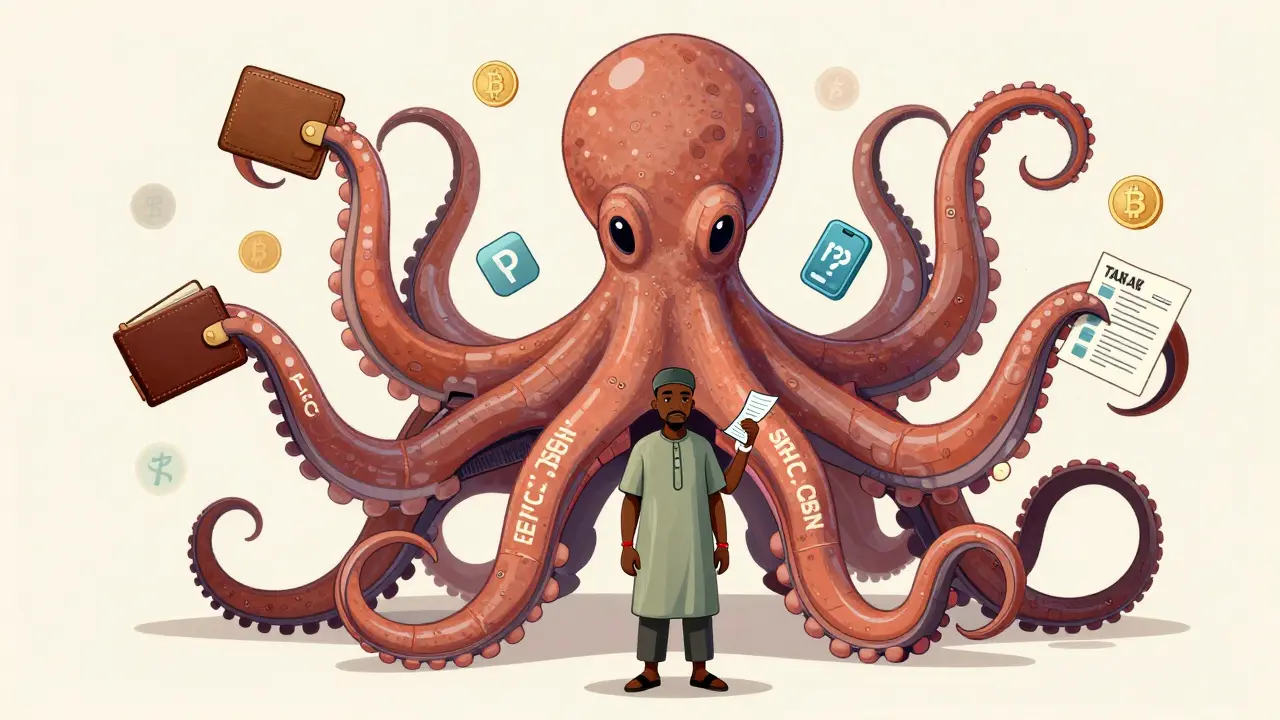
Crypto isn’t just regulated-it’s taxed. The Nigeria Tax Administration Act (NTAA) 2025 took effect in January 2026. Now, every crypto transaction that results in a profit is taxable. That includes trading one coin for another, selling for naira, or using crypto to buy goods. VASPs are required to report all user transactions to the Federal Inland Revenue Service (FIRS). If you make ₦500,000 from trading Bitcoin and don’t report it, you’re at risk. Penalties are steep: ₦10 million ($6,693) for the first month of non-compliance, plus ₦1 million ($669) every month after that. The SEC can suspend or revoke a license if a company doesn’t report. For individuals, it’s not as strict yet. But the FIRS is building a system to track crypto wallets linked to Nigerian bank accounts. If you’re making consistent profits, expect a letter soon.Who’s in Charge?
Nigeria’s system is messy-but intentional. Four agencies work together:- SEC: Regulates crypto as securities. Licenses exchanges, enforces disclosure rules.
- CBN: Oversees banking relationships. Lets banks open accounts for licensed VASPs.
- EFCC: Investigates fraud, money laundering, and scams. Can freeze assets.
- NFIU: Monitors suspicious transactions across banks and crypto platforms.
How Are People Reacting?
Nigerians still love crypto. Between July 2024 and June 2025, the country received $92.1 billion in crypto value-more than any other African nation. People use it to send money home, protect savings from inflation, and buy goods from global sellers. But the mood has shifted. Before 2025, users were angry. They lost bank accounts. They couldn’t cash out. Now, many are relieved. Legal certainty means they can open business bank accounts. They can hire employees. They can attract investors. Still, there’s fear. Some worry the government will eventually ban P2P trading. Others are scared of surveillance. The ability to access telecom records and wallet data feels invasive. Social media is full of posts asking: “Is the SEC watching my wallet?” The truth? They’re not watching you. But if you’re running a business or moving large sums, they’re watching that.What’s Next?
More licenses will be granted. The SEC has over 50 applications in review. International exchanges like Binance and Kraken are applying-but they’ll need to set up local offices and hire Nigerian staff. That’s expensive. It could push smaller players out. The government is also working on a National Blockchain Policy to encourage tech development. But that’s separate from crypto regulation. It’s about infrastructure, not coins. The big question: Will this work? Experts say yes-if the government sticks to its plan. Nigeria has the largest crypto user base in Africa. It also has the most detailed rules. If they can make compliance manageable, Nigeria could become the fintech hub of the continent. But if the rules get too heavy, if licenses cost too much, or if enforcement turns into harassment, users will find ways around it. They always have.What Should You Do?
If you’re a trader: Keep records. Know your gains. Don’t ignore tax notices. You’re not breaking the law-but you’re not invisible. If you’re running a crypto business: Get legal help. Don’t try to navigate this alone. The SEC doesn’t give hand-holding. You need a lawyer who understands both Nigerian securities law and blockchain tech. If you’re just using crypto to send money or save: You’re fine. But stay aware. Rules can change. What’s allowed today might need a license tomorrow. Nigeria didn’t ban crypto. It didn’t ignore it. It took control. And now, the world is watching to see if it can make regulation work for its people-not just its banks.Is crypto legal in Nigeria in 2026?
Yes, cryptocurrency is fully legal in Nigeria as of 2026. The Investments and Securities Act (ISA) 2025 officially recognized digital assets as securities, and the Central Bank of Nigeria allows banks to serve licensed crypto businesses. Trading, holding, and using crypto is not illegal-but operating a business that facilitates trades requires a license.
Do I need to pay taxes on crypto in Nigeria?
Yes. The Nigeria Tax Administration Act (NTAA) 2025, effective January 2026, requires all crypto profits to be reported and taxed. This includes gains from trading, selling for naira, or using crypto to buy goods. While individuals aren’t yet being audited aggressively, the Federal Inland Revenue Service (FIRS) is building systems to track transactions. VASPs must report user activity.
Can I use Binance or Coinbase in Nigeria?
You can still use international platforms like Binance or Coinbase to trade, but they’re not licensed in Nigeria. If you’re using them for personal trading, you’re not breaking the law. However, if you’re running a business that connects Nigerian users to these platforms-like a local payment gateway or referral service-you’re operating as a VASP and need an SEC license.
What happens if I don’t get a VASP license?
If you’re running a crypto exchange, wallet service, or P2P platform without a license, you’re breaking the law. The SEC can shut down your operations, freeze your assets, and refer your case to the EFCC for criminal investigation. Penalties include fines, license revocation, and potential jail time for directors. Even established platforms like Quidax faced delays because the SEC is vetting every applicant thoroughly.
Are NFTs regulated in Nigeria?
Only if they’re sold as investments. If you buy an NFT as digital art or collectible, it’s not regulated. But if the NFT promises profit-sharing, royalties, or future value-as in tokenized real estate or royalty funds-it’s considered a security and falls under SEC rules. You’ll need to file disclosures and comply with investor protection laws.
Can Nigerian banks block my account for crypto activity?
No-not if you’re using a licensed VASP. Since the CBN lifted its 2021 ban, banks are allowed to open accounts for SEC-registered crypto businesses. If your bank freezes your account for crypto activity, it’s likely violating CBN guidelines. You can file a complaint with the CBN or the Central Bank’s Consumer Protection Unit. However, if you’re using unlicensed services or engaging in suspicious activity, banks may still flag your transactions.
Is peer-to-peer (P2P) crypto trading banned in Nigeria?
No, P2P trading is not banned. Individuals can still trade crypto directly with each other using apps like Paxful or LocalBitcoins. However, if you’re advertising yourself as a trader, taking fees, or operating as a marketplace, you’re considered a VASP and need an SEC license. Casual users are not targeted-but commercial operators are.
How long does it take to get a crypto license in Nigeria?
It typically takes 6 to 12 months. The SEC conducts deep due diligence on applicants, including background checks on owners, audits of security systems, and verification of local office setups. Even well-known platforms like Quidax and Busha faced delays. The process is slow because the SEC is building the rules as it goes-there’s no playbook yet.
Comments
Jack Petty
This is a classic case of government overreach wrapped in a shiny compliance blanket. They're not regulating crypto-they're weaponizing it. Every transaction tracked, every wallet monitored. Welcome to the surveillance state, where your Bitcoin buys you a visit from the EFCC. They think they're protecting people? Nah. They're protecting their own power.
February 1, 2026 at 09:46
mary irons
It’s fascinating how quickly societies trade freedom for the illusion of safety. Nigeria’s elite always loved control-now they’ve just given themselves a digital leash to dangle over the masses. The fact that they’re calling this ‘regulation’ instead of ‘capture’ tells you everything. They don’t want crypto to thrive. They want it to kneel.
February 2, 2026 at 21:04
Wayne mutunga
I get why people are nervous. I used to trade on Paxful back in 2021, just sending money to my cousin. Now I hear about telecom records being pulled and wallet tracking… it makes me pause. I’m not trying to hide anything, but it feels like the ground’s shifting under me. Maybe this system works for big players, but what about the rest of us just trying to get by?
February 4, 2026 at 19:47
Gavin Francis
Big win for Nigeria!! 🚀 The fact they’re building real rules instead of banning it is huge. Sure it’s messy, but look at the numbers-$92B in crypto value! That’s not luck, that’s demand. Now they’re giving entrepreneurs a path, not a prison. Keep going!! You’re showing the world how to do it right!! 💪🔥
February 6, 2026 at 13:35
Jeremy Dayde
Look I’ve been in this space since 2017 and I’ve seen every kind of regulation from zero to overkill and this one is actually kind of impressive in its scope but also terrifying in its execution because you’ve got four agencies all trying to own the same space and none of them have ever worked together before so the friction is going to be insane and the compliance costs are going to kill the small guys and honestly the tax part is gonna be a nightmare because how do you even track every single trade when you’re swapping BTC for ETH and then turning it into naira and buying a laptop and then someone sends you 0.05 BTC as a gift and now you owe taxes on it and the system is just not built for this kind of granularity and I’m not even talking about the fact that half the population still uses cash and this whole thing feels like a tech utopia dream being forced onto a country that’s still figuring out electricity
February 6, 2026 at 15:45
Kevin Thomas
Let’s cut the crap. If you’re running a crypto business in Nigeria and you’re not licensed, you’re not just breaking the law-you’re putting your users at risk. The SEC isn’t being harsh, they’re being responsible. Look at the scams from 2021-2022. People lost life savings. Now there’s a system. Yes it’s slow. Yes it’s expensive. But if you can’t afford to play by the rules, maybe you shouldn’t be in the game. Stop whining and get a lawyer. Your users deserve better than shadow operations.
February 7, 2026 at 06:10
Jerry Ogah
They call this regulation? This is a coup. The state is taking over the digital economy under the guise of protection. They’ve turned crypto from a tool of liberation into a tax-collecting machine. And now they’re watching your phone records? That’s not oversight-that’s tyranny dressed in a suit. And don’t tell me it’s for the people. The people didn’t ask for this. The people just wanted to send money home without getting their accounts frozen. Now they’ve got a bureaucracy breathing down their necks. This isn’t progress. This is conquest.
February 9, 2026 at 00:14