NFT Gas Fee & Cost Calculator
Calculate Purchase Costs
Calculate Sale Profits
Cost Breakdown
Enter values above to see cost breakdown
Buying and selling NFTs isn’t as simple as clicking a button and hoping for profit. By 2025, the NFT market has settled into something more real - less of a wild gold rush, more like a digital art gallery with rules, fees, and real ownership. If you’re trying to get in, you need to know the steps, the costs, and the traps. This isn’t about getting rich quick. It’s about understanding what you’re actually buying - and how to protect yourself.
What Exactly Are NFTs?
NFT stands for Non-Fungible Token. That sounds technical, but it just means it’s a unique digital item tied to a blockchain. Unlike Bitcoin or Ethereum, where every coin is the same, each NFT is one-of-a-kind. It could be a piece of digital art, a music file, a video clip, or even a virtual sneaker. The NFT doesn’t store the file itself - it stores a certificate of ownership. Think of it like a signed receipt that proves you own the original version of something.
Most NFTs live on the Ethereum blockchain, but others run on Polygon, Solana, and Hedera. These alternatives matter because they’re cheaper. Ethereum gas fees can spike to $50 or more during busy times. Polygon, on the other hand, often costs less than $1. That’s a big deal if you’re buying a $20 NFT and don’t want to pay half its value in fees.
Step 1: Set Up a Crypto Wallet
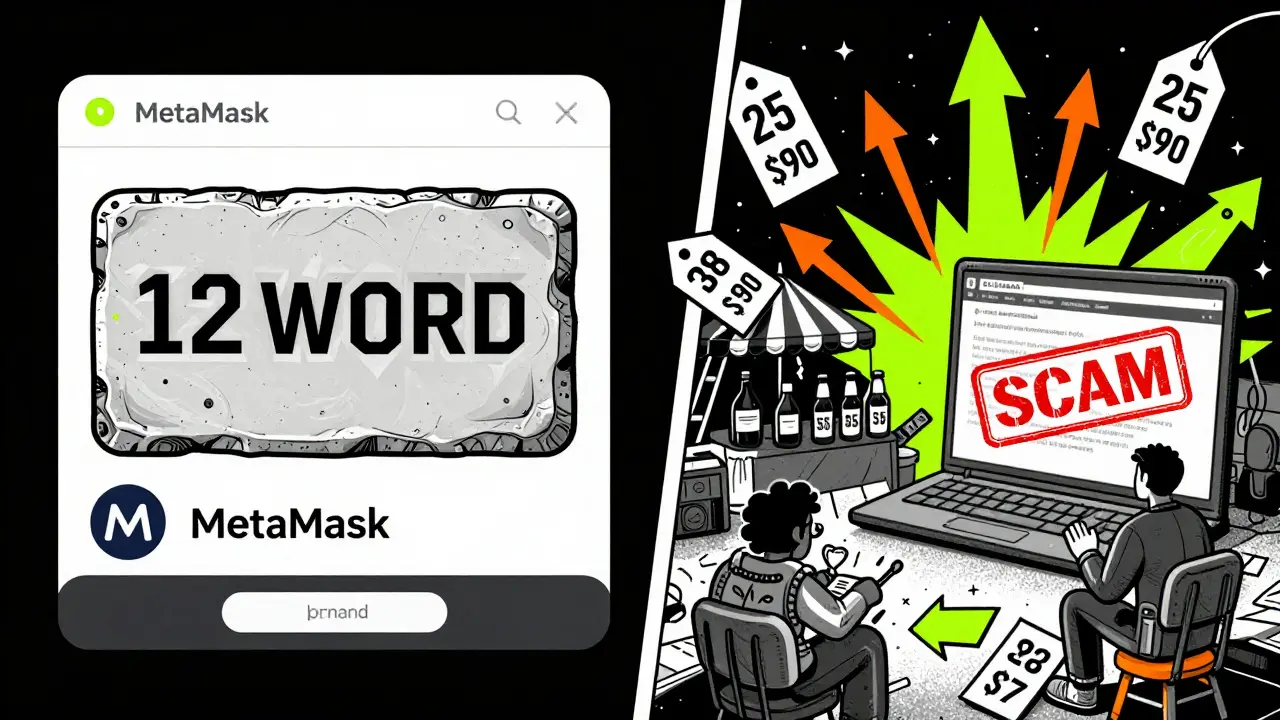
You can’t buy or sell NFTs without a digital wallet. It’s your key to the blockchain. The most common wallet for NFTs is MetaMask. It’s free, works in your browser, and connects to almost every NFT marketplace. Download the MetaMask extension for Chrome or Firefox, then follow the setup. You’ll create a password and get a 12-word recovery phrase. Write this down. Keep it in a safe place - like a locked drawer, not your phone or cloud drive. If you lose it, you lose everything.
Other wallets like Phantom (for Solana) or Rabby are also good, but MetaMask is the safest starting point. Once it’s set up, you need to fund it. That means buying cryptocurrency. Use Coinbase or Binance to buy ETH (Ethereum) or MATIC (Polygon’s token). Transfer it from the exchange to your wallet. Don’t send crypto directly from an exchange to an NFT marketplace - always go through your wallet first.
Step 2: Choose a Marketplace
OpenSea is still the biggest. As of 2025, it handles over 80% of all NFT trades. It supports Ethereum, Polygon, and a few other chains. You’ll find everything here - from $5 pixel art to $100,000 digital collectibles. But OpenSea isn’t the only option. Foundation and SuperRare focus on high-end art and require invites. Blur is popular with experienced traders for its low fees and advanced tools.
Here’s the thing: not all marketplaces work the same. OpenSea lets you list NFTs for free using lazy minting. That means you don’t pay to create the NFT until someone buys it. Other platforms charge upfront minting fees - sometimes $50 or more - even if your item never sells. Always check the fee structure before you start.
Step 3: How to Buy an NFT
Once your wallet is funded and connected to OpenSea, browse the marketplace. Click on an NFT you like. You’ll see the price, how many are listed, and the seller’s history. Look for verified creators - they have a blue checkmark. Avoid unknown sellers with no track record.
There are two ways to buy:
- Buy Now - Pay the fixed price. Simple. Fast.
- Auction - Place a bid. You might win it for less - or lose to someone who bids higher.
When you click Buy Now, MetaMask will pop up. Confirm the transaction. You’ll see two fees: the price of the NFT and the gas fee. Gas fees vary. On Polygon, they’re usually under $0.50. On Ethereum, they can be $10-$40. If the gas fee looks too high, wait an hour. Fees drop when the network isn’t busy.
After you pay, the NFT shows up in your wallet. You own it. You can view it on OpenSea, display it in a digital frame, or resell it later.
Step 4: How to Sell an NFT
Selling is where most people get stuck. You need to list your NFT. Go to your profile on OpenSea, find the NFT you want to sell, and click “Sell.”
You’ll choose:
- Fixed Price - Set your own price. Buyers can grab it instantly.
- Timed Auction - Let people bid over 24 hours, 7 days, or longer.
- Accept Offers - Let buyers make bids. You can accept, reject, or counter.
Set a reserve price if you’re using an auction. That’s your minimum acceptable bid. Don’t list something for $10 if you’d never sell it for less than $50.
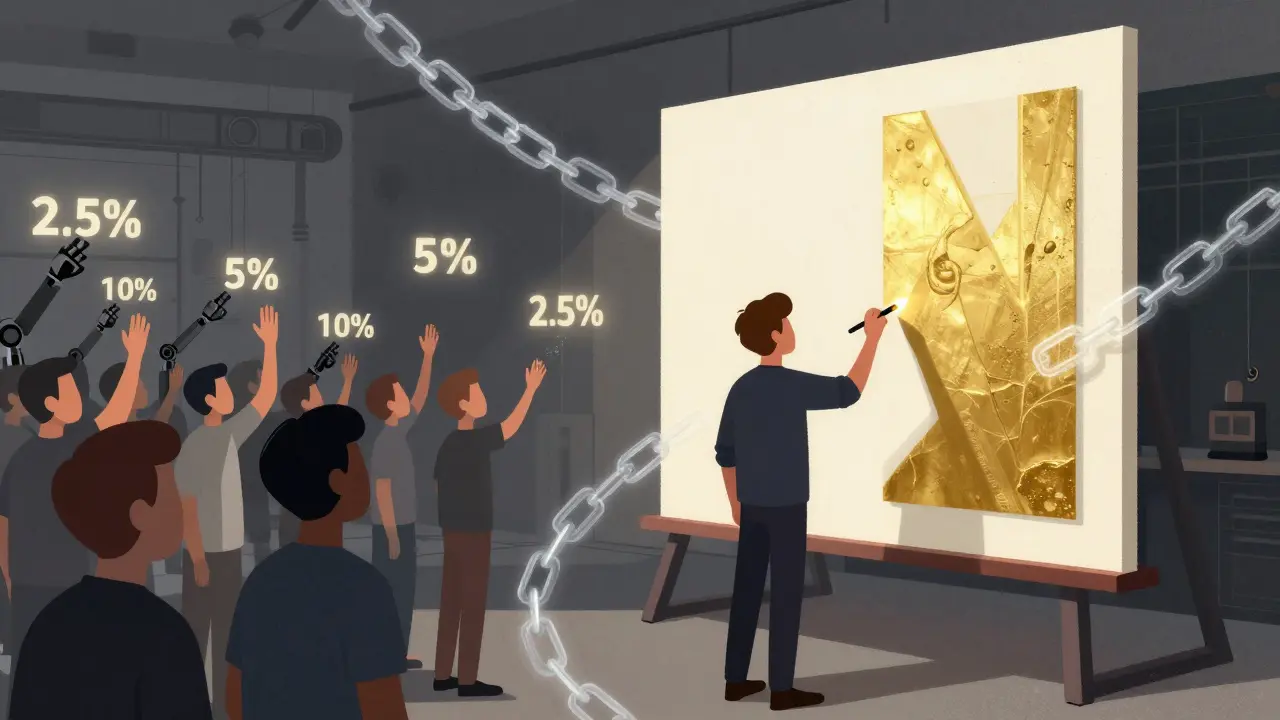
OpenSea charges 2.5% on every sale. The original creator usually gets 5-10% royalty on resale. That’s built into the smart contract. You can’t change it. If you’re selling someone else’s NFT, you’re paying both fees.
When someone buys, the money goes to your wallet. You’ll pay gas again to confirm the transfer. That’s how the blockchain works - every action costs a little.
Costs You Can’t Ignore
People forget the hidden costs. Here’s what you’ll pay:
- Gas fees - $0.10 to $50+, depending on the blockchain and network traffic.
- Marketplace fees - 2.5% on OpenSea, up to 10% on others.
- Creator royalties - 5-10% on resale, paid to the original artist.
- Minting fees - $10-$100 if you’re creating your own NFT on a platform that doesn’t use lazy minting.
Example: You buy an NFT for $200 on Ethereum. Gas fee: $25. You sell it later for $300. OpenSea takes $7.50. The artist gets $20 royalty. Gas to sell: $30. Your net profit? $217.50. That’s not bad - but you’re paying $57.50 in fees alone. That’s nearly 20% of your sale. You need to buy low and sell high to make this work.
Red Flags and Scams
Scams are everywhere. Here’s how to avoid them:
- Never click links from DMs, Twitter, or Discord. Fake websites look real. Always go to OpenSea.com directly.
- Check contract addresses. If you’re buying from a new collection, verify the contract on Etherscan. If it’s not verified, walk away.
- Don’t connect your wallet to unknown sites. Scammers use fake “claim your free NFT” pages to steal your private keys.
- Ignore FOMO. If someone says “This drops in 5 minutes - BUY NOW!” - it’s probably a pump-and-dump. Do your research.
Real NFT projects have communities. They have Discord servers, Twitter threads, and regular updates. If the team is anonymous or the project has no roadmap, it’s risky.
What You Own - And What You Don’t
Buying an NFT doesn’t mean you own the copyright. You own the token. The artist still owns the image. You can’t print it on T-shirts and sell them unless the creator says you can. Some NFTs come with commercial rights - but you have to read the terms. Most don’t.
This matters. A lot of people think they’re buying the art. They’re not. They’re buying proof they own the original digital version. It’s like owning a signed print of a Picasso - you don’t own the painting, just the certificate.
What’s Changed in 2025
The NFT market isn’t what it was in 2021. Trading volume is down over 90%. But the survivors are stronger. Brands like Nike and Adidas still launch NFTs. Game companies use them for in-game items. Artists use them to sell directly to fans without galleries.
Platforms now have better tools. Lazy minting is standard. Layer 2 chains like Polygon cut fees. Some marketplaces even let you buy NFTs with credit cards - no crypto needed. That’s helping new users get in without the learning curve.
Regulations are coming. The EU’s MiCA law and U.S. proposals are starting to define what NFTs are legally. That could mean more protection for buyers - or more red tape. Either way, the wild west is over.
Is It Worth It?
Only if you’re in it for the long term. Don’t buy NFTs hoping to flip them for profit. Most will never increase in value. But if you love digital art, support creators, or want to be part of a community - then yes. It’s worth it.
Start small. Buy one NFT you like for under $50. Learn how to connect your wallet, how gas fees work, how to list something. Don’t rush. Wait for the right moment. And never risk more than you can afford to lose.
Can I buy NFTs without cryptocurrency?
Some marketplaces like OpenSea now allow you to buy NFTs with a credit card through third-party services like Stripe or MoonPay. But you still need a wallet to receive the NFT. You can’t hold NFTs in a regular bank account. So while you can skip buying crypto directly, you still need a wallet and some crypto knowledge to use it.
Which blockchain is best for NFTs in 2025?
For beginners, Polygon is the best choice. It’s fast, cheap, and supported by OpenSea. Ethereum is still the most secure and widely accepted, but gas fees are high. Solana is fast and low-cost, but less supported on major marketplaces. Avoid obscure chains - they’re risky and hard to sell on later.
How do I know if an NFT is legitimate?
Look for a verified creator badge on the marketplace. Check the project’s official website and social media. Join their Discord and see if the team responds. Search the NFT’s contract address on Etherscan or Polygonscan. If it’s unverified or has zero transactions, walk away. If the project has no whitepaper or roadmap, it’s likely a scam.
What happens if I lose my wallet password?
If you lose your password and don’t have your 12-word recovery phrase, you lose your NFTs forever. There is no customer support to recover them. That’s how blockchain works - it’s decentralized. No company owns it. That’s why writing down your recovery phrase and storing it securely is the most important step in the whole process.
Do I pay taxes on NFT sales?
Yes. In the U.S., the IRS treats NFTs as property. If you sell an NFT for more than you paid, you owe capital gains tax. If you trade one NFT for another, that’s also a taxable event. Keep records of every purchase and sale. Use crypto tax tools like Koinly or TokenTax to track your activity. Ignoring taxes can lead to penalties.
Comments
Cristal Consulting
Just bought my first NFT last week on Polygon - $35 for a digital sketch of a cat wearing a tiny hat. Didn’t flip it. Just love it. That’s the whole point. No stress, no FOMO. Just art you own.
Thanks for the clear guide - saved me from a sketchy Discord link that looked too good to be true.
December 4, 2025 at 15:59
Shane Budge
Wait - so if I buy an NFT on OpenSea with a credit card, does it still go into my wallet? Or is it held by the platform?
December 5, 2025 at 14:28
sonia sifflet
You people are clueless. NFTs are a scam engineered by Wall Street to drain millennials’ savings. Even Polygon fees are predatory. In India, we know real value - land, gold, education. This digital trash? Pathetic.
And don’t even get me started on royalties - you’re paying the artist twice. Once to buy, again when it sells. That’s not ownership. That’s rent.
December 6, 2025 at 18:53
Chris Mitchell
What’s interesting isn’t the tech - it’s the shift in mindset. We used to buy things to own them. Now we buy tokens to belong to a community.
That’s why the real value isn’t in the image. It’s in the Discord server, the AMA threads, the inside jokes. The NFT is just the key to the club.
And yeah - most will crash. But the ones that stick? They become cultural artifacts. Like vinyl records in the 90s.
December 7, 2025 at 06:15
Regina Jestrow
I cried when I sold my first NFT. Not because I made money - I didn’t. I lost $12 after fees.
But I met three artists through the project. One of them DM’d me a custom doodle of my dog. That’s worth more than any resale.
Stop treating this like a stock market. It’s a love letter to digital creativity.
December 7, 2025 at 16:30
Lore Vanvliet
USA is so naive. You think NFTs are art? HA. In Russia, we use blockchain for voting. In China, they track supply chains. Here? You pay $40 in gas to own a JPEG of a monkey with sunglasses.
And you call that progress? I’m embarrassed for you.
Also - your ‘verified creators’? Half of them are bots. I’ve seen the same 3 wallets mint 500 collections. Wake up.
😭
December 8, 2025 at 21:23
Scott Sơn
Yo. I turned $80 into $8,000 in 3 weeks. Not bragging - just saying. Bought a glitchy pixel frog on Blur. Sold it to a Japanese collector who said it reminded him of his grandma’s kitchen tiles.
That’s the magic. Not the blockchain. Not the fees. The story.
Now I’m minting my own: a floating taco with a crown. Title: ‘The Last Taco on Earth.’
Drop your wallet. I’ll send you the link. No gas fee. Promise. (I’m lying. But it’s worth it.)
December 9, 2025 at 03:07
Brooke Schmalbach
Let’s be real - 98% of NFTs are worthless. The only people making money are the ones who bought in 2021 and held. Everyone else? They’re paying gas fees to fund someone else’s yacht.
And don’t get me started on royalties. That’s just a backdoor tax. The artist gets paid every time it changes hands? So if I resell it 10 times, they get 10% of each sale? That’s not fair. That’s extortion.
And yes, I’ve lost $2,000. I’m not mad. Just… disappointed in the entire ecosystem.
December 10, 2025 at 07:33
michael cuevas
Wow. A 10-page essay on how to not lose money on JPEGs.
Meanwhile, my dog just ate my wallet recovery phrase.
Guess I’m going back to buying vinyl.
At least when my cat pees on it, I can blame the cat.
Not the blockchain.
Also - gas fees are a joke. I’d rather pay $50 to see a live concert than $50 to own a pixelated banana.
December 11, 2025 at 13:13
Nina Meretoile
Hey - I’m from Paris. I’ve been collecting NFTs since 2022. In Europe, we don’t treat them like investments. We treat them like poetry.
One of my NFTs? It’s a generative poem that changes every time you view it. No resale value. But it makes me feel less alone at 3 a.m.
That’s the real win. Not profit. Presence.
Also - yes, taxes. I filed mine. Used Koinly. It’s messy. But worth it.
And yes, I cried when I lost my wallet once. I still do.
But I keep going. Because art shouldn’t be owned. It should be felt.
✨
December 11, 2025 at 20:02