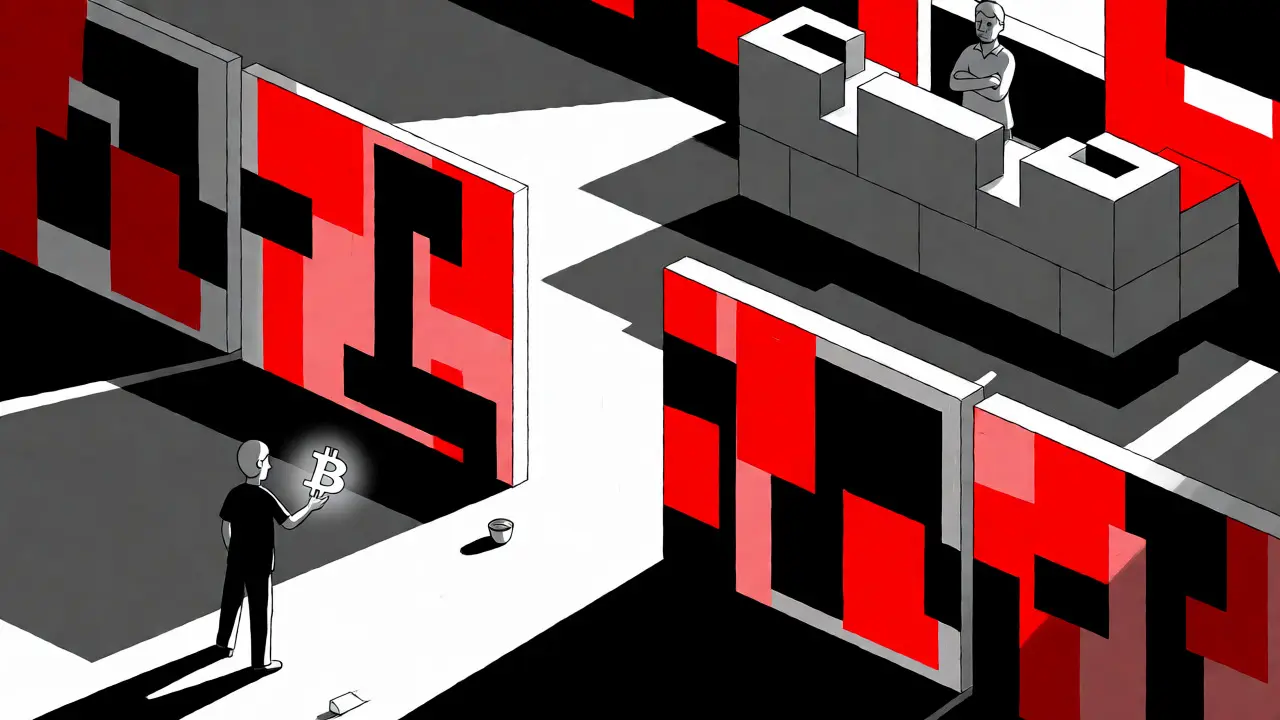
Imagine trying to buy a coffee with Bitcoin in Moscow today. You’d likely face more trouble than the barista’s refusal-it could trigger an account freeze. While Russia hasn’t banned owning cryptocurrency outright, it has built a legal maze designed to keep regular citizens away from using it for daily transactions. The rules changed significantly in 2025, creating a sharp divide between what companies can do and what you, as an individual, can get away with. If you’re holding assets or planning to trade, understanding these boundaries is the only way to keep your money safe from sudden freezes and hefty fines.
| Regulation Area | Restriction Detail | Impact on Users |
|---|---|---|
| Retail Payments | Banned under Digital Financial Assets Law | Cannot pay for goods/services directly with BTC/ETH |
| P2P Trading | High scrutiny; 48-hour freeze triggers | Bank accounts risk freezing during large transfers |
| Mining | Fines up to 200,000 RUB for illegal ops | Home mining requires registration and tax compliance |
| Cross-Border | Allowed via Experimental Legal Regime (ELR) | Only for qualified investors/companies, not retail |
The Ban on Paying with Crypto
Let’s clear up a common misconception first. Owning Bitcoin in Russia isn’t illegal. Buying it? Also fine, technically. But spending it? That’s where you hit the wall. Under the Digital Financial Assets Law, which came into full force recently, cryptocurrency cannot be used as a means of payment for goods and services within the country. This means if you try to buy groceries with USDT, the transaction isn’t just frowned upon; it’s legally void. The government wants the Russian Ruble to remain the sole medium of exchange to maintain control over monetary policy and inflation.
Why does this matter to you? Because many people confuse "holding" with "using." You can hold Bitcoin as a digital asset, similar to how you might hold gold bars in a safe. But the moment you try to transfer that value to another person for a service, you enter a gray zone that banks monitor closely. The Central Bank of Russia (CBR) is particularly aggressive here, viewing any attempt to bypass the ruble for domestic payments as a threat to financial stability.
Navigating the P2P Minefield
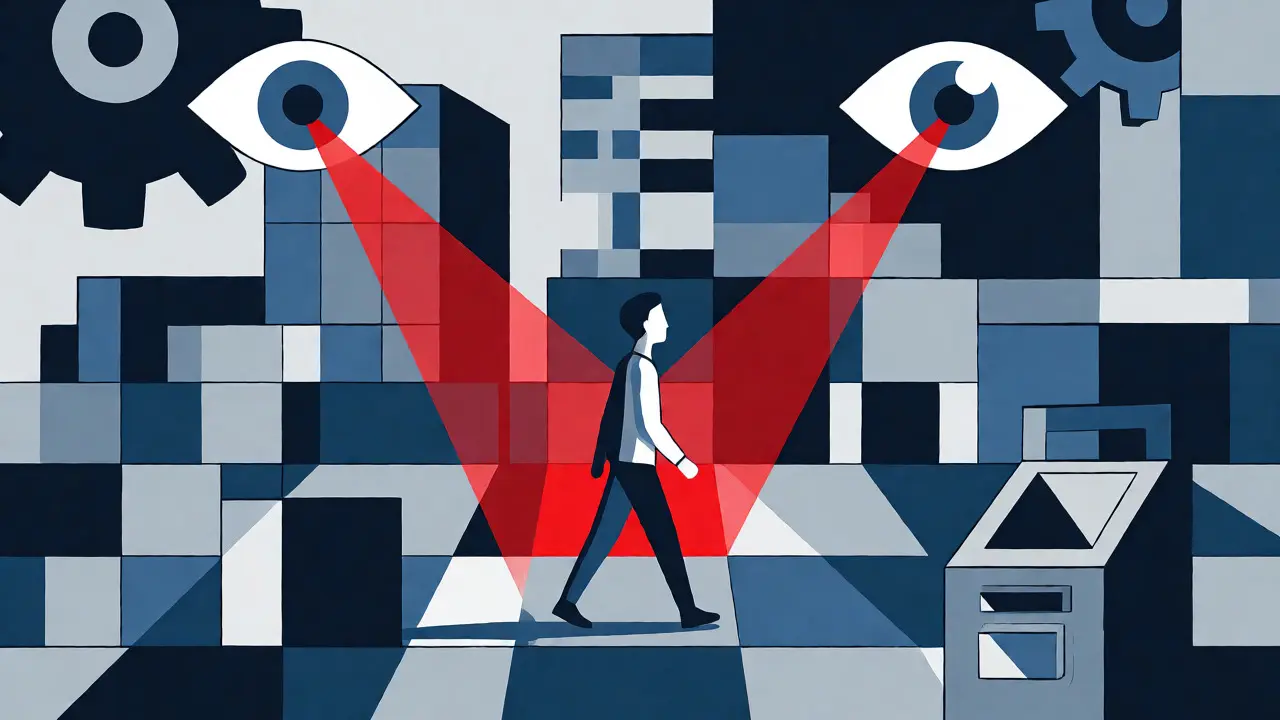
If you can’t use centralized exchanges easily due to sanctions and local bans, Peer-to-Peer (P2P) trading becomes your primary option. But don’t let the term "peer-to-peer" fool you into thinking it’s private. It’s actually one of the most monitored activities by Russian banks right now. In September 2025, new banking protocols kicked in, forcing institutions to flag suspicious ATM withdrawals and bank transfers immediately.
Here is what triggers those red flags:
- Unusual Timing: Withdrawing cash at 3 AM when you usually shop at noon.
- Volume Spikes: Transfers exceeding ₽200,000 via the Faster Payments System without prior history.
- QR Code Usage: Using QR codes for payments instead of standard card swipes, often linked to crypto platforms.
- Sudden Activity: A spike in phone calls or app logins right before a large withdrawal.
If the bank’s algorithm spots these patterns, they have the right to freeze your account for up to 48 hours while they investigate. For a trader moving significant capital, a two-day freeze can mean missing out on market opportunities or, worse, having funds locked indefinitely pending manual review. To avoid this, keep your transaction volumes consistent with your typical spending habits. If you need to move large sums, consider splitting them across multiple days or different accounts, though even this tactic is getting harder to hide as AI monitoring improves.
The Qualified Investor Loophole
Is there a legal way to trade freely? Yes, but it comes with a high price tag: status. Russia introduced an Experimental Legal Regime (ELR) that allows specific entities to use cryptocurrencies for cross-border settlements. However, access to this regime is restricted to "qualified investors." What does that mean for you?
To qualify, you generally need to meet strict criteria set by the CBR, such as holding securities worth over 6 million rubles or having a net income exceeding 6 million rubles annually. Ordinary citizens rarely meet these thresholds. Consequently, the ELR is mostly utilized by corporations navigating international sanctions rather than individuals wanting to trade altcoins. If you aren’t a qualified investor, you are effectively barred from using the official channels for crypto-based international transfers. This forces most retail traders back into the informal P2P sector, accepting higher risks for greater flexibility.
Mining: The Only Clearly Regulated Path
While trading remains murky, mining has received clearer guidelines. The government acknowledges mining as a legitimate economic activity, provided you register your operations. Unregistered home miners face fines up to 200,000 rubles. More importantly, registered miners must pay taxes on their earnings, treating them similarly to other business incomes.
This clarity creates a paradox. You can legally mine Bitcoin, sell it abroad through corporate structures, and bring the profits back as fiat currency. But you cannot simply mine Bitcoin and use it to buy a car domestically. The infrastructure supports production but restricts consumption. If you run a small mining rig at home, ensure you are registered with the Federal Tax Service. Ignoring this step turns a hobby into a liability, especially as energy costs rise and authorities crack down on unlicensed power usage.
The Shadow of the Digital Ruble
Looking ahead to 2026, the landscape shifts again with the launch of the Digital Ruble. Unlike decentralized cryptocurrencies, the digital ruble is a Central Bank Digital Currency (CBDC). It offers speed and convenience but comes with total state visibility. Every transaction is traceable by the government, eliminating anonymity.
For crypto enthusiasts, the digital ruble poses a competitive threat. The government aims to make the digital ruble so convenient for domestic payments that users won’t feel the need to seek out stablecoins like USDT or USDC. Additionally, the digital ruble may introduce programmable features, allowing the state to restrict how funds are spent-something traditional crypto doesn’t allow. As adoption grows, expect further pressure on private crypto wallets, as the state prefers all digital money flows to pass through its controlled rails.
Practical Steps to Stay Compliant
So, how do you survive this regulatory environment without losing your assets? Here is a practical checklist based on current enforcement trends:
- Avoid Domestic Payments: Never try to pay for local goods or services directly with crypto. Convert to rubles first.
- Monitor Bank Triggers: Keep an eye on your bank’s notification settings. If they flag a transaction, respond immediately with proof of origin.
- Use Foreign Exchanges Carefully: Since local exchanges are scarce, rely on reputable foreign platforms. Be aware that withdrawing fiat to Russian cards can be tricky due to sanctions.
- Document Everything: Keep records of every P2P trade. If your account is frozen, you’ll need to prove the source of funds quickly.
- Consider Corporate Structures: If you trade heavily, registering as an individual entrepreneur or LLC might offer better protection and tax clarity than operating purely as an individual.
The situation in Russia isn’t static. Laws evolve rapidly, often reacting to geopolitical pressures rather than long-term economic strategy. Staying compliant means staying informed. Regularly check updates from the Central Bank of Russia and major legal firms specializing in fintech. The goal isn’t just to avoid fines, but to ensure your liquidity isn’t trapped in a frozen account when you need it most.
Can I still buy Bitcoin in Russia in 2026?
Yes, buying Bitcoin is not explicitly prohibited for individuals. However, purchasing it through local centralized exchanges is difficult due to lack of licensing. Most Russians use foreign platforms or P2P markets. While ownership is legal, using it for domestic payments is banned.
What happens if my bank freezes my account for crypto trades?
Banks typically freeze accounts for 48 hours initially if algorithms detect suspicious activity related to crypto. You will need to provide documentation proving the legitimacy of the transactions, such as screenshots of P2P chats or exchange statements. If unresolved, the freeze can extend longer, requiring formal communication with the bank's compliance department.
Are there penalties for illegal mining in Russia?
Yes, unregistered mining operations can result in fines up to 200,000 rubles. Authorities also scrutinize electricity usage. Registered miners must pay taxes on their income, treating mining rewards as taxable profit. Failure to register converts a potentially profitable activity into a legal risk.
Does the Digital Ruble replace cryptocurrency?
The Digital Ruble is a Central Bank Digital Currency (CBDC), not a replacement for decentralized crypto like Bitcoin. It offers state-controlled digital payments. While it competes with stablecoins for convenience, it lacks the decentralization and borderless nature of traditional cryptocurrencies. Its rollout aims to centralize transaction data and reduce reliance on foreign payment systems.
Can I use crypto for international transfers?
Individuals face significant hurdles. The Experimental Legal Regime (ELR) allows crypto for cross-border settlements, but primarily for qualified investors and corporations. Retail users often resort to P2P swaps or third-party services, which carry higher fees and regulatory uncertainty compared to traditional bank wires, which themselves are restricted by sanctions.