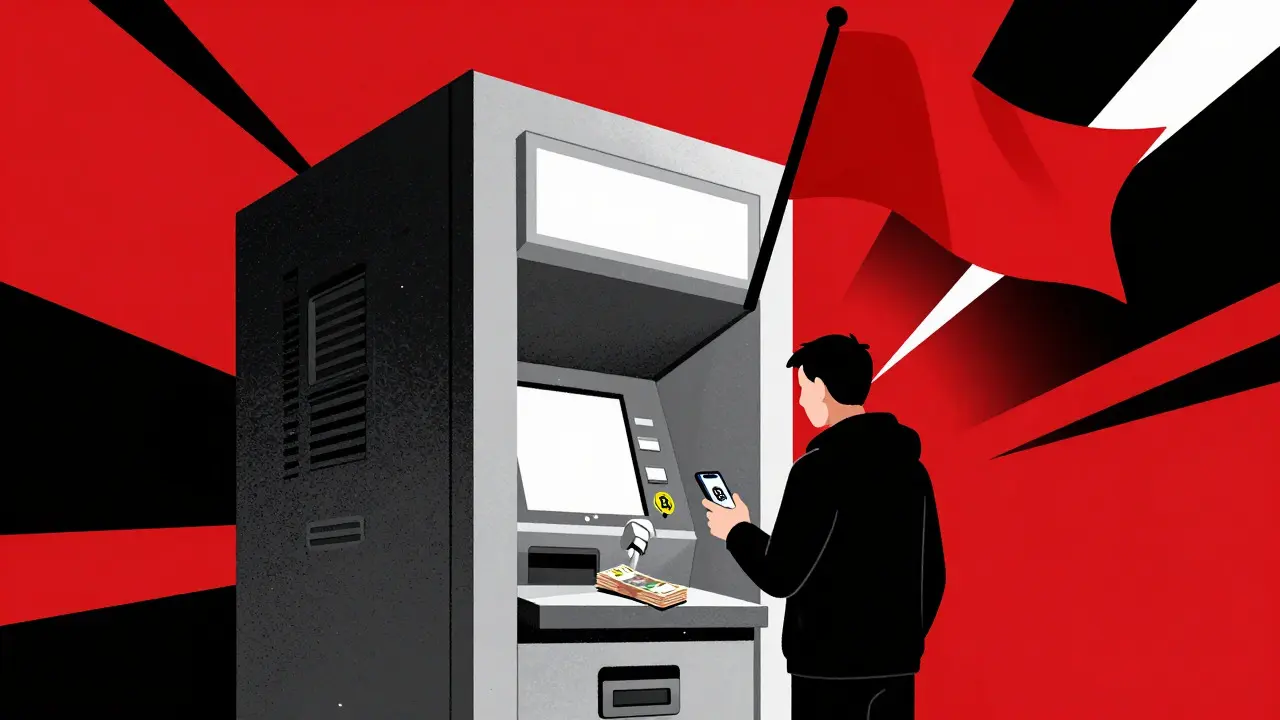
Imagine you just sold some Bitcoin on a peer-to-peer platform. The rubles hit your account. You head to the ATM or open your banking app to transfer them to your savings. Suddenly, your daily limit drops to 50,000 rubles. Your card is flagged. And now, you need to prove where that money came from.
This isn’t a glitch. It’s the new reality for cryptocurrency users in Russia as we move through 2026. Following the strict regulatory changes implemented by the Central Bank of Russia (CBR) starting September 1, 2025, withdrawing crypto earnings into fiat currency has become a minefield. Banks are no longer just passive observers; they are actively monitoring every transaction for signs of 'suspicious' crypto activity.
If you are holding crypto and live in Russia, understanding how these algorithms work is the difference between keeping your money accessible and getting your account frozen for days-or even weeks. Here is exactly what happens behind the scenes when you convert crypto to rubles, and how banks react.
The New Rules: What Triggered This Crackdown?
To understand why your bank might block you, you have to look at the legislation driving these actions. Federal Law No. 3-1092818-2025 gave Russian banks the authority to impose immediate limits on accounts flagged for suspicious behavior. The goal? To curb unregulated cryptocurrency circulation and combat fraud.
The data backing this up is stark. In the second quarter of 2025 alone, the CBR reported over 273,000 scams totaling 6.3 billion rubles linked to crypto conversions. Finance Minister Anton Siluanov noted that crypto accounts were facilitating roughly 37% of all cross-border currency withdrawals. With sanctions isolating traditional banking channels, the state wants to control who moves money out of the country and how.
Key Takeaway: If your transaction looks like it fits the profile of a scam victim or a money launderer, the system reacts automatically. Human intervention comes later.
12 Red Flags That Will Get Your Account Flagged
Banks don't guess. They follow a specific directive (CBR Directive No. 74-P) issued in August 2025. This document lists 12 specific characteristics that trigger automated alerts. If your withdrawal hits even one of these, your account enters 'enhanced verification' mode.
Here are the most common triggers that affect everyday users:
- Unusual Timing: Withdrawing cash between 11:00 PM and 5:00 AM local time. Algorithms assume legitimate business transactions happen during the day.
- Weird Amounts: Transactions not divisible by 1,000 rubles. For example, withdrawing 43,500 rubles looks suspicious compared to round numbers like 50,000.
- Location Mismatch: Using an ATM more than 50 kilometers away from your registered address. If you live in Moscow but withdraw cash in Sochi without a clear travel history, it raises a flag.
- Device Anomalies: Banking apps check your phone. If there are signs of malware or if you received three or more messages from unknown numbers within six hours before the withdrawal, the system assumes you might be under duress or part of a scam ring.
- Rapid Movement of Funds: Withdrawing cash within 24 hours of receiving a large transfer (over 200,000 rubles) via the Faster Payments System. This looks like 'smurfing'-breaking up large sums to avoid detection.
- P2P Platform Links: Transfers originating from known peer-to-peer exchanges like Paxful or LocalBitcoins exceeding 100,000 rubles are automatically high-risk.
When any of these occur, the bank must notify you via SMS within 15 minutes. Then, they slap a hard cap on your daily withdrawals: 50,000 rubles for 48 hours.
What Happens When You Get Flagged?
Let’s walk through the typical scenario. You sell $1,000 worth of USDT on a P2P platform. The buyer sends 90,000 rubles to your Sberbank or Tinkoff account. You try to withdraw it.
- The Freeze: The moment you attempt the transaction, the algorithm checks against the 12 red flags. Let’s say it’s 2 AM (unusual time) and the amount is 90,000 (not divisible by 1,000). Boom. Limit applied.
- The Notification: You get an SMS saying your daily limit is temporarily reduced. You can only take out 50,000 rubles today and tomorrow.
- The Verification: To lift the ban, you often have to visit a branch. Be prepared to show proof of income. This is where it gets tricky. Banks increasingly demand notarized transaction histories from exchanges. If you used a decentralized exchange (DEX), good luck proving the source legally.
- The Delay: According to user reports from late 2025, average resolution times for these flags are 3.2 business days. During this time, your funds are stuck.
User experiences on forums like BitBoom confirm this friction. One trader reported having their account frozen for 72 hours after a simple Paxful trade, requiring an in-person visit with printed screenshots of wallet balances.

Bank-Specific Reactions: Who Is Harshest?
Not all banks react the same way, though they all follow the same federal law. However, their internal risk appetites differ significantly.
| Bank | Reaction Speed | Documentation Required | User Sentiment |
|---|---|---|---|
| Sberbank | Very Fast (Automated) | High (Notarized histories often demanded) | Negative (Strict compliance teams) |
| Tinkoff Bank | Fast | Medium (App-based verification first) | Mixed (Better UX, but frequent blocks) |
| VTB | Moderate | High (Focus on corporate/large amounts) | Negative (Long wait times for support) |
| Alfa-Bank | Variable | Low-Medium (Case-by-case) | Neutral (More flexible for premium clients) |
Sberbank, being the largest, has expanded its crypto monitoring team by over 300%. They hire specialized analysts to review flagged transactions. This means their decisions are less likely to be reversed quickly. Tinkoff, while digital-first, still relies heavily on algorithmic flags, leading to a drop in customer satisfaction ratings specifically regarding crypto services.
How Users Are Adapting (And the Risks Involved)
Faced with these restrictions, crypto traders in Russia have developed strategies to keep their money moving. However, each workaround carries its own risks.
1. The "Natural" History Strategy
Legal experts recommend using cards that have a consistent, 'natural' spending history. If your card usually buys groceries and pays for utilities, suddenly receiving 500,000 rubles stands out. If you build up a history of regular, smaller transactions over three months, the algorithm is less likely to flag sudden spikes. Transactions with verified, long-term contacts also face a 73% lower restriction rate.
2. Multi-Account Staggering
Many active traders now use an average of 3.7 bank accounts. They split incoming crypto sales across different banks to stay below individual thresholds. But beware: anti-money laundering (AML) algorithms now monitor cross-institutional patterns. If you move money between your own accounts too frequently, you might trigger a broader freeze.
3. Avoiding Round Numbers and Night Hours
Simple behavioral changes help. Withdraw during business hours (9 AM - 6 PM). Try to make amounts divisible by 1,000. Use ATMs near your registered address. These small tweaks reduce the likelihood of hitting the automated 'red flags.'
4. The Underground Market Risk
With legal channels becoming difficult, some users turn to informal exchangers or criminal intermediaries who promise to bypass limits. These operators charge premiums of 7-12%. The danger? High. If you deal with an unlicensed intermediary, you lose consumer protection entirely. If the intermediary is caught, your funds may be seized.
The Bigger Picture: Dual-Track Regulation
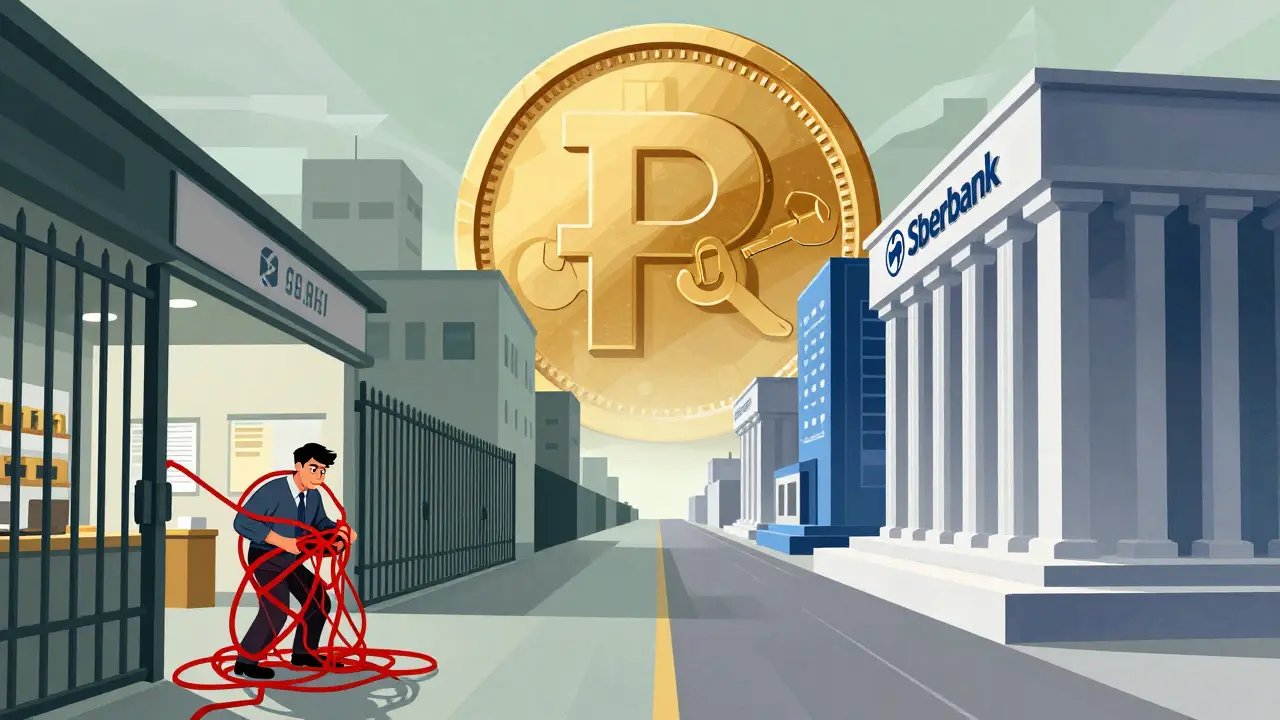
It feels contradictory, doesn’t it? On one hand, retail users are being squeezed. On the other, the government is pushing for institutional crypto adoption. Why?
Russia is pursuing a dual-track strategy. For individuals, the goal is to suppress unregulated circulation to prevent capital flight and fraud. For institutions, the goal is to create controlled channels for international trade under sanctions.
In late 2025, the CBR announced that domestic banks could engage in crypto operations, provided they keep exposure capped at 1% of their regulatory capital and maintain 150% reserve ratios. This means big banks like VTB or Sberbank might soon offer official crypto custody for large corporations, while you, the retail trader, struggle to withdraw your weekend profits.
Furthermore, the introduction of the Digital Ruble, scheduled for phased rollout in late 2026, aims to replace much of this shadow economy. The central bank wants to track every ruble digitally, making opaque crypto conversions obsolete.
What to Expect in Late 2026
If you think things are tight now, brace yourself. Legislation progressing through the Duma suggests harsher penalties for repeated violations. We are looking at potential criminal charges for 'organized cryptocurrency conversion schemes,' with prison sentences up to five years.
Additionally, by December 2025, banks were expected to verify sources for any withdrawal over 100,000 rubles. By mid-2026, this threshold could drop further. The IMF has warned that this fragmented regulation creates systemic vulnerabilities, but the CBR remains firm on its crackdown.
For the average user, the message is clear: treat your crypto-to-fiat conversions with extreme caution. Keep records. Stay within normal behavioral patterns. And remember, in the eyes of the Russian banking system, crypto money is 'dirty' until proven otherwise.
What is the daily withdrawal limit if my bank flags a crypto transaction?
If your transaction is flagged as suspicious under the 2025 regulations, your daily cash withdrawal limit is immediately reduced to 50,000 rubles for a period of 48 hours. This applies to both ATM withdrawals and certain electronic transfers.
Which banks are strictest about crypto withdrawals in Russia?
Sberbank and VTB are generally considered the strictest due to their massive compliance teams and automated monitoring systems. Sberbank, in particular, has hired hundreds of specialized analysts to review flagged crypto-related transactions, leading to longer resolution times.
Can I avoid getting flagged by changing my withdrawal habits?
Yes, to some extent. Avoid withdrawing cash between 11 PM and 5 AM. Ensure your withdrawal amounts are divisible by 1,000 rubles. Use ATMs close to your registered address. Building a consistent history of regular, non-crypto spending on your card also helps reduce suspicion.
Do I need to provide proof of crypto income to my bank?
Increasingly, yes. Many banks now require notarized transaction histories from exchanges or detailed explanations of the source of funds for withdrawals exceeding 100,000 rubles. This is particularly difficult for users of decentralized platforms that do not maintain centralized records.
Are there criminal penalties for violating crypto withdrawal rules?
Legislation introduced in late 2025 and continuing into 2026 proposes criminal penalties for repeated violations. 'Organized cryptocurrency conversion schemes' could lead to imprisonment of up to 5 years, with aggravated circumstances potentially resulting in up to 10 years.
Will banks eventually allow crypto transactions again?
The strategy is dual-track. While retail access remains restricted, the Central Bank of Russia is allowing institutional banks to handle crypto for foreign trade, capped at 1% of their regulatory capital. Retail users may see limited, highly regulated options in the future, but widespread ease of use is unlikely in the short term.