Crypto Savings Calculator
Why This Matters
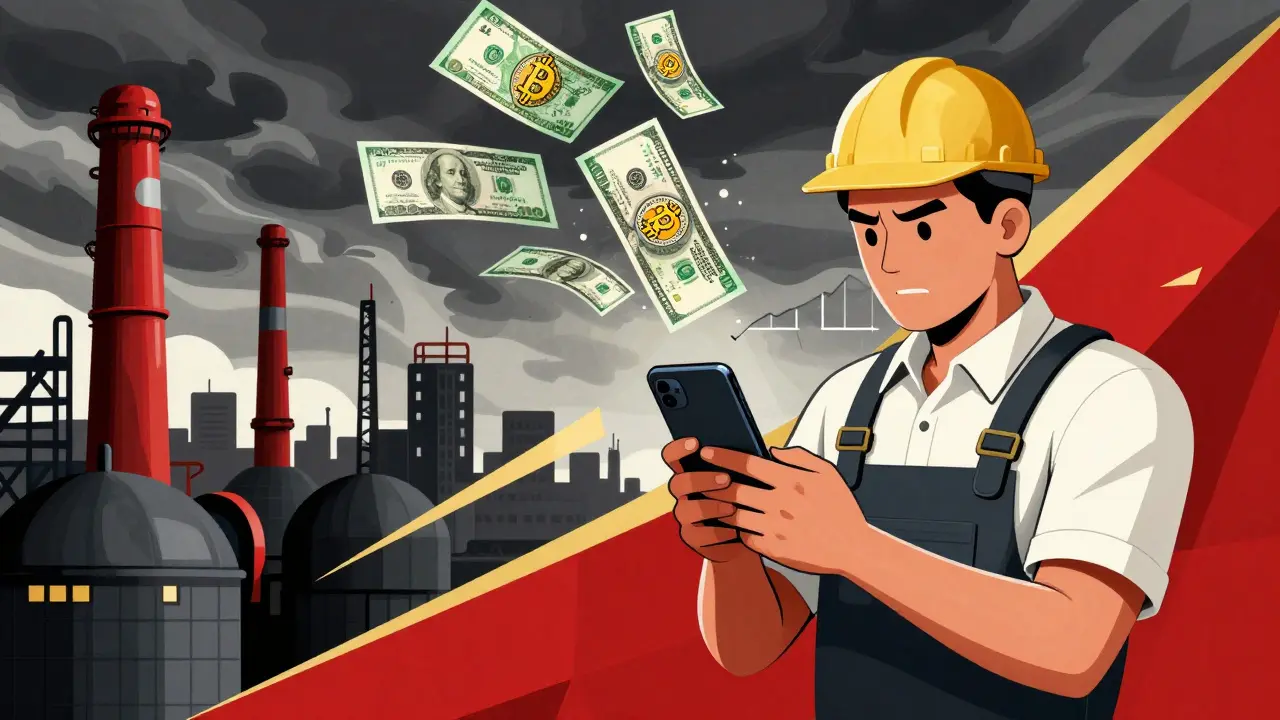
Pakistan's rupee has lost over 60% of its value since 2020 while inflation hit 38% in 2024. Traditional banking has 12% wire transfer fees. This calculator shows how crypto (especially USDT) helps protect your savings from these realities.
Your Potential Savings
Pakistan doesn’t have legal crypto exchanges. Banks won’t touch it. The central bank banned financial institutions from dealing with virtual assets back in 2018. And yet, in 2025, Pakistanis traded over $300 billion in cryptocurrency last year. That’s more than Japan, more than Germany, more than most countries with full regulatory frameworks. How? It’s not magic. It’s necessity.
Why Pakistanis Trade Crypto When It’s Not Legal
The Pakistani rupee has lost more than 60% of its value against the US dollar since 2020. Inflation hit 38% in 2024. Savings evaporate. Salaries don’t keep up. People aren’t trading crypto because it’s trendy-they’re trading because they have no other way to protect their money.
Bitcoin and USDT (Tether) became the new savings accounts. Not because they’re safe-crypto is volatile-but because they’re portable, divisible, and outside the reach of a collapsing currency. A factory worker in Faisalabad can buy $100 worth of Bitcoin with Easypaisa and hold it overnight while the rupee drops 2%. A freelancer in Lahore gets paid in USDT from a client in California, avoids 12% bank fees on wire transfers, and cashes out through a local P2P trader.
This isn’t speculation. It’s survival.
The $300 Billion Number: What It Really Means
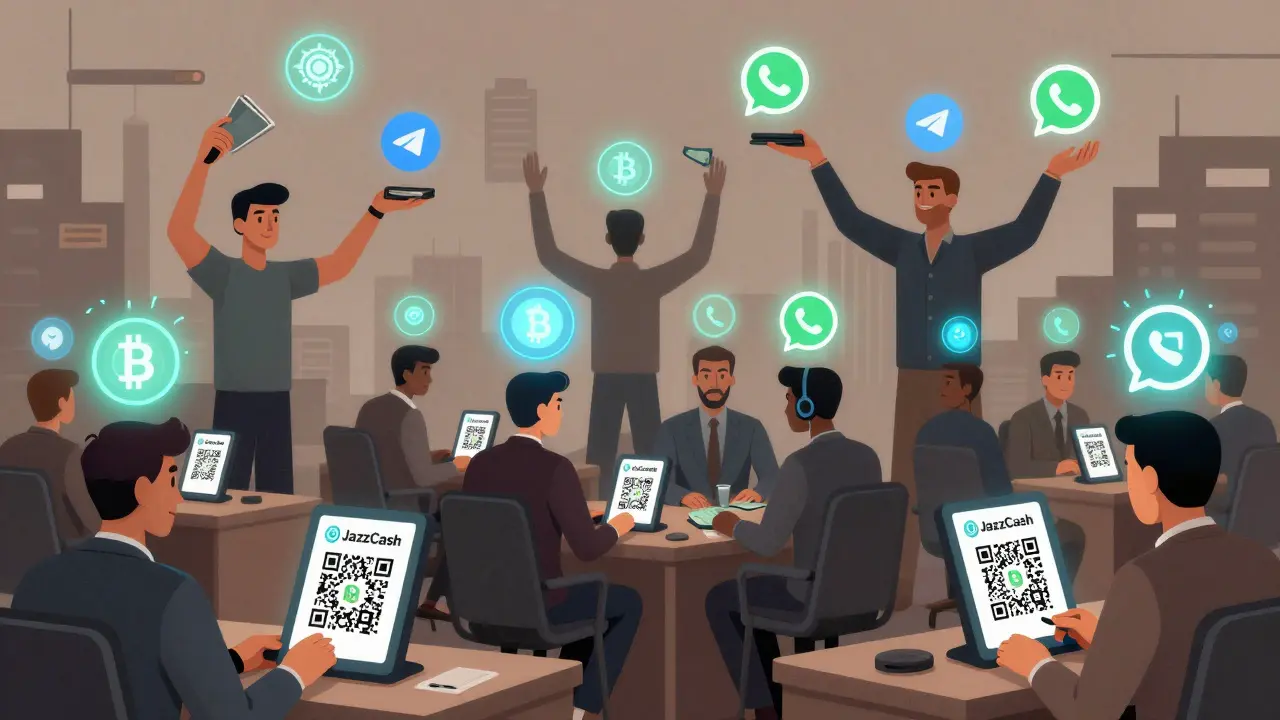
That $300 billion figure sounds absurd. It’s more than the entire annual GDP of Pakistan’s formal financial sector. But here’s the catch: most of it isn’t on exchanges like Binance or Coinbase. It’s happening in the shadows-on peer-to-peer platforms, WhatsApp groups, and mobile money apps.
Think of it like this: one person buys $500 in Bitcoin from another person using JazzCash. That’s $500 in trading volume. They sell it two weeks later for $550. Another $550. That’s $1,050 in volume from one trade. Multiply that by millions of transactions every day, and the number grows fast. CoinLaw estimates 18.2 million verified users, but independent surveys suggest over 40 million Pakistanis have touched crypto in some form-many doing small, frequent trades just to hedge daily expenses.
It’s not just Bitcoin. USDT dominates because it’s pegged to the dollar. Ethereum is growing for DeFi and smart contracts, but 80% of daily volume in Pakistan is BTC and USDT. The rest? Memecoins, mostly bought by teens on TikTok ads.
How People Buy Crypto Without Banks
No bank will process a crypto deposit. So Pakistanis built their own pipeline.
- Use Easypaisa or JazzCash to send rupees to a local P2P seller.
- The seller confirms receipt and releases Bitcoin or USDT from their wallet.
- The buyer stores it in a Trust Wallet or Phantom wallet.
- When they need cash, they find another buyer through a Telegram group or local trader network.
There are now over 200 active P2P trading hubs in Karachi, Lahore, and Islamabad alone. Traders have ratings, dispute systems, and even escrow services run by local tech startups. Some even use QR codes printed on flyers in university cafeterias.
It’s messy. It’s risky. But it works. And it’s growing. In 2025 alone, Pakistan added 5.4 million new crypto users-more than the population of Denmark.
Why Pakistan Ranks Third in Global Crypto Adoption
The 2025 Global Crypto Adoption Index ranked Pakistan third in the world, behind only India and Vietnam. Not because of government support. Not because of infrastructure. But because of raw demand.
The index doesn’t measure regulation. It measures behavior: how many people are using crypto, how often, and how much value moves through their wallets. Pakistan scored high because:
- Over 13 billion visits to crypto platforms came from Pakistani devices in 2024.
- Mobile money penetration is over 80% in urban areas.
- Young people (under 30) make up 65% of users-tech-savvy, frustrated with the system, and willing to learn.
Compare that to the U.S., which ranks fourth. Americans use crypto for investment and speculation. Pakistanis use it to eat.
The Energy Secret: Why Pakistan Is Mining Bitcoin
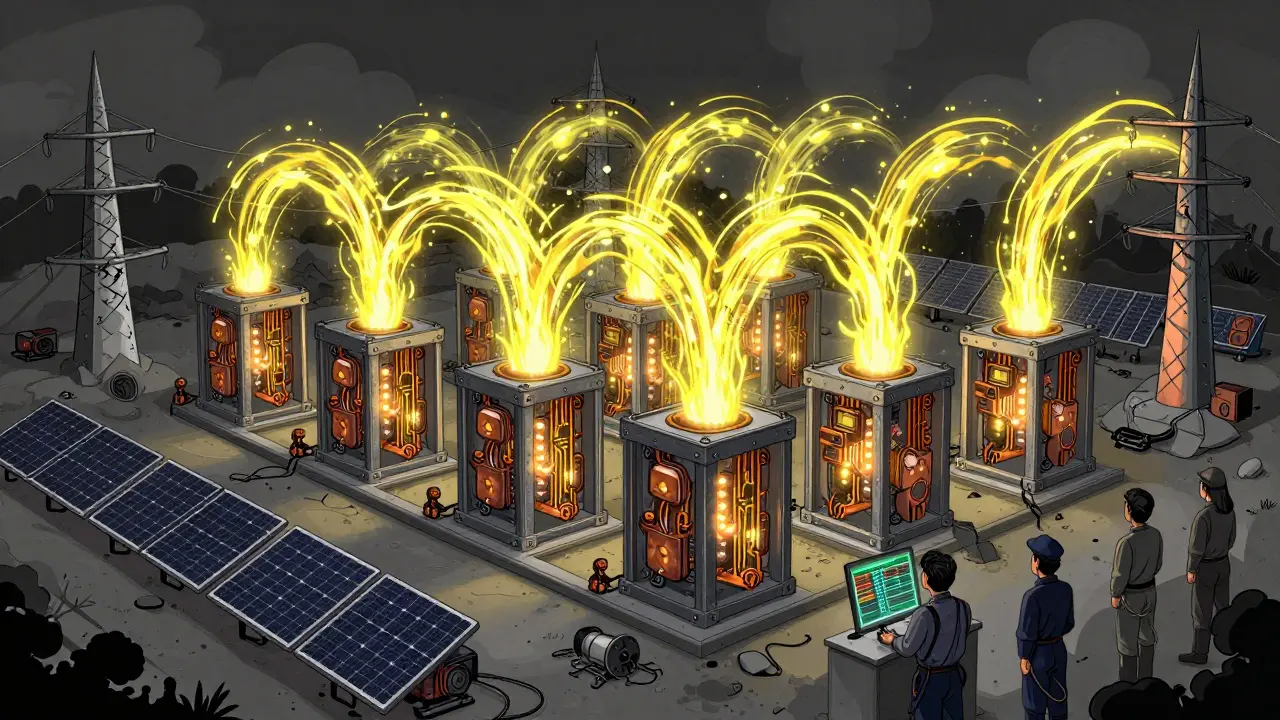
Here’s something most outsiders don’t know: Pakistan is quietly allocating 2,000 megawatts of surplus electricity to Bitcoin mining.
It’s not official policy. There’s no law saying “mining is legal.” But the government isn’t shutting down mining farms. In fact, they’re ignoring them-because those farms use power that would otherwise go to waste. Pakistan has chronic electricity shortages, but also massive underutilized capacity in off-grid areas and during low-demand hours.
Miners run rigs in warehouses in Faisalabad and Gujranwala, powered by diesel generators and solar panels. They pay for electricity in rupees, earn Bitcoin, and convert it to USDT to pay for imports. It’s a self-sustaining loop.
One mining cluster near Multan processes 120 terahashes per second. That’s more than some small countries. And no one’s taxing it.
The Real Threat: Regulation or Crackdown?
The government knows crypto is happening. They’ve seen the numbers. They’ve heard the complaints from banks about money laundering risks. They’ve watched the IMF push for financial transparency.
So what’s next?
There are whispers of a national crypto licensing framework. A virtual asset regulatory authority. Maybe even a state-backed digital currency. But no one knows for sure. The last time regulators met in late 2024, they spent six hours debating whether to classify crypto as a commodity, a currency, or a security.
Meanwhile, traders keep trading. The volume keeps rising. And the government? They’re watching. Waiting. Calculating.
One thing’s certain: if they crack down now, they’ll trigger a mass exodus of capital. If they legalize it, they gain tax revenue, control, and legitimacy. The choice isn’t about banning crypto anymore. It’s about controlling it.
What This Means for the Future
Pakistan’s crypto market isn’t a bubble. It’s a parallel economy. One built out of desperation, ingenuity, and a generation that refuses to accept broken systems.
By 2027, experts predict Pakistan could become the first major economy to fully integrate crypto into its financial backbone-not by decree, but by default. Imagine a future where your salary is paid in USDT. Where remittances from the Gulf arrive instantly. Where your child’s school fees are paid in Bitcoin.
It’s not science fiction. It’s happening in real time.
The $300 billion isn’t just a number. It’s proof that when people are locked out of the system, they’ll build their own. And no ban, no warning, no regulation can stop that.
Is crypto legal in Pakistan in 2025?
No, crypto is not officially legal in Pakistan. The State Bank of Pakistan banned banks from processing crypto transactions in 2018, and no law currently permits exchanges or trading platforms. However, there is no law that makes owning or trading crypto a criminal offense. The government tolerates it because it’s too widespread to shut down-and too economically useful to ignore.
How do Pakistanis buy Bitcoin without a bank account?
Most Pakistanis use peer-to-peer (P2P) platforms like Paxful, LocalBitcoins, or local Telegram and WhatsApp groups. They send Pakistani rupees via Easypaisa or JazzCash to a seller, who then sends Bitcoin or USDT to their wallet. The system relies on trust, ratings, and sometimes escrow services run by local tech groups. No bank involvement is needed.
Why is USDT so popular in Pakistan?
USDT (Tether) is popular because it’s pegged to the U.S. dollar. Since the Pakistani rupee is losing value rapidly, people use USDT to protect their savings from inflation. It’s also easier to convert back to rupees through P2P traders than Bitcoin, because its price doesn’t fluctuate as much. Over 70% of daily crypto trades in Pakistan involve USDT.
Is crypto mining legal in Pakistan?
There is no official law banning or permitting crypto mining. The government has not shut down mining operations, and in 2025, it allocated 2,000 megawatts of surplus electricity to support mining activity. This suggests de facto approval. Miners operate in warehouses and industrial zones, often using cheap or idle power during off-peak hours.
Why is Pakistan ranked third in global crypto adoption?
Pakistan ranks third because of massive user adoption, not regulation. The Global Crypto Adoption Index measures real usage-how many people are trading, how often, and how much value moves through wallets. With over 40 million users, high mobile money penetration, and youth-driven tech adoption, Pakistan leads in grassroots crypto use. It’s not about legality-it’s about necessity.
Could Pakistan create a national cryptocurrency?
Yes, and it’s likely. Discussions are underway about launching a digital rupee or even a state-backed Bitcoin reserve. The government sees crypto’s economic potential and wants to capture tax revenue and control. A national digital currency could replace the informal crypto system-but only if it’s faster, cheaper, and more accessible than USDT and Bitcoin.
Comments
Billye Nipper
This is the most beautiful thing I’ve ever seen… people building their own safety net, brick by brick, with no help from anyone. I cried reading this. Not because it’s sad-but because it’s so brave. These aren’t gamblers. They’re engineers of survival. And they’re doing it with WhatsApp, JazzCash, and sheer grit. I wish my government had half their courage.
December 5, 2025 at 05:31
Roseline Stephen
It’s fascinating how necessity drives innovation faster than any policy ever could. The fact that this system works without banks, without regulation, without even official recognition-it speaks volumes about human adaptability. I’ve studied financial systems for decades, and this is the most organic, decentralized economic response I’ve ever seen.
December 6, 2025 at 05:46
Tara Marshall
USDT dominates because it’s stable. Bitcoin is too volatile for daily hedging. People aren’t investing-they’re preserving. And yes, the $300B includes repeated trades. One person buys $500, sells for $550, buys again at $540, sells at $560-that’s $2,150 in volume from one person’s survival strategy. It’s not speculation. It’s arithmetic.
December 6, 2025 at 22:54
Nelson Issangya
Stop pretending this is ‘ingenuity.’ This is a system built on desperation and exploitation. Miners are burning diesel. Traders are getting scammed daily. People are risking everything because their government failed them. And now you’re romanticizing it? This isn’t a revolution-it’s a collapse with Wi-Fi. If this is progress, I’d hate to see what regression looks like.
December 7, 2025 at 01:03
Mariam Almatrook
One must, with the utmost intellectual rigor, interrogate the underlying epistemological framework underpinning this so-called ‘crypto adoption.’ The data presented, while statistically compelling, is fundamentally unmoored from any legitimate monetary sovereignty. The State Bank of Pakistan’s 2018 edict remains legally binding; the proliferation of informal P2P networks constitutes not innovation, but a pathological evasion of fiduciary responsibility. To celebrate this as ‘resilience’ is to confuse entropy with emancipation.
December 7, 2025 at 09:01
rita linda
Let’s be clear: this isn’t ‘people building their own economy.’ It’s a lawless, unregulated black market fueled by foreign capital and crypto speculation. You think this is ‘survival’? It’s a Ponzi waiting to implode. And now we’re supposed to applaud because they’re using WhatsApp? What’s next? Trading shares on TikTok? This isn’t progress-it’s a financial free-for-all that will end in blood and ruin. And the IMF is going to blame Pakistan, not the speculators.
December 8, 2025 at 17:35
Regina Jestrow
Wait-so miners are using 2,000 megawatts of surplus power? And the government just… lets them? No taxes? No permits? No oversight? That’s not tolerance. That’s tacit collusion. And if they’re using solar and diesel to mine Bitcoin while half the country gets 4 hours of electricity a day… I don’t know whether to cheer or scream. This is the most surreal, beautiful, horrifying thing I’ve ever read. I need to know who’s paying for the diesel. And who’s getting rich off it. And why no one’s talking about it.
December 9, 2025 at 01:25