Imagine buying a limited-edition sneaker online. You pay full price, but when it arrives, it’s a cheap knockoff with the wrong logo. Now, imagine that same scenario happening on the blockchain, where the "sneaker" is a digital asset worth thousands of dollars, and the receipt is immutable code. This is why NFT marketplace collection verification is the critical process platforms use to authenticate legitimate projects and protect users from impersonation scams. It’s not just a blue checkmark for vanity; it’s the primary defense against the $142 million in losses caused by NFT impersonation scams in 2022 alone.
If you are looking to mint your own collection or simply want to know which projects are safe to buy, understanding how these verifications work is essential. There is no single global standard. Instead, each major platform uses its own mix of technical checks, volume thresholds, and manual reviews. Let’s break down exactly what happens behind the scenes at the biggest players like OpenSea, LooksRare, and Blur.
The Technical Foundation: Smart Contracts and Metadata
Before any human looks at a project, the platform’s systems check the underlying technology. Every NFT collection is a set of unique digital tokens governed by a specific smart contract address on a blockchain like Ethereum or Polygon. Verification starts here. Platforms verify that the contract exists, is deployed correctly, and matches the metadata provided by the creator.
- Contract Address Matching: The platform ensures the wallet submitting the verification request owns the private keys to the smart contract deploying the NFTs. This proves you are the developer, not a random user trying to claim ownership.
- Metadata Integrity: Systems check if the image links (IPFS or centralized servers) are valid and consistent across the collection. Broken links or mismatched traits can trigger an automatic rejection.
- Token Standard Compliance: Most major collections use the ERC-721 or ERC-1155 standards. Deviations from these norms without clear justification often raise red flags during automated scans.
This technical layer filters out obvious fakes. However, since anyone can copy-paste code, technical validity doesn’t guarantee legitimacy. That’s where the platform-specific criteria come in.
OpenSea: The Reputation-Based Model
OpenSea is the largest NFT marketplace with approximately 65% market share, known for its opaque, reputation-based verification system. Unlike competitors with hard numbers, OpenSea operates more like Instagram’s old blue check system. They look for "credibility."
What does credibility mean in practice? Based on creator reports and community analysis, OpenSea evaluates three main pillars:
- Media Coverage: Has the project been featured in reputable news outlets like TechCrunch, CoinDesk, or major crypto blogs? A simple press release isn’t enough; they want independent editorial coverage.
- Founder Identification: Are the team members doxxed (publicly identified)? Projects with anonymous teams face a much higher hurdle unless they have massive existing brand recognition.
- Community Presence: Does the Discord and Twitter account show organic growth? Bots and fake followers are easily detected and lead to immediate rejection.
The downside? It’s slow and subjective. According to surveys from late 2022, fewer than 5% of applications succeed on the first try. One creator reported waiting eight months despite having 300 ETH in volume. If you need speed, OpenSea might not be your best bet.
LooksRare: The Volume-Based Approach
LooksRare is an NFT exchange that introduced a transparent, volume-threshold verification system requiring significant trading activity before eligibility. Launched in early 2022, LooksRare changed the game by making verification objective. You don’t need fame; you need liquidity.
To qualify for the blue checkmark on LooksRare, a collection must meet one of these criteria:
- Platform Volume: Accumulate at least 250 ETH in trading volume specifically on LooksRare.
- Ecosystem Volume: Show 500+ ETH in total trading volume across the entire NFT ecosystem (excluding private sales).
- Notable Status: Demonstrate affiliation with high-profile public figures or established cultural brands.
This system is fairer in theory because it rewards actual market interest. However, it creates a barrier for new projects. As noted in the 2023 NFT Creator Survey, 78% of creators felt this model disadvantaged newer collections that hadn’t yet built up trading history. It’s a catch-22: you need volume to get verified, but verification helps drive volume.
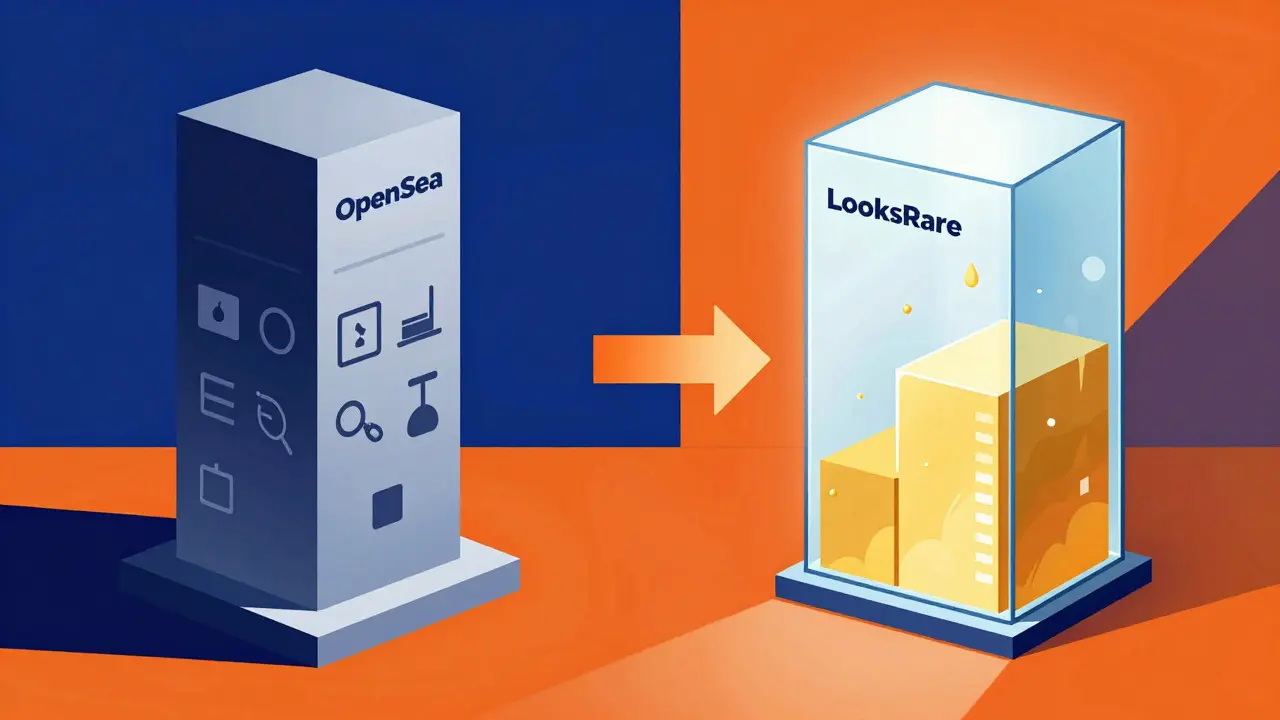
Blur and Other Emerging Platforms
Blur is a professional-focused NFT aggregator that captured 60% of trading volume in Q2 2023 through a streamlined verification program. Blur’s approach is hybrid. They require projects to submit documentation through an official form, but the exact criteria remain undisclosed. This keeps bad actors guessing while allowing genuine projects to move quickly once approved.
Other platforms have tried different models. X2Y2, for instance, required 100 ETH in volume plus a manual review before discontinuing their verification badge in late 2022. Meanwhile, experimental proposals like those from the Ethereum Research community suggest using zero-knowledge proofs are cryptographic methods that allow verification of transaction legitimacy without revealing sensitive data, offering a future-proof alternative to manual reviews. While technically superior for privacy, these systems are complex and not yet mainstream.
| Marketplace | Primary Criterion | Transparency Level | Avg. Processing Time |
|---|---|---|---|
| OpenSea | Reputation & Media Coverage | Low (Opaque) | 4-12 Weeks |
| LooksRare | 250+ ETH Volume (On-Platform) | High (Objective) | 3-7 Business Days |
| Blur | Documentation Submission | Medium | Varies |
Why Verification Matters for Security
You might wonder if the blue check is just marketing. In reality, it’s a vital security tool. According to Chainalysis’ 2023 Crypto Crime Report, impersonation scams accounted for over $142 million in losses in 2022. These scams work by creating a fake collection with the same name and image as a popular project, tricking buyers into sending funds to the scammer’s wallet.
Verification mitigates this risk by:
- Preventing Impersonation: Only the true owner of the smart contract can receive the badge.
- Building Trust: Verified collections see 37% higher trading volume on average, according to Nansen analysts, because users feel safer.
- Reducing Support Burden: Fewer fraudulent listings mean less time spent resolving disputes.
However, verification is not a guarantee of quality. As Alex Atallah, co-founder of OpenSea, stated, "Verification is about preventing scams, not endorsing projects." A verified badge means the project is likely real, not that it will go up in value.
Common Pitfalls and How to Avoid Them
Many creators fail verification due to simple mistakes. Here’s what to watch out for:
- Inconsistent Branding: Ensure your website, Discord, Twitter, and contract metadata all use the exact same name and logo. Even minor discrepancies can cause rejection.
- Lack of Social Proof: If you’re applying to OpenSea, build your community before asking for verification. Engage authentically rather than buying bots.
- Ignoring Volume Requirements: For LooksRare, track your volume carefully. Private sales don’t count toward the threshold, so focus on open-market trades.
- Poor Documentation: When submitting forms, provide clear, concise evidence. Link directly to articles, not just social media posts.
The Future of NFT Verification
The landscape is shifting toward standardization. With regulatory pressure increasing-such as the SEC’s enforcement actions against unregistered securities-the industry is moving away from purely manual reviews. Proposals for decentralized verification using Ethereum Name Service (ENS) domains allow NFT holders to display verified badges proving their assets belong to authenticated collections, though widespread adoption is still pending. and zero-knowledge proofs aim to create a trustless system where verification is cryptographic, not bureaucratic.
By 2025, Gartner predicts that 70% of major platforms will implement standardized protocols compliant with regulations like EU MiCA. Until then, creators must navigate the fragmented current system, balancing transparency with the need for quick approval.
How long does it take to get verified on OpenSea?
Processing times vary significantly, but community reports indicate an average of 4 to 12 weeks. Some creators have waited several months, especially if additional information is requested during the manual review process.
Does a verified badge mean the NFT is a good investment?
No. Verification only confirms the legitimacy of the collection and prevents impersonation scams. It does not endorse the artistic merit, utility, or future financial performance of the NFT.
What is the minimum volume required for LooksRare verification?
You need either 250 ETH in trading volume specifically on LooksRare or 500+ ETH in total volume across the entire NFT ecosystem, excluding private sales.
Can I appeal a rejected verification application?
Yes, most platforms allow re-application after addressing the reasons for rejection. For OpenSea, this often means improving media coverage or community engagement. For LooksRare, it involves accumulating more trading volume.
Is there a fee to apply for verification?
Currently, major marketplaces like OpenSea, LooksRare, and Blur do not charge a direct fee for the verification application itself. However, the indirect costs include gas fees for transactions and potential marketing spend to build volume or reputation.