
Imagine handing the only key to your house to a friend for safekeeping. If they lose it, steal it, or if someone breaks into their home, you’re locked out-or worse, robbed. That is exactly how most people store their cryptocurrency in standard single-signature wallets. One private key controls everything. It’s simple, but it’s also dangerously fragile.
This is where Multisig wallets are cryptocurrency storage solutions that require multiple digital signatures to authorize transactions, eliminating single points of failure. Also known as multi-signature wallets, these tools change the game by splitting control among several keys. Instead of one person holding all the power, you need approval from multiple parties to move funds. For anyone serious about protecting their digital assets, understanding this shift isn't just technical trivia-it's essential survival strategy.
The Core Mechanism: How M-of-N Works
To understand why multisig is safer, you first have to look at how it actually functions. Unlike a traditional wallet where you enter one password or scan one QR code, a multisig wallet operates on an "M-of-N" logic. This might sound like math homework, but it’s actually quite straightforward once you see it in action.
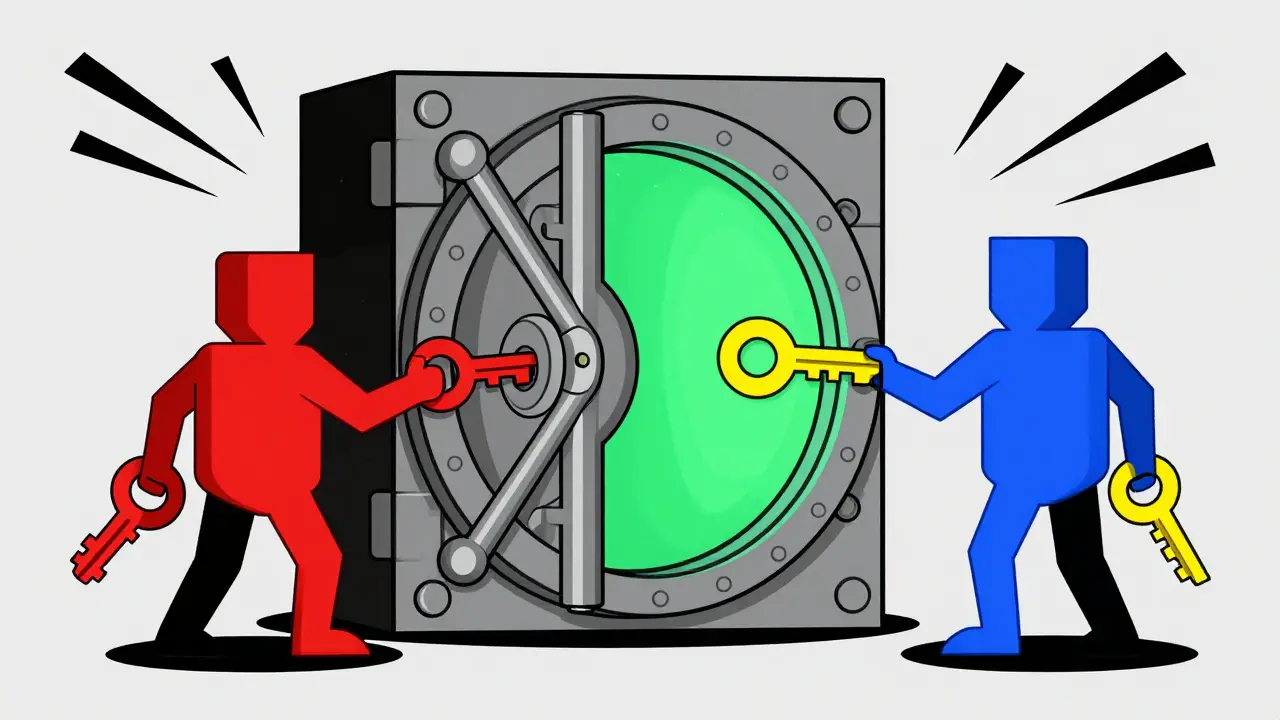
In this system, 'N' represents the total number of private keys created for the wallet, and 'M' is the minimum number of those keys required to sign off on a transaction. Think of it like a bank vault that requires two different managers to insert their keys simultaneously before the door opens.
- 2-of-3 Setup: You create three keys. You keep one, give one to a trusted family member, and store the third in a safety deposit box. To send money, any two of those three people must approve it. If one key is stolen or lost, your funds are still safe because the thief (or you, without the other keys) cannot access them alone.
- 3-of-5 Setup: Common in larger organizations. Five board members hold keys, but any three can authorize a payment. This prevents rogue employees from draining company funds while ensuring business continuity even if two members are unavailable.
This structure removes the "single point of failure." In a standard wallet, compromising one key means total loss. In a multisig setup, compromising one key changes nothing. The attacker needs to breach multiple independent security layers simultaneously, which is exponentially harder to achieve.
Smart Contracts: The Digital Enforcer
You might be wondering who checks if the right number of signatures were collected. Is there a central server watching? No. That would defeat the purpose of decentralization. Instead, multisig wallets rely on smart contracts are self-executing programs stored on the blockchain that automatically enforce predefined rules without human intervention.
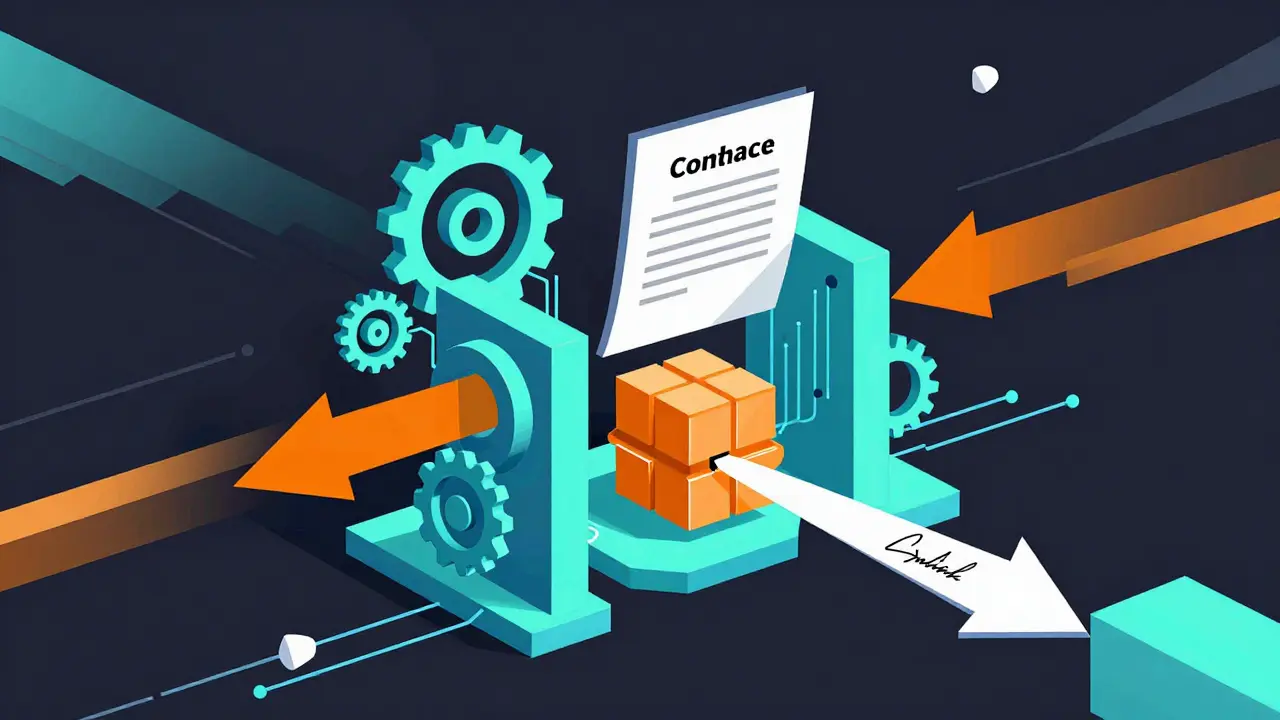
When you set up a multisig wallet, you are essentially deploying a small piece of code onto the blockchain. This code contains the rules: "Only release funds if Signature A and Signature B are present." When you propose a transaction, it doesn’t happen immediately. It sits in a pending state, waiting for the required approvals.
Here is the workflow:
- User A creates a transaction proposal.
- The smart contract records this proposal and waits.
- User B reviews the details and signs with their private key.
- Once the contract sees enough valid signatures matching the M-of-N rule, it executes the transfer.
Why Single-Signature Wallets Are Risky
Most beginners start with hot wallets-software apps on their phones or computers. These are convenient, yes, but they are vulnerable. If your computer gets malware, if you click a phishing link, or if you accidentally write down your seed phrase where someone can find it, your funds are gone instantly. There is no second chance. There is no "undo" button.
Research into cryptocurrency theft shows that the vast majority of losses come from compromised private keys. Hackers don't break into the blockchain itself; they trick users into handing over their keys. Multisig wallets neutralize this threat vector. Even if a hacker steals one of your keys via a phishing attack, they cannot move the funds because they lack the other required signatures. It turns a catastrophic event into a minor inconvenience-you just revoke the compromised key and generate a new one.
| Feature | Single-Signature Wallet | Multisig Wallet |
|---|---|---|
| Control | Centralized (One Key) | Distributed (Multiple Keys) |
| Risk of Theft | High (If key is compromised) | Low (Requires multiple compromises) |
| Recovery Options | Limited (Seed phrase only) | Flexible (Redundant keys) |
| Complexity | Low | Medium to High |
| Best For | Small daily amounts | Large holdings, businesses, DAOs |
Real-World Applications Beyond Personal Use
While individuals use multisig to protect their life savings, its true power shines in collaborative environments. Consider a Decentralized Autonomous Organization (DAO). A DAO is a community-led entity with no CEO. How does it spend its treasury? It can't just have one admin button. Instead, DAOs use multisig wallets to execute governance decisions. Proposals are voted on, and if approved, the multisig wallet releases the funds based on the pre-agreed threshold.
It also serves as a robust escrow service. Imagine buying a high-value NFT or a large amount of Bitcoin from a stranger. You could put the funds in a 2-of-3 multisig wallet where you hold one key, the seller holds another, and a trusted third-party mediator holds the third. Once you receive the goods, you sign off, releasing the funds. If there’s a dispute, the mediator steps in. This reduces trust requirements significantly.
Setting Up Your First Multisig Wallet
Getting started with multisig isn't as intimidating as it sounds, but it does require patience and preparation. You aren't just downloading an app; you are building a security protocol.
First, you need the right hardware. For maximum security, experts recommend using hardware wallets-physical devices that keep your private keys offline. Brands like Ledger and Trezor support multisig setups. Using software-only wallets for large sums increases exposure to online threats.
Next, choose your configuration. For personal use, a 2-of-3 setup is often the sweet spot. It offers redundancy without requiring constant coordination with others. Here is a basic checklist for setup:
- Generate Keys Securely: Create each private key on a separate, secure device. Never generate keys on a public computer.
- Physical Backup: Write down your seed phrases on metal plates or fireproof paper. Store them in physically separate locations (e.g., home safe, bank box).
- Test with Small Amounts: Before moving significant funds, send a tiny amount to test the signing process. Ensure all signatories know how to approve transactions.
- Use Reputable Software: Platforms like Trust Wallet or specialized interfaces like Gnosis Safe provide user-friendly ways to manage multisig interactions. Trust Wallet, for instance, has integrated security scanners that analyze transactions for risks in real-time, flagging potential phishing attempts before you sign.
Remember, the complexity is the price of admission for superior security. Take your time. Rushing this process is the fastest way to introduce errors that could lock your funds permanently.
Pitfalls to Avoid
Multisig is powerful, but it’s not magic. Misconfiguration is the biggest enemy. If you set up a 3-of-3 wallet and lose one key, your funds are gone forever. There is no customer support to call. This is why the "N" in M-of-N should always include some redundancy. A 2-of-2 setup offers no recovery option if one key is lost.
Another pitfall is social engineering. Hackers may try to impersonate a co-signer. Always verify requests through a secondary channel. If your partner asks you to sign a transaction via email, call them to confirm. The security of the technology is only as strong as the vigilance of the humans operating it.
The Future of Crypto Security
As cryptocurrency matures from a speculative asset class to a foundational part of global finance, security standards are rising. Institutions and high-net-worth individuals are increasingly adopting multisig as the baseline requirement, not an optional upgrade. We are seeing more integration with identity verification and biometric authentication, making the user experience smoother while maintaining rigorous security controls.
For now, the message is clear: if you care about your digital assets, stop relying on single keys. Embrace the redundancy of multisig. It takes a bit more effort upfront, but the peace of mind knowing that no single mistake can wipe out your portfolio is worth every minute spent setting it up.
Is a multisig wallet better than a hardware wallet?
They serve different purposes but work best together. A hardware wallet keeps your keys offline, protecting against remote hacking. A multisig wallet distributes control, protecting against theft or loss of a single key. For maximum security, use hardware wallets to store the keys within a multisig setup.
Can I recover my funds if I lose one key in a 2-of-3 multisig wallet?
Yes. Since you only need two signatures to authorize transactions, losing one key leaves you with two remaining. As long as you have access to at least two of the original three keys, you can continue to manage and recover your funds.
Do multisig wallets cost more to use?
Yes, slightly. Because multisig transactions involve more data and complex smart contract interactions, they often incur higher gas fees (transaction costs) on networks like Ethereum compared to simple transfers. However, for large holdings, this cost is negligible compared to the security benefit.
What happens if a co-signer refuses to approve a transaction?
The transaction will not go through. This is a feature, not a bug, designed to prevent unauthorized spending. In personal setups, this requires communication between parties. In organizational settings, governance protocols usually define how to handle dissent or replace unresponsive signers.
Are multisig wallets supported on all blockchains?
Most major blockchains like Bitcoin, Ethereum, and Solana support multisig functionality, either natively or through smart contracts. However, the implementation varies. Always check if your specific wallet provider supports multisig for the particular blockchain you are using.