Bitcoin Quantum Risk Calculator
Quantum computers could break Bitcoin's security by 2032. Your risk depends on how you use your Bitcoin. This calculator estimates your exposure based on your transaction habits.
Your Quantum Risk Assessment
Risk Level
Estimated At-Risk Bitcoin
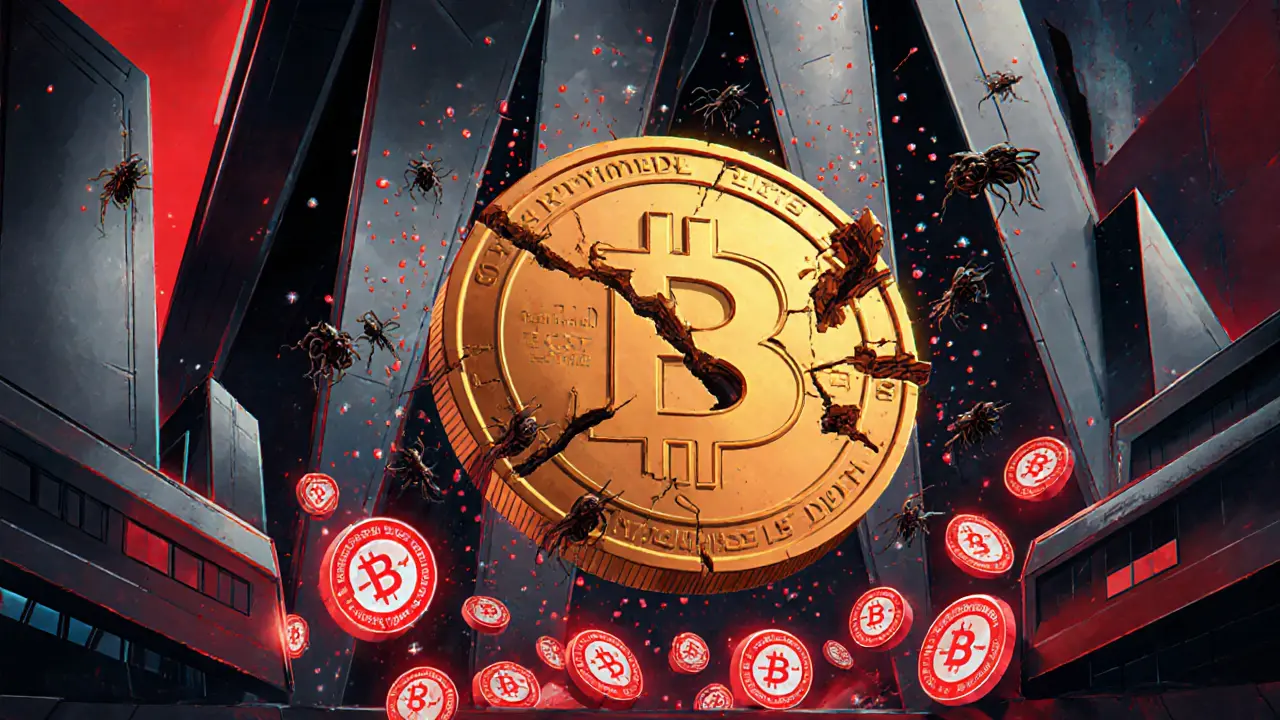
Right now, over 6.65 million Bitcoin-worth more than $745 billion-are sitting ducks. Not because of hackers, scams, or bad code. But because of something that doesn’t even exist yet: a working quantum computer. If one shows up before Bitcoin adapts, those coins could be stolen in minutes. And it’s not science fiction. The math behind Bitcoin’s security is already broken in theory. The only thing holding it back is the hardware. And that hardware is coming faster than most people think.
Why Bitcoin Is Vulnerable
Bitcoin uses a system called ECDSA-Elliptic Curve Digital Signature Algorithm-to prove you own your coins. When you send Bitcoin, you sign the transaction with a private key. The network checks that signature against your public key. If it matches, the transaction goes through. Simple. Secure. Or it was. Here’s the problem: ECDSA relies on the difficulty of solving a math problem called the discrete logarithm. Classical computers can’t solve it fast enough. But quantum computers? They can. Using Shor’s algorithm, a powerful enough quantum machine can reverse-engineer a public key and steal the private key in under 30 minutes. That’s not a guess. That’s what researchers at Chainalysis and Cambridge University are saying. And here’s the scary part: you don’t even have to be actively sending coins to be at risk. If your public key is on the blockchain-which it is, every time you spend Bitcoin-you’re exposed. About 25% of all Bitcoin ever mined have public keys visible. That’s 6.65 million coins. The rest are still safe… as long as you never spend them. But that’s not realistic. People spend Bitcoin. And every spend is a window.The Solution: Post-Quantum Cryptography
The fix isn’t magic. It’s math. In August 2024, NIST-the U.S. government’s standards body-picked the first set of algorithms that can survive quantum attacks. The one Bitcoin needs is called ML-DSA (formerly Dilithium). It’s a lattice-based algorithm. Instead of breaking numbers into primes, it solves complex problems in multi-dimensional space. No known quantum algorithm can do that efficiently. BTQ Technologies, a blockchain startup, showed the first working version of a quantum-resistant Bitcoin on October 16, 2025. They replaced every ECDSA signature in the Bitcoin protocol with ML-DSA. It worked. Wallets signed transactions. Miners verified them. The blockchain kept growing. The system didn’t collapse. That’s huge. But there’s a catch. ML-DSA signatures are huge. Like, 2,000 to 4,000 bytes big. ECDSA? Just 64 bytes. That’s a 1,000x increase. Bitcoin’s blocks are currently 4 MiB. To fit these new signatures, they’d need to jump to 64 MiB. That’s 16 times bigger. And it’s not just about space. More data means slower sync times, more storage, and heavier hardware for full nodes.Three Ways to Do It
There are three main paths forward-and none are perfect.- Direct Replacement (BTQ’s Model): Swap ECDSA for ML-DSA everywhere. All transactions use the new signature. No old keys allowed. Pros: Clean, secure, no confusion. Cons: Requires a hard fork. Every wallet, miner, and node must upgrade at the same time. If even 5% don’t upgrade, the network splits. And with Bitcoin’s slow governance, getting 95% miner support? That’s a mountain to climb.
- Hybrid Signatures (Cardano’s Approach): Require both ECDSA and ML-DSA on every transaction. Old wallets still work. New wallets are safe. Pros: Backward compatible. No sudden break. Cons: Doubles the size of every signature. That’s 4-8 KiB per tx. Bandwidth and storage skyrocket. And it’s temporary. You’re just delaying the inevitable.
- Address Migration (QRAMP Protocol): Create a new type of address that’s quantum-safe. Let users voluntarily move their coins to it. Old addresses stay on the chain. New ones are protected. Pros: No fork needed. Users control the pace. Cons: Only works if people actually move their money. Past adoption (like SegWit) shows only 30-60% of users upgrade on their own. That leaves billions at risk.

What’s Holding Bitcoin Back?
Bitcoin isn’t a company. It’s a network. No CEO. No board. No update button. Change needs near-unanimous agreement. That’s why Ethereum moved faster. They had a core team pushing EIP-7212. Bitcoin’s development is open-source, slow, and consensus-driven. The Bitcoin Core team only formed a Quantum Readiness Working Group on November 1, 2025. Their first goal? Submit a formal proposal by January 31, 2026. Meanwhile, miners are hesitant. A November 2025 survey showed only 68% support for a hard fork. That’s below the 95% needed. Why? Because upgrading means buying new hardware. Full nodes now need 16 TB of storage, 32 GB of RAM, and an 8-core CPU. Before? 2 TB, 8 GB, 4-core. That’s a 5x increase in cost. For a hobbyist, that’s a dealbreaker. For a small mining operation? A death sentence. And it’s not just hardware. Verification takes longer. ML-DSA signatures need 10-15x more CPU power to check. Bitcoin’s current limit is 7 transactions per second. With PQC, that could drop to 0.5 TPS. BTQ’s testnet got to 1.2 TPS-but only after heavy optimization. Real-world performance? Still shaky.What’s Happening Now?
The clock is ticking. IBM says it will have a 1,000+ logical qubit machine by 2028. Google hit 49 logical qubits in October 2025. That’s double their 2024 number. Théau Peronnin of Alice & Bob says his “Graphene” quantum computer will be ready in 2030. He’s not the only one. The consensus? Quantum threat arrives between 2028 and 2032. BTQ plans to launch its mainnet-ready version on December 15, 2025. That’s just weeks away. Institutional players are moving. Fidelity, Coinbase, and Binance have all announced quantum-resistant wallet projects. But retail? Harris Poll says only 8% of Bitcoin holders even know what quantum computing means. The biggest risk isn’t the tech. It’s the lack of awareness. If users don’t move their coins, and miners don’t upgrade, and developers can’t agree, Bitcoin could lose half its value overnight. Imagine a single quantum attack wiping out $100 billion in coins. The market would panic. Confidence would collapse.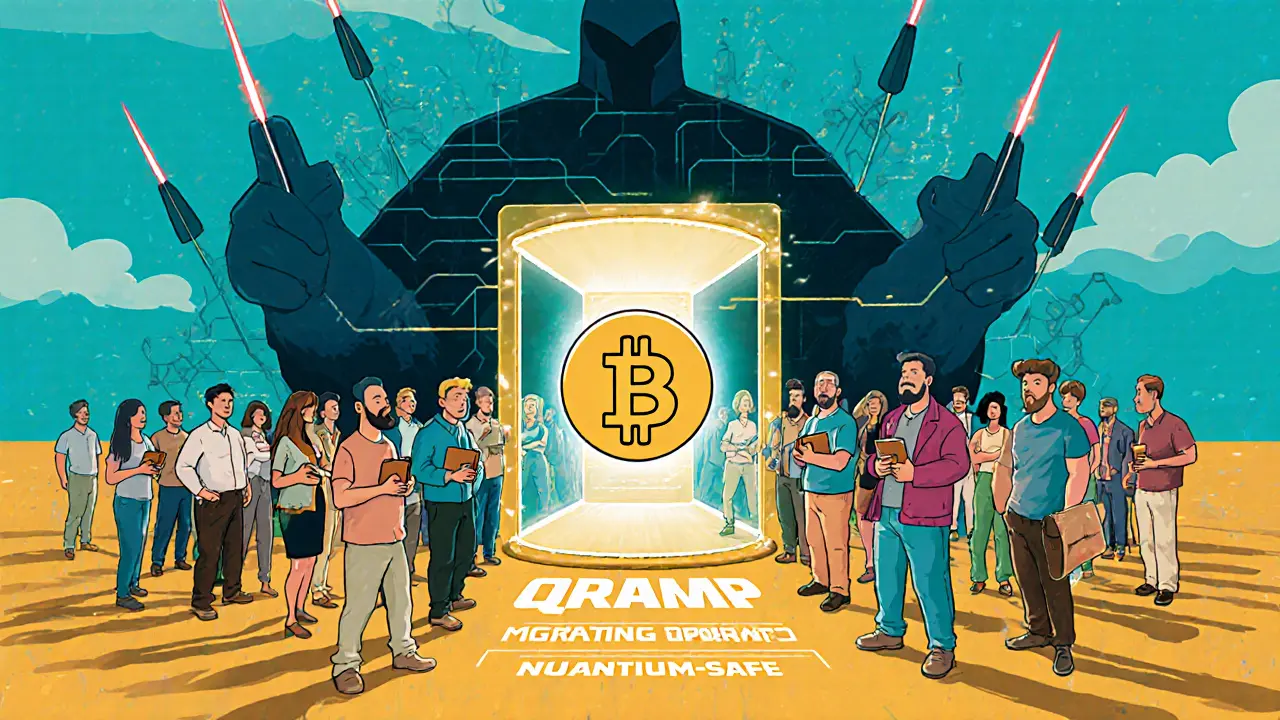
What You Can Do
If you hold Bitcoin, here’s what matters:- Don’t reuse addresses. Every time you spend, use a new one. That keeps your public key hidden. It’s the easiest protection you have right now.
- Watch for wallet updates. In 2026, expect new wallets to support quantum-safe addresses. Don’t ignore them.
- Don’t wait for a fork. If a migration protocol like QRAMP launches, move your coins early. Don’t assume someone else will do it for you.
- Know your node. If you run a full node, prepare for hardware upgrades. 16 TB storage isn’t optional anymore-it’s the new baseline.
Will Bitcoin Survive?
The crypto world is full of hype. But this isn’t hype. This is math. This is physics. This is a real, measurable threat with a real timeline. Bitcoin’s strength has always been its simplicity and decentralization. But those same traits make adaptation hard. It’s not about whether Bitcoin can become quantum-resistant. It’s whether its community will act fast enough. The tools exist. The standards are set. The testnet works. The only missing piece is coordination. And that’s always the hardest part in a decentralized system. If Bitcoin pulls this off, it will prove it can evolve without losing its soul. If it doesn’t? The largest cryptocurrency in the world could become the most expensive museum piece in history.Can quantum computers already steal Bitcoin?
No-not yet. Current quantum computers don’t have enough stable qubits to run Shor’s algorithm on Bitcoin’s keys. But they’re getting close. Experts estimate a machine capable of breaking ECDSA will exist between 2028 and 2032. The threat is future, but the risk is now: public keys on the blockchain are already exposed.
What is ML-DSA and why is it important?
ML-DSA (formerly Dilithium) is a post-quantum digital signature algorithm standardized by NIST in 2024. It’s based on lattice mathematics, which quantum computers can’t easily break. It’s the leading candidate to replace ECDSA in Bitcoin because it’s secure, efficient enough for real-world use, and already tested in blockchain environments like BTQ’s quantum-resistant Bitcoin testnet.
Will I need to move my Bitcoin to a new wallet?
It depends on how Bitcoin upgrades. If it uses direct replacement, yes-your old wallet won’t work after the fork. If it uses a migration protocol like QRAMP, you can choose to move your coins to a new quantum-safe address. Either way, you’ll need to update your wallet software. Don’t wait until the last minute.
How will this affect transaction fees and speed?
Transaction sizes will grow dramatically-up to 1,000 times larger. That means fewer transactions fit in each block, which could slow confirmation times. Throughput may drop from 7 TPS to under 1 TPS without hardware upgrades. Fees might rise short-term due to lower capacity. Long-term, layer-two solutions like the Lightning Network could help offset this.
Is Bitcoin more at risk than other blockchains?
Bitcoin has more at stake-$2.4 trillion in value-but it’s not necessarily more vulnerable. Ethereum and Solana are moving faster because they have more centralized development teams. Bitcoin’s slower governance makes it harder to coordinate a global upgrade. So while Bitcoin’s market size makes it a bigger target, its decentralized nature makes adaptation harder.
What happens if Bitcoin doesn’t upgrade?
If a quantum computer breaks ECDSA and no upgrade has happened, attackers could drain any wallet with a visible public key. That’s millions of coins. The market would likely crash. Trust in Bitcoin’s security would vanish. Even if only a few billion are stolen, the psychological damage could be irreversible. The longer Bitcoin waits, the higher the risk of catastrophic loss.
Comments
Jess Bothun-Berg
So let me get this straight-we’re supposed to trust a decentralized network with no leadership to upgrade itself before a quantum computer shows up? Lol. Meanwhile, my grandma’s iPhone 8 still runs Bitcoin Core from 2019. Good luck with that.
November 29, 2025 at 06:49
Layla Hu
I’ve been using new addresses for every transaction since 2021. It’s not hard. Just don’t be lazy. And don’t pretend this is a surprise-this was predicted a decade ago.
November 30, 2025 at 17:51
Nora Colombie
Why are we even talking about Bitcoin? The U.S. is the only country with the tech and will to solve this. China’s already testing quantum-resistant ledgers. Europe? They’re still debating if crypto is ‘ethical.’ Meanwhile, we’re letting a bunch of crypto bros with 2TB drives decide the fate of $745 billion? Pathetic.
December 2, 2025 at 09:13
Christy Whitaker
I just can’t believe people still think Bitcoin is ‘digital gold.’ Gold doesn’t need a software update. Gold doesn’t vanish because someone built a fancy calculator. This isn’t innovation-it’s a house of cards made of math and hope. And now we’re all just waiting for the wind to blow.
December 4, 2025 at 07:43
Nancy Sunshine
Let me be clear: this is not a technical challenge-it is a human coordination crisis. We have the cryptographic tools. We have the testnets. We have the timelines. What we lack is collective will. The Bitcoin network is not broken. It is asleep. And sleep, in the face of existential risk, is not an option. The moment we prioritize convenience over survival, we forfeit our future. This is not a debate. It is a reckoning.
December 5, 2025 at 02:06
Alan Brandon Rivera León
It’s wild to think that the same network that survived 2013, 2017, and 2021 might not survive a math problem. Maybe the real issue isn’t quantum computers-it’s whether we still believe in the idea of decentralized trust. If we can’t agree on a simple upgrade, what does that say about the whole project?
December 5, 2025 at 23:10
Ann Ellsworth
ML-DSA’s lattice-based complexity is fundamentally incompatible with Bitcoin’s UTXO model’s entropy constraints. The O(n²) verification overhead under current node architectures would collapse the mempool topology within 18 months post-fork. Additionally, the 4KB signature footprint violates the BIP-141 weight limit by 6200%. This isn’t a ‘migration’-it’s a protocol-level obsolescence requiring a hard fork with 95% miner consensus, which is statistically improbable given the current ASIC oligopoly. We’re not preparing-we’re deluding ourselves.
December 7, 2025 at 04:35
Ankit Varshney
In India, we’ve seen how slow change can be. But we’ve also seen communities adapt when the stakes are real. If Bitcoin can’t evolve, maybe it’s not meant to be the future. But if it does-then it deserves to survive.
December 7, 2025 at 12:11
Ziv Kruger
What is security, really? A lock? A signature? Or a shared belief that someone else will fix it when it breaks? We built Bitcoin to be unchangeable. Now we beg it to change. The tragedy isn’t the quantum computer. It’s that we built something perfect-and then forgot how to be human with it.
December 7, 2025 at 21:20
Heather Hartman
Hey everyone-just wanted to say I’m moving my coins to a QRAMP address next week. It’s not scary, it’s just smart. If you’re reading this and haven’t updated your wallet yet, you’ve got time. Don’t wait for the panic. Do it now. You’ve got this. 💪
December 8, 2025 at 18:00