You lost money because a developer pulled the liquidity. You watched your token value drop to zero in seconds, wondering how you missed the warning signs. You are not alone. In 2024 alone, U.S. citizens lost $9.3 billion to cryptocurrency scams, according to FBI data. Most of these losses came from rug pulls-where projects vanish with investor funds.
The good news? The tools we use to catch these scams are getting smarter. We are moving past simple "check the code" checks into an era of predictive AI and behavioral analytics. This article breaks down exactly how future protections against rug pulls work, what tech is leading the charge, and how you can stay ahead of the next wave of sophisticated fraud.
Why Old Detection Methods Fail
For years, investors relied on basic red flags. Did the team do an audit? Is the liquidity locked? These questions matter, but they are no longer enough. Scammers have industrialized. They don't just write bad code; they create complex webs of transactions that look legitimate until the moment they dump.
Traditional detection methods often fail because they look at static data. A smart contract might pass a standard security scan, but the developers could still be planning a soft rug pull over six months. Or they might use a hard rug pull via a hidden function that only triggers under specific market conditions. If your tool doesn't analyze live transaction behavior alongside the code, it misses half the picture.
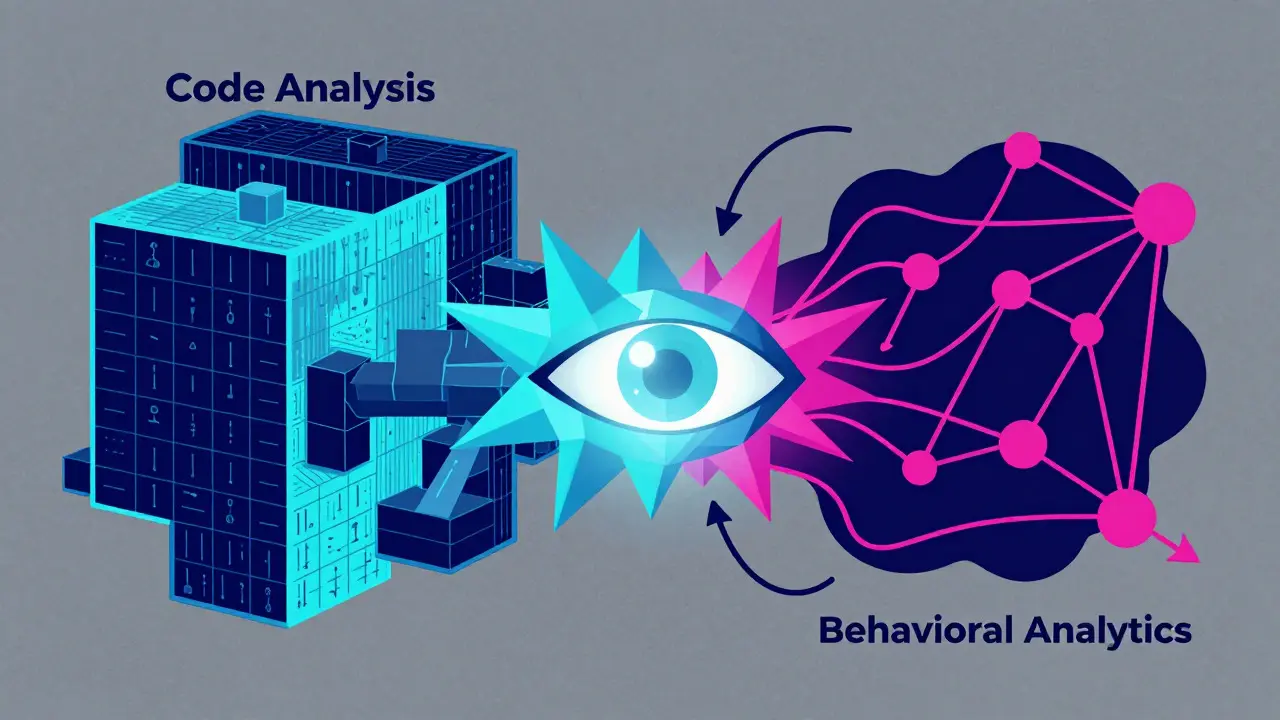
This gap between code and behavior is where modern protection systems like RPHunter step in. Unlike older scanners that check for predefined patterns, RPHunter integrates both code analysis and real-time transaction monitoring. It treats the blockchain as a living organism, watching how tokens move rather than just reading the rules governing them.
The Rise of Hybrid Detection: Code Plus Behavior
The most significant shift in rug pull defense is the move toward hybrid models. Researchers published findings in 2025 detailing a technique called RPHunter, which combines two distinct types of data analysis. First, it builds a Semantic Risk Code Graph (SRCG) by analyzing the smart contract's structure. Second, it creates a Token Flow Behavior Graph (TFBG) that maps actual trading activity.
Why does this matter? Because scammers often hide malicious intent in plain sight. A contract might allow withdrawals, but if 90% of all liquidity leaves the pool within minutes of launch, the code permission becomes irrelevant. The behavior tells the truth. By using graph neural networks to fuse these two data streams, RPHunter achieved a precision rate of 95.3% in testing. That means when it flags a project, there is a very high chance it is actually a scam.
This approach solves the problem of false positives. Early detection tools flagged any new token with low liquidity as risky. But many legitimate projects start small. By looking at the flow of funds-who is buying, who is selling, and how quickly-the system distinguishes between a healthy early-stage project and a coordinated pump-and-dump scheme.
Key Technologies Leading the Charge
Several platforms are currently deploying these advanced methodologies. Understanding how they differ helps you choose the right layer of protection for your portfolio.
| Platform | Primary Method | Best For | Limitations |
|---|---|---|---|
| RPHunter | Hybrid Code & Transaction Graph Analysis | Detecting sophisticated, multi-step rug pulls | Requires extensive historical data for training |
| Token Sniffer | Automated Smart Contract Scanning | Quick pre-investment safety scores (0-100) | May miss behavioral anomalies in clean code |
| GoPlus Security | Malicious Address & dApp Vulnerability Checks | Identifying known scammer wallets and risks | Focuses more on existing threats than new patterns |
| Elliptic | Behavioral Analytics & Cross-Chain Monitoring | Institutional compliance and wallet tracking | Less accessible for retail investors directly |
Token Sniffer remains a popular first line of defense. It scans contracts for common vulnerabilities like mint functions or owner privileges. It assigns a score from 0 to 100. While useful, it relies heavily on static code rules. If a scammer writes unique, non-standard code, Token Sniffer might give it a passing grade even if the economic model is flawed.
GoPlus Security adds another layer by checking if the deployer address has a history of shady dealings. It connects the dots between different blockchains. If a wallet was involved in a scam on Ethereum and now launches a token on Solana, GoPlus can flag that connection. This cross-chain awareness is crucial as scammers increasingly hop between networks to evade jurisdiction-specific bans.
Elliptic focuses on the institutional side. Their tools monitor wallet behaviors across chains. They look for patterns typical of laundering or sudden asset drainage. For individual investors, this translates to better data feeds. When Elliptic flags a wallet, exchanges and aggregators can warn users before they interact with it.
Understanding Liquidity Sweeps and Soft Rugs
Not all rug pulls look the same. To protect yourself, you need to know the variants. The most common type studied recently is the liquidity sweep, particularly prevalent on platforms like Raydium V4 on Solana. Here’s how it works: A developer provides all the initial liquidity for a memecoin paired with SOL. Users trade, increasing the pool's SOL value. Then, the developer removes almost all the liquidity. With no buyers left, the token price collapses. Research shows scammers often remove 50% to 90% of available liquidity in one go.
Then there are soft rug pulls. These are slower and harder to spot. The team stays active on social media, posting updates and holding community calls. But behind the scenes, they are quietly selling their holdings or reducing support. Over months, the project fades away. Technical tools struggle here because nothing "breaks." The code works fine. The detection requires sentiment analysis and holder distribution tracking. If the top 10 wallets hold 80% of the supply and start selling gradually, that is a soft rug signal.
The Role of AI and Machine Learning
Human analysts cannot watch every new token launch. There are thousands deployed daily. This is where machine learning shines. Platforms like Token Metrics use AI to assign grades based on multiple factors. They look at audit status, team credibility, and liquidity metrics to calculate an Investor Grade. This isn't just about security; it's about viability. A project might be safe from a rug pull but still fail due to poor adoption. AI helps distinguish between a slow death and a sudden murder.
These models learn from past failures. As new scams emerge, the algorithms adapt. They don't need manual rule updates for every new trick. Instead, they detect anomalies in data patterns. For example, if a token suddenly sees a spike in volume from wallets that were previously dormant, the AI flags it as potential wash trading-a common tactic to inflate prices before a dump.
However, AI is not magic. It needs quality data. If a scammer uses fresh wallets created specifically for the launch, the behavioral history is thin. This is why community-driven data matters. When users report suspicious activity, those reports feed back into the system, helping the AI recognize new signatures faster.
Regulatory and Community Safeguards
Technology handles the technical side, but regulation and community handle the human side. Governments are stepping up. The California Department of Financial Protection and Innovation, for instance, maintains a Crypto Scam Tracker. These databases list known fraudulent platforms. While crypto is global, local regulators can ban specific entities from operating in their jurisdictions, adding friction for scammers.
Community intelligence is equally powerful. Decentralized autonomous organizations (DAOs) and user forums often spot issues before automated tools do. Reputation mechanisms are being built into platforms where users can flag projects. Algorithms then weight these flags based on the reporter's accuracy. If a user correctly identifies three scams, their future warnings carry more weight. This creates a network effect: the more people use the platform, the safer it becomes for everyone.
Your Personal Defense Strategy
Tools help, but your behavior is the final firewall. Even the best AI cannot save you if you ignore basic due diligence. Here is a checklist to integrate into your routine:
- Check the Liquidity Lock: Use tools to verify if liquidity is locked for a reasonable period (e.g., 6+ months). Unlocked liquidity is a major risk factor.
- Analyze Holder Distribution: Look at the top 10 holders. If they own more than 50% of the supply, one whale sell-off can crash the price.
- Review the Team: Are they doxxed (publicly identified)? Anonymous teams are higher risk. Check their LinkedIn or previous projects.
- Monitor Developer Wallets: Set alerts for large transfers from the deployer wallet to exchanges. This often precedes a dump.
- Beware of FOMO: If everyone is talking about a token and the price is vertical, you are likely late. Scammers thrive on fear of missing out.
Remember, no single tool guarantees safety. A 100% score on Token Sniffer doesn't mean zero risk. It means the code looks clean. It doesn't account for the developer deciding to stop working tomorrow. Combining automated checks with manual research gives you the best odds.
What Comes Next?
The arms race between scammers and defenders will continue. As detection gets better, scams get more creative. We might see more cross-chain rug pulls, where assets are moved rapidly between Ethereum, Solana, and Layer 2 networks to confuse trackers. Future protections will likely involve real-time insurance protocols that automatically trigger payouts when specific risk thresholds are breached.
Ultimately, the goal isn't to eliminate risk entirely-that would stifle innovation. It's to make rug pulls expensive and difficult for scammers while making them easy to detect for honest investors. By leveraging hybrid analysis, behavioral AI, and community vigilance, the ecosystem is becoming more resilient. Stay curious, keep verifying, and never invest more than you can afford to lose.
What is the difference between a hard and soft rug pull?
A hard rug pull is sudden and acute, where developers drain liquidity or abandon the project instantly, causing immediate total loss. A soft rug pull happens gradually; the team may remain active but slowly sells off holdings or reduces development effort, leading to a slow decline in value over weeks or months.
Can AI completely prevent rug pulls?
No. AI significantly improves detection rates, with tools like RPHunter achieving over 95% precision. However, scammers constantly evolve their tactics. AI also struggles with brand-new patterns it hasn't seen before. It is a powerful tool for risk reduction, not a guarantee of safety.
How does RPHunter differ from standard smart contract auditors?
Standard auditors mainly check code for bugs or known vulnerabilities. RPHunter combines code analysis with real-time transaction behavior. It looks at how funds actually move and interacts with the code context, allowing it to detect malicious intent that might look like normal code execution.
Is a high Token Sniffer score always safe?
Not necessarily. A high score indicates the smart contract code is technically sound and lacks obvious traps. It does not evaluate the team's integrity, marketing hype, or external market forces. A project can have perfect code and still suffer a soft rug pull if the team decides to quit.
Why is cross-chain monitoring important for rug pull protection?
Scammers often move funds across different blockchains (like Ethereum to Solana) to obscure their trail. Cross-chain monitoring tools like GoPlus or Elliptic track these movements, identifying if a wallet associated with a scam on one chain is launching a new project on another, providing earlier warnings.