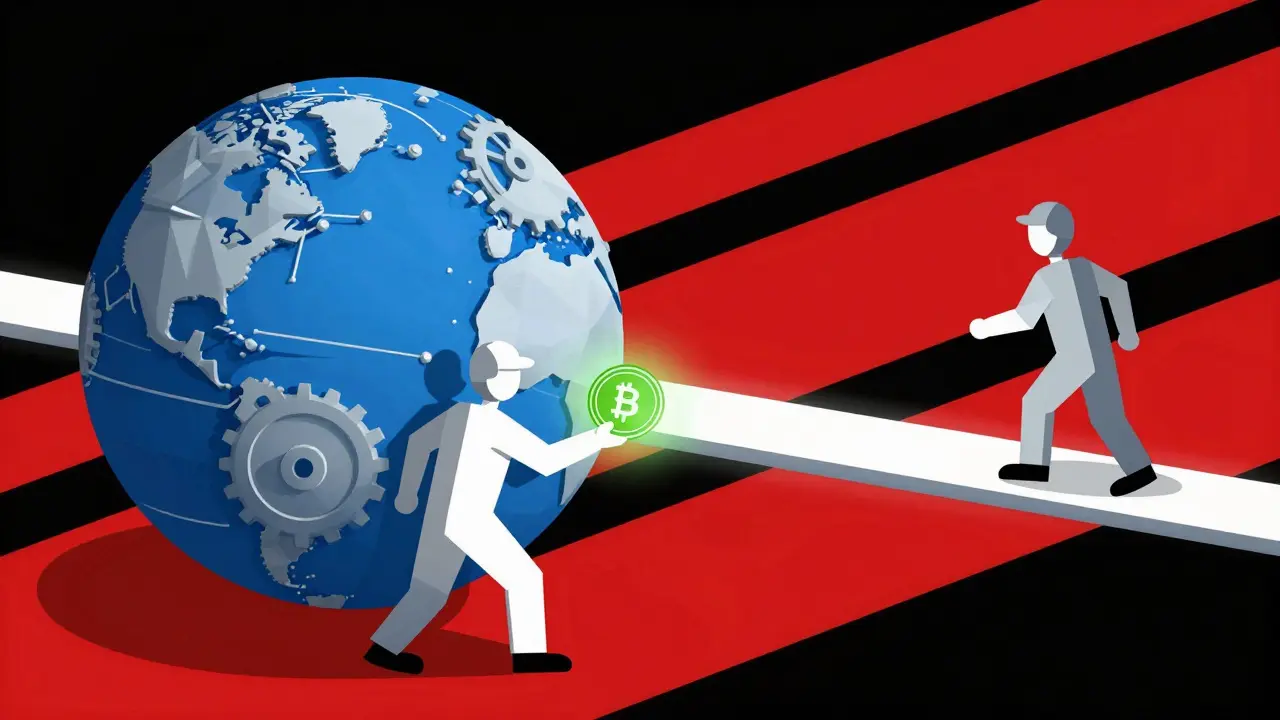
Cryptocurrency is no longer just a speculative bet for tech enthusiasts. By mid-2026, it has quietly become the plumbing behind some of the world’s largest financial transactions. The shift happened faster than most predicted. In December 2024, stablecoins facilitated $719 billion in monthly transfers, a record that stood until April 2025 when volumes hit $717.1 billion. These aren’t numbers from a niche trading community; they represent real money moving across borders for payroll, remittances, and corporate settlements.
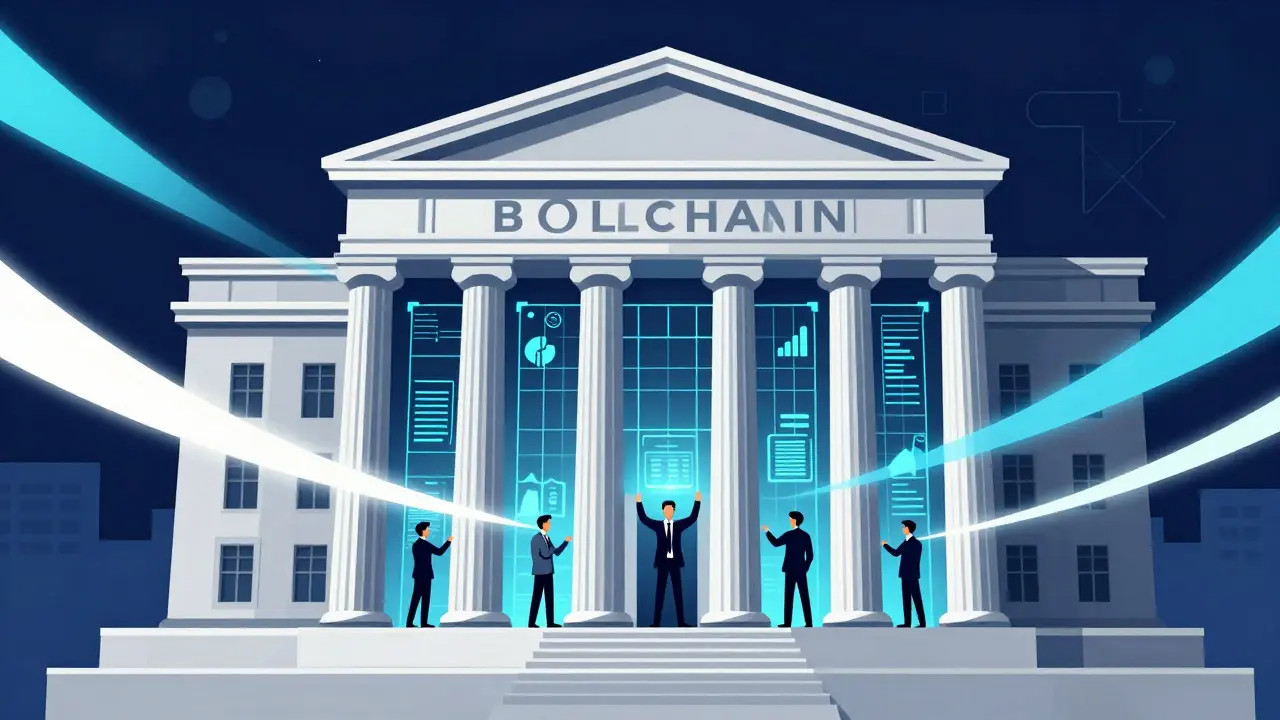
The era of Bitcoin as merely "digital gold" is evolving into an era where blockchain technology serves as the underlying infrastructure for global finance. Banks are building on it. Fortune 500 companies are integrating it. And regulators are finally writing rules that allow institutions to participate without fear. This article breaks down what this actually looks like in practice, why traditional finance is adopting these tools, and how you can understand your place in this new system.
Stablecoins: The New Payment Rails
If you think cryptocurrency means volatile coins that crash overnight, you’re looking at only half the picture. The real revolution in global finance right now is driven by stablecoins. Unlike Bitcoin or Ethereum, which fluctuate wildly, stablecoins are pegged to fiat currencies like the US dollar. They offer the speed and low cost of crypto with the price stability of cash.
Consider the traditional wire transfer. Sending $10,000 internationally via SWIFT can take three days and cost $30-$50 in fees, plus hidden exchange rate markups. Now compare that to sending USDC or USDT. The transaction settles in seconds, costs less than a dollar, and works 24/7/365. No bank holidays. No intermediary delays.
This utility is driving massive adoption. In 2025, over 81% of crypto-aware small and medium businesses expressed interest in using stablecoins to solve specific pain points: high payment processing fees and slow cross-border payroll. For a freelance designer in Poland working with a client in California, getting paid in stablecoins means receiving funds instantly at fair market rates, rather than waiting weeks for a check to clear.
- Speed: Settlements occur in seconds, not days.
- Cost: Transaction fees are a fraction of traditional banking charges.
- Accessibility: Anyone with a smartphone and internet access can participate.
- Transparency: Every transaction is recorded on a public ledger, reducing fraud risk.
Major players like Mastercard have launched the Multi-Token Network to make these transactions secure and interoperable. Their live tests with Standard Chartered Bank prove that legacy financial giants aren’t just watching-they’re building.
Asset Tokenization: Real World Assets Go Digital
Beyond payments, the second major pillar reshaping finance is asset tokenization represents the process of converting rights to an asset into a digital token on a blockchain. This isn’t about buying JPEGs of monkeys. It’s about digitizing stocks, bonds, real estate, and commodities.
Traditionally, if you wanted to invest in a commercial building in Manhattan, you needed millions of dollars. With tokenization, that property can be divided into thousands of digital tokens. Each token represents a fractional ownership share. You can buy one token for $100, receive proportional rental income, and sell your share instantly on a secondary market.
In 2025, we saw significant maturation in this space. Banks began issuing digital-native bonds on blockchain platforms. Why? Because it cuts underwriting costs and speeds up time-to-market. Instead of weeks of paperwork and reconciliation between custodians, smart contracts automate the entire process. Ownership records are immutable, transparent, and easily transferable.
| Feature | Traditional Finance | Tokenized Assets |
|---|---|---|
| Settlement Time | T+2 (2 business days) | Near-instant (seconds/minutes) |
| Minimum Investment | High ($10k-$1M+) | Low ($10-$100) |
| Liquidity | Low (illiquid assets) | High (24/7 trading markets) |
| Intermediaries | Many (brokers, custodians, clearinghouses) | Few (smart contracts automate roles) |
| Transparency | Opaque (private ledgers) | Public (verifiable blockchain records) |
Tokenized collateral is also changing how banks manage risk. Real-time margining allows lenders to adjust exposure instantly based on market conditions, reducing systemic risk during volatility spikes.

Institutional Adoption: From Fringe to Core Strategy
The narrative that "banks hate crypto" is outdated. As of 2025, nearly 1 in 5 Fortune 500 executives consider on-chain initiatives a key part of their corporate strategy. That’s a 47% year-over-year increase. These aren’t experimental side projects; they are core operational improvements.
University endowments, multinational corporations, and pension funds are allocating capital to Bitcoin and other digital assets not for speculation, but for portfolio diversification. Bitcoin’s deflationary design and low correlation to traditional markets make it an attractive hedge against inflation and currency debasement. When Bitcoin surged past $100,000 in 2024, it wasn’t just retail traders cheering-it was institutional portfolios rebalancing.
Exchange-Traded Funds (ETFs) played a crucial role here. By packaging Bitcoin into familiar investment vehicles, major firms like BlackRock and Fidelity made it easy for conservative investors to gain exposure without managing private keys or dealing with exchanges. This structural change signaled that cryptocurrency had graduated from fringe experiment to legitimate asset class.
Regulatory clarity accelerated this trend. The United States moved toward a more ambitious agenda to mainstream selected digital assets while maintaining oversight. Former SEC chief economist Jessica Wachter and former CFTC chair Timothy Massad emphasized balancing innovation with consumer protection. Clearer rules mean institutions can comply confidently, unlocking trillions in potential capital.
Challenges and Risks: What Could Go Wrong?
Despite the progress, significant hurdles remain. Understanding these risks is essential for anyone engaging with this ecosystem.
- Volatility: While stablecoins mitigate this, non-stable cryptocurrencies like Bitcoin and Ethereum still experience sharp price swings. Investors must be prepared for drawdowns of 20-30% within months.
- Security Complexity: Private key management puts the burden of security on the user. Lose your seed phrase, and your funds are gone forever. Phishing attacks and exchange hacks remain prevalent threats.
- Energy Consumption: Proof-of-work systems like Bitcoin consume substantial electricity. Although Bitcoin’s energy use is often compared unfavorably to gold mining or banking sectors, environmental concerns persist. Many networks have shifted to proof-of-stake, which uses 99% less energy, but Bitcoin remains dominant.
- Regulatory Fragmentation: Rules vary widely by country. What’s legal in Switzerland may be banned in China. Businesses operating globally must navigate a patchwork of compliance requirements.
- Technological Barriers: User interfaces are improving, but interacting with smart contracts or decentralized applications still requires technical literacy. Mistakes in contract interactions can lead to irreversible losses.
Traditional finance retains advantages in consumer protection, established legal recourse, and widespread acceptance. Cryptocurrency offers programmability, accessibility, and efficiency. The future likely involves hybrid systems where both coexist and interoperate.
How to Navigate the Crypto Financial Landscape
If you’re ready to engage with this evolving system, start small and prioritize education. Here’s a practical roadmap:
- Choose Regulated Exchanges: Use platforms that comply with local laws and offer insurance for digital assets. Avoid unregistered offshore exchanges.
- Learn Wallet Security: Understand the difference between hot wallets (connected to internet) and cold wallets (offline hardware devices). Store long-term holdings in cold storage.
- Start with Stablecoins: Experiment with sending and receiving stablecoins to understand transaction flows before touching volatile assets.
- Diversify Gradually: Allocate only what you can afford to lose. Treat early investments as learning expenses.
- Stay Informed: Follow reputable sources like Wharton’s Finance Centers, MIT Media Lab Digital Currency Initiative, and industry reports from major financial institutions.
For businesses, explore pilot programs with stablecoin payroll or tokenized supply chain financing. Partner with fintech providers who specialize in blockchain integration. Test small-scale use cases before full deployment.
FAQ
Is cryptocurrency safe for everyday payments?
Stablecoins are increasingly safe and practical for everyday payments due to their price stability and fast settlement times. However, users must ensure they use reputable platforms and secure wallets. Volatile cryptocurrencies like Bitcoin are less suitable for daily purchases due to price fluctuations.
What is asset tokenization and why does it matter?
Asset tokenization converts physical or financial assets into digital tokens on a blockchain. It matters because it increases liquidity, lowers investment minimums, and automates administrative tasks through smart contracts. This makes previously illiquid assets like real estate accessible to everyday investors.
Are banks really adopting blockchain technology?
Yes. Major banks like J.P. Morgan and Standard Chartered are actively testing and deploying blockchain solutions for cross-border payments and asset issuance. Nearly 20% of Fortune 500 companies now include on-chain initiatives in their strategic plans, signaling deep institutional commitment.
How do stablecoins differ from Bitcoin?
Bitcoin is a decentralized store of value with no fixed price, leading to high volatility. Stablecoins are pegged to fiat currencies like the US dollar, maintaining a stable value. This makes stablecoins ideal for payments and remittances, while Bitcoin is better suited for long-term investment and hedging.
What are the biggest risks of investing in cryptocurrency?
Key risks include price volatility, security breaches (hacks, phishing), regulatory changes, and technological complexity. Users must manage private keys securely and stay informed about evolving laws. Diversification and starting with small amounts help mitigate these risks.
Will cryptocurrency replace traditional banking?
Unlikely in the near term. Instead, expect integration. Traditional banks will adopt blockchain for backend processes like settlement and custody, while offering crypto services to customers. The future is hybrid, combining the trust and regulation of banks with the efficiency and transparency of blockchain.
How much does it cost to send money via crypto vs. bank?
Sending money via traditional banks often costs $20-$50 per international transfer plus hidden exchange fees. Using stablecoins on efficient blockchains can cost less than $1, with near-instant settlement. However, network congestion can temporarily raise fees, so timing matters.
What is the role of ETFs in cryptocurrency adoption?
Crypto ETFs allow investors to gain exposure to digital assets through traditional brokerage accounts without handling private keys. This lowers the barrier to entry for conservative investors and institutional funds, legitimizing cryptocurrency as a standard asset class alongside stocks and bonds.
Comments
Robert Hundley
Man, seeing the big banks finally jump on the blockchain bandwagon is just wild to watch. :D It feels like they were sleeping through the whole revolution and now they're scrambling to build their own rails instead of just shutting us down. The stablecoin volume numbers are insane though, $700 billion a month? That's not niche anymore, that's the new plumbing for global money. I remember when people laughed at sending Bitcoin for coffee, now Fortune 500s are using it for payroll. We really are living in the future, even if it's messy. :)
June 26, 2026 at 13:13
Melissa L
i dont get why everyone is so hyped about this stuff lol its just complicated tech for rich people to save on taxes or something right? i mean sure sending money fast sounds nice but what if i lose my seed phrase? thats scary as hell. also the energy thing still bugs me even if they say its better now. feels like we are running from one problem to another without fixing the root cause. maybe im just old fashioned but traditional banks feel safer even if they are slow.
June 26, 2026 at 15:02
Rob Morton
The shift towards institutional adoption isn't just about speed; it's about the fundamental restructuring of trust. When you remove the intermediary, you aren't just cutting fees, you are removing the single point of failure that has plagued finance for centuries. Consider the implications for emerging markets where banking infrastructure is crumbling. Tokenization allows capital to flow to places that were previously ignored by the traditional system. It forces us to ask whether efficiency should ever be sacrificed for legacy control. The technology is neutral, but its application can be deeply equitable. We must look beyond the price charts to see the architectural change happening beneath our feet.
June 26, 2026 at 21:59
Routh Middaugh
I think we need to be very careful here!!! While the benefits are clear... there are huge risks involved!! The regulatory fragmentation is a nightmare for businesses trying to operate globally!!! One country says yes... another says no!!! This creates a legal gray area that could destroy companies overnight!!! Also... the security complexity is no joke!!! If you make one mistake with your private keys... it is gone forever!!! We cannot ignore these dangers just because the technology is shiny!!!
June 27, 2026 at 19:04
Ryan Peters
Look, let's cut the crap. This is just another way for foreign entities to bypass US sanctions and move dirty money around without Uncle Sam knowing. You think BlackRock is doing this out of the goodness of their hearts? They want to capture the liquidity before the SEC can figure out how to tax it properly. The 'efficiency' argument is a smokescreen for deregulation. We built the strongest financial system in the world, and now we're letting some code written by anarchists dictate how our dollars move. It's a threat to national sovereignty, plain and simple. Keep your crypto, I'll keep my FDIC insurance and my flag.
June 29, 2026 at 02:59
ross harris
The digital leviathan awakens, shedding its skin of gold for pixels of power. You speak of stability, yet the foundation is sand castles built on volatility. The tokenization of assets is merely the commodification of existence itself, reducing the tangible warmth of property to cold, unfeeling tokens on a ledger. It is a beautiful horror, really. The banks smile as they integrate the chains that could strangle them, unaware that the snake eats its own tail. We are dancing on the edge of a cliff, mistaking the wind for flight. The market does not care for your safety, only your liquidity.
June 30, 2026 at 17:56
Carl Belgrave
Listen up folks, this article is sugarcoating a disaster waiting to happen. You think these institutions have your best interests at heart? They are predators looking for fresh meat. The moment things go south, they will dump their bags on retail investors who bought in because some guru told them it was the future. Real wealth comes from hard work and domestic industry, not gambling on digital coins created by anonymous hackers. Stop listening to these tech bro narratives and support real American jobs. This crypto hype is a distraction from the real economic issues facing our nation.
July 1, 2026 at 12:36
Carl Hanzel
You are all missing the point entirely. The problem is not the technology, but the human desire for easy gains. Stablecoins are just a bridge to nowhere, a temporary fix for a broken monetary system that refuses to die. People cling to the idea of 'speed' while ignoring the fact that they are handing over control of their finances to centralized entities that can freeze their funds at any moment. It is not freedom, it is a leash made of fiber optics. And don't get me started on the environmental hypocrisy. You claim it's green now? Please. The narrative shifts whenever the profits do. Wake up.
July 1, 2026 at 19:13
Daniel J. Cox
Having worked in fintech across Asia and Europe, I can tell you the cultural shift is massive. In countries with unstable currencies, stablecoins aren't a choice, they are a lifeline. People in Argentina or Turkey use them to preserve purchasing power daily. It's not about speculation there, it's survival. Seeing Western institutions adopt this is ironic but necessary. They are realizing that the world doesn't wait for SWIFT hours. The interoperability tests mentioned are crucial because without standard protocols, we end up with walled gardens again. But yeah, the user experience needs to be foolproof before mass adoption truly hits. 🌍💸
July 2, 2026 at 11:57