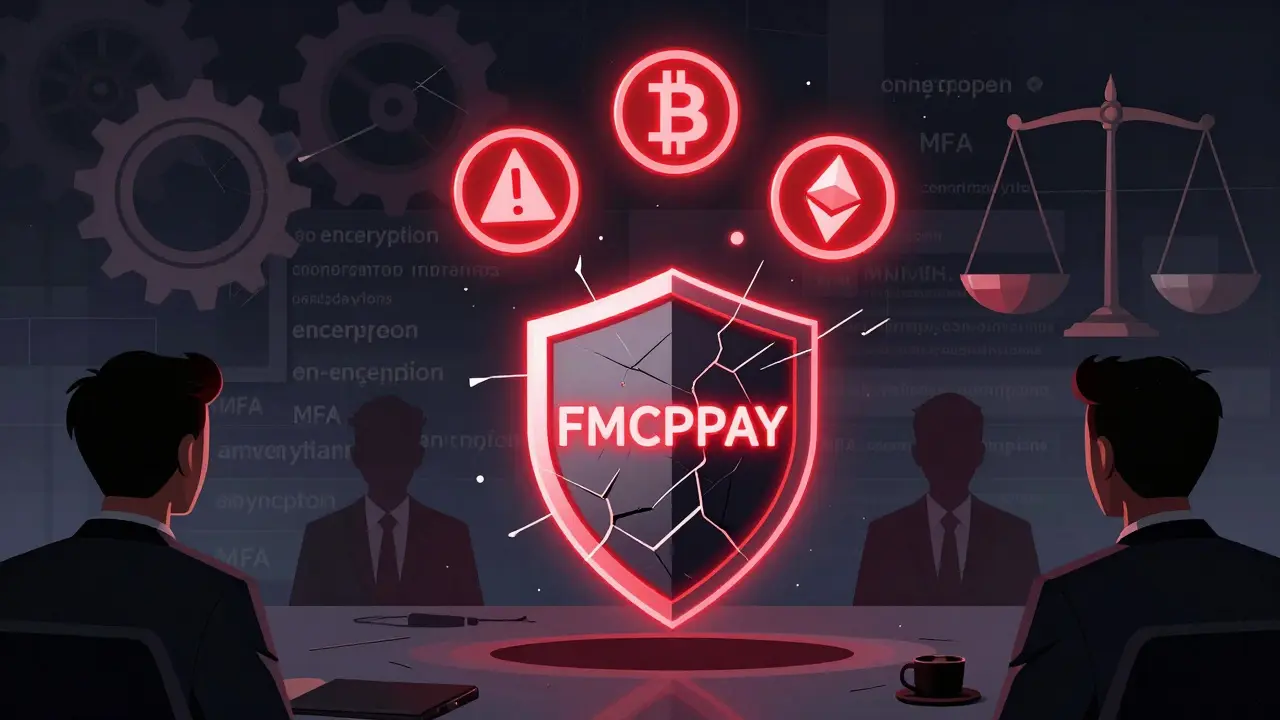
When you're looking for a crypto exchange, you want something that works, keeps your money safe, and doesn’t vanish overnight. FMCPAY promises easy trading, staking, and peer-to-peer (P2P) crypto exchanges - but here’s the real question: can you trust it?
FMCPAY launched in 2021 and claims to serve 2 million users across 65 countries as of late 2024. It supports Bitcoin, Ethereum, Litecoin, and over 30 other coins. It even has a mobile app and a Trustpilot rating of 4.4. Sounds good? Not so fast.
What FMCPAY Offers - And What It Hides
FMCPAY isn’t trying to reinvent crypto trading. It does the basics: buy, sell, stake, and trade crypto via P2P. That’s it. No advanced charting tools, no margin trading, no institutional-grade APIs. If you’re just starting out or live somewhere with few crypto options, it might seem like a simple solution.
But here’s what they won’t tell you: they don’t publish any details about their security systems. No mention of encryption standards like AES-256. No info on whether two-factor authentication uses SMS, authenticator apps, or hardware keys. Just vague claims like “encryption and multi-factor authentication.” That’s like saying your car has “safety features” without telling you if it has airbags or ABS.
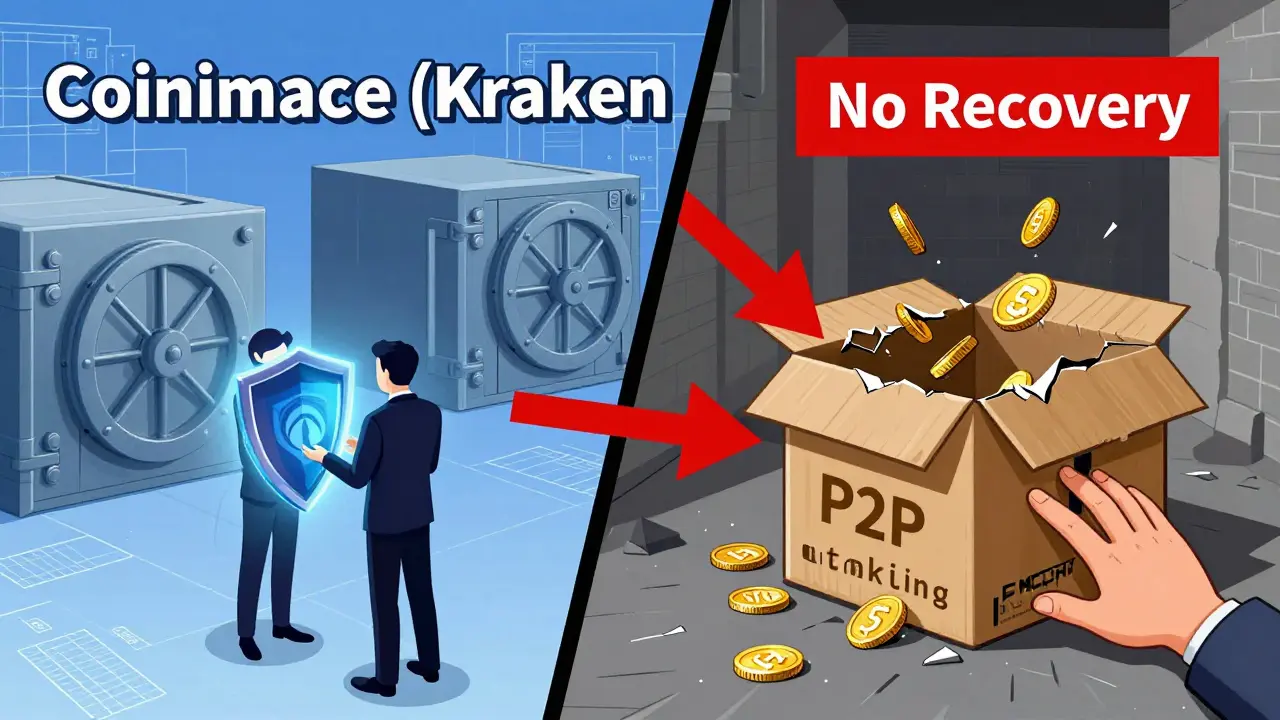
And then there’s the biggest red flag: FMCPAY is not regulated by any top-tier financial authority. Not the SEC. Not the FCA. Not ASIC. Nothing. BrokerChooser, a trusted brokerage verification service, explicitly warns: “We wouldn’t trust FMCPAY with our own money.” Why? Because if something goes wrong - if the platform freezes withdrawals, gets hacked, or disappears - you have almost no legal recourse. No regulator to file a complaint with. No insurance fund like SIPC to protect your assets.
The Trustpilot Paradox
FMCPAY’s Trustpilot page says 4.4 out of 5 stars. Sounds impressive, right? But look deeper. Forex Peace Army, another independent review site, reported in November 2024 that FMCPAY had zero reviews. How can one site show hundreds of glowing reviews while another shows none?
This isn’t just a data glitch. It’s a pattern seen with unregulated platforms. Positive reviews often come from users who haven’t lost money yet - or worse, from paid promoters. Meanwhile, the people who got locked out of their accounts? They rarely leave reviews. They’re too busy trying to get their money back.
And even if the reviews are real, a 4.4 rating doesn’t mean safety. It just means people found the interface easy to use. Easy doesn’t mean secure.
Why CoinMarketCap Won’t Track It
FMCPAY got listed on CoinMarketCap in December 2023. That sounds like a stamp of approval. But CoinMarketCap doesn’t verify safety - it verifies trading activity. And here’s the truth: FMCPAY’s trading volume is untracked. That means there’s not enough verified trading data to include in their market rankings.
Compare that to Binance or Coinbase, which process billions in daily volume and publish audited reserve reports. FMCPAY? No reserve data. No transparency. Just a number on a website saying “2 million users.” Without trading volume, you can’t tell if those users are actually active - or if they’re just sign-ups who never traded a single coin.

Staking and P2P: A Double-Edged Sword
FMCPAY lets you stake your crypto to earn passive income. That’s useful. But here’s the catch: when you stake on an unregulated exchange, you’re trusting them to hold your coins. If they get hacked, or if they decide to freeze withdrawals, your staked assets are gone - and you can’t prove ownership in court.
The P2P feature lets you trade directly with other users. Sounds peer-to-peer? Not really. FMCPAY still acts as the middleman holding your funds until the trade clears. That’s not P2P - that’s custodial trading with a fancy label. And if the other user doesn’t pay up, you’re still stuck waiting for FMCPAY’s support team to intervene - assuming they respond at all.
Who Should Avoid FMCPAY
If you’re in the U.S., Canada, the UK, Australia, or any country with strong crypto regulations - don’t use FMCPAY. The SEC and other regulators are cracking down on unlicensed platforms. You’re not just risking your money - you could be violating local laws.
If you care about long-term security, insurance, or legal protection - walk away. Platforms like Coinbase, Kraken, or even Interactive Brokers are regulated, audited, and offer real recourse if something goes wrong. They’re not perfect, but they’re miles ahead of FMCPAY in safety.
Who Might Consider It - With Caution
There’s one scenario where FMCPAY might make sense: if you live in a country with no access to regulated exchanges, and you’re desperate to buy crypto. Maybe you’re in a region where banks block crypto purchases, and local options are even riskier.
In that case, only use FMCPAY with money you can afford to lose completely. Don’t stake large amounts. Don’t keep more than you need for a quick trade. Treat it like a temporary bridge - not a home.
The Bottom Line
FMCPAY looks shiny on the surface. It has a clean interface, supports popular coins, and claims big user numbers. But under the hood, it’s built on secrecy and risk.
Real crypto exchanges don’t hide their security details. They don’t avoid regulation. They don’t rely on unverified Trustpilot ratings to prove trustworthiness.
FMCPAY might work today. But tomorrow? If regulators crack down, if a hacker breaches their system, or if the company just shuts down - you won’t get your money back. No one will help you. No one is responsible.
There are dozens of safer, transparent alternatives. Why take a gamble on a platform that refuses to play by the rules?
Is FMCPAY regulated by any financial authority?
No, FMCPAY is not regulated by any top-tier financial authority such as the SEC, FCA, or ASIC. BrokerChooser and other independent analysts confirm it lacks regulatory oversight, meaning users have no legal protection if funds are lost or frozen.
Can I trust FMCPAY’s security measures?
FMCPAY claims to use encryption and multi-factor authentication but doesn’t disclose technical details like encryption standards (AES-256?), authentication methods (SMS, Google Authenticator, or hardware keys?), or whether cold storage is used. Without transparency, these claims can’t be verified - making security a major concern.
Why is FMCPAY listed on CoinMarketCap if it’s untracked?
CoinMarketCap lists exchanges based on basic operational criteria, not safety or volume reliability. FMCPAY’s listing doesn’t mean it’s trustworthy - it just means it met minimal technical requirements to appear on the site. Its trading volume remains untracked because there’s insufficient verified data to include in market rankings.
Are the positive Trustpilot reviews real?
There’s conflicting data. Traders Union reports a 4.4 Trustpilot rating, but Forex Peace Army found zero reviews on the same platform in late 2024. This inconsistency raises red flags about review authenticity. Positive reviews may come from users who haven’t yet experienced issues - not those who lost money.
What happens if FMCPAY gets hacked or shuts down?
If FMCPAY is hacked, freezes withdrawals, or disappears, you have almost no way to recover your funds. There’s no insurance, no regulatory body to appeal to, and no legal framework protecting users. BrokerChooser explicitly warns that users have “few options to get your money back” on unregulated platforms like this one.
Should I use FMCPAY for staking?
Staking on FMCPAY means giving them full control of your coins. If they’re hacked or decide to block access, you lose everything. Even if you earn rewards, the risk far outweighs the benefit. Use staking only on regulated exchanges with proven cold storage and insurance.
Is FMCPAY better than Binance or Coinbase?
No. Binance and Coinbase are regulated, audited, and publish verified trading volumes and reserve reports. They offer customer support with legal accountability and insurance for user funds. FMCPAY offers none of that. It’s not a better alternative - it’s a higher-risk option for users with no other choices.
What to Do Instead
If you want to trade crypto safely, use platforms that are regulated, transparent, and audited. In the U.S., Coinbase and Kraken are top choices. In Europe, Bitstamp and Binance EU are options. Even if they’re not perfect, they have legal obligations to protect you.
For P2P trading, use Binance’s P2P platform - it’s regulated, escrowed, and backed by a global infrastructure. For staking, use Coinbase or Kraken - both offer staking with clear terms and insurance.
FMCPAY might seem like a shortcut. But in crypto, shortcuts often lead to dead ends. Don’t risk your hard-earned money on a platform that refuses to answer basic questions about safety, regulation, or accountability.
Comments
Mark Estareja
FMCPAY's lack of transparency on encryption standards is a red flag bigger than a 2020 meme stock pump. AES-256? TLS 1.3? Hardware wallet integration? Nothing. Just marketing fluff wrapped in a mobile app UI. If they can't even disclose their security stack, they're not a platform - they're a honeypot.
January 24, 2026 at 23:21
Heather Crane
I get it - you're scared. I was too. But let's not throw the baby out with the bathwater. Not everyone has access to Coinbase or Kraken. I live in a rural town where even PayPal won't let me buy crypto. FMCPAY? It's not ideal - but it's the only way I got my first 0.01 BTC. I keep it minimal. I don't stake. I don't leave it there longer than 24 hours. It's a bridge, not a home. And sometimes, bridges are all you got.
January 25, 2026 at 15:23
Catherine Hays
Anyone using this platform is an idiot. No regulation. No audit. No accountability. And you think Trustpilot ratings matter? That's like trusting a guy who says his car has airbags because the dealership poster says so. If you're not in the US, you're already playing Russian roulette. If you are? You're breaking the law. Stop being naive.
January 26, 2026 at 19:28
Nathan Drake
There's an interesting paradox here. We demand transparency from platforms like FMCPAY, yet we're the ones who click 'Accept' on their terms without reading them. We want safety, but we also want convenience. We want returns without risk. But crypto, at its core, is about decentralization - and decentralization means responsibility. If you don't control your keys, you're not owning crypto. You're renting it. And FMCPAY? They're the landlord who never fixes the leaky roof - but still charges rent.
January 27, 2026 at 20:38
Mike Stay
It is important to recognize that the structural deficiencies of FMCPAY, as outlined in this comprehensive analysis, are not anomalies - they are systemic features of unregulated, offshore crypto intermediaries. The absence of regulatory oversight, the lack of cryptographic transparency, the non-disclosure of reserve holdings, and the reliance on unverified third-party review platforms collectively constitute a risk profile that is fundamentally incompatible with fiduciary responsibility. One cannot reasonably expect legal recourse, asset recovery, or operational integrity from an entity that deliberately obscures its operational architecture. The fact that CoinMarketCap lists it reflects neither endorsement nor validation - merely algorithmic compliance with minimal data ingestion thresholds. In this context, FMCPAY functions less as a financial service provider and more as a speculative vehicle operating in a regulatory vacuum - a digital Wild West outpost where the only law is the volatility of the market and the silence of the users who have lost everything.
January 29, 2026 at 04:01
Taylor Mills
trustpilot is fake. forex peace army is legit. if you're using fmcpay you're basically handing your seed phrase to a guy in a basement in russia. and yes i said russia - because if it was in the us it'd be shut down by now. no one cares about your 'i just needed a way to buy btc' excuse. there are ways. use binance p2p. use localbitcoins. but don't be that guy who gets hacked and then cries on reddit.
January 29, 2026 at 15:05