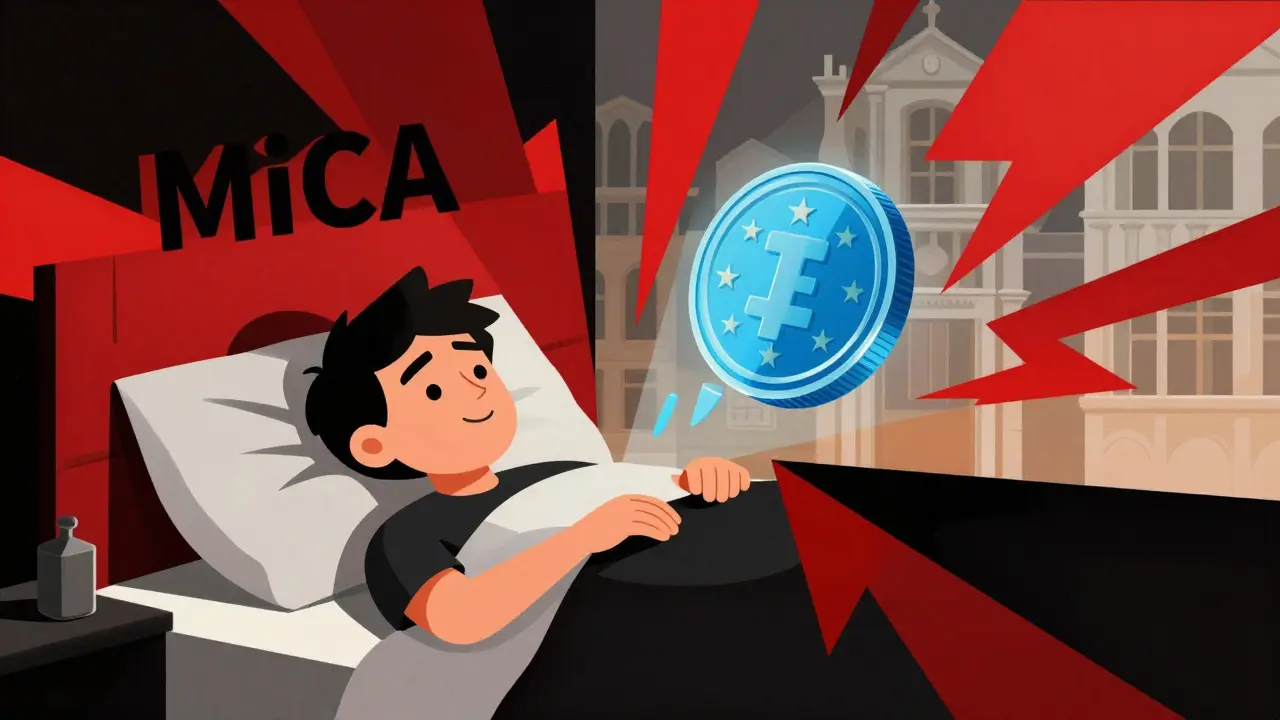
Imagine waking up in January 2025 to find your favorite crypto trading platform has suddenly stopped letting you buy or sell Tether (USDT). You can still hold it. You can still send it to a friend. But you can’t trade it. This wasn’t a glitch. It was the European Union enforcing its new rulebook for digital assets.
The Markets in Crypto-Assets Regulation, known as MiCA, is the EU's comprehensive legal framework regulating crypto-assets across all 27 member states, took full effect in 2025. For stablecoins like USDT, which do not meet specific reserve and transparency standards, this meant being delisted from regulated exchanges operating within the EU. If you are holding stablecoins in Europe, understanding these restrictions is no longer optional-it is essential for protecting your capital.
What Exactly Are the New EU Stablecoin Rules?
To understand why USDT faced restrictions, you first need to know how MiCA classifies stablecoins. The regulation splits them into two main buckets:
- E-Money Tokens (EMTs): These are pegged 1-to-1 to a single fiat currency, like the Euro or the US Dollar. Think of them as digital versions of cash held in a bank account. To qualify, the issuer must keep reserves that are fully backed by cash or highly liquid assets, protected from bankruptcy, and audited regularly.
- Asset-Referenced Tokens (ARTs): These try to maintain value by referencing a basket of currencies, commodities, or even other crypto assets. Because they are more complex and carry higher risk, MiCA imposes stricter rules on their issuance and reserve management.
The core requirement for both types is simple but strict: one-for-one backing. For every token in circulation, there must be an equivalent amount of safe, accessible reserves. Crucially, holders have the right to redeem their tokens at par value. This means if you hold $100 worth of a compliant stablecoin, you should be able to get back $100 in fiat currency without penalty or delay.
Why does this matter? Before MiCA, many popular stablecoins operated with opaque reserve structures. Some held commercial paper or corporate bonds instead of pure cash. While this might seem minor, it introduces credit risk. If those bonds lose value, the stablecoin’s peg can break. MiCA eliminates this uncertainty by demanding high-quality, transparent reserves.
Why Was USDT Restricted in the EU?
Tether (USDT) is the world’s largest stablecoin by market cap. However, under MiCA, it did not automatically qualify as a compliant EMT or ART when the enforcement deadline hit. Here is why:
- Reserve Composition: Historically, Tether’s reserves included a mix of cash, treasury bills, and other instruments. MiCA requires reserves to be held in bankruptcy-protected structures with immediate liquidity. Until Tether adjusted its reserve structure to meet these exact EU standards, it could not operate freely on regulated platforms.
- Lack of EU Authorization: Issuers must obtain authorization from national competent authorities in the EU. Without this license, a stablecoin cannot be traded on EU-regulated exchanges.
- Transparency Gaps: MiCA demands regular, real-time disclosure of reserve attestations by independent auditors. Previous reporting cycles for USDT were less frequent and lacked the granular detail required by ESMA (European Securities and Markets Authority).
As a result, Crypto-Asset Service Providers (CASPs)-essentially crypto exchanges-were forced to delist non-compliant stablecoins from their order books by early 2025. This didn’t mean users lost their coins. It meant they couldn’t easily convert them into other assets or fiat through regulated channels.
| Feature | MiCA-Compliant (e.g., EURC) | Non-Compliant (e.g., USDT pre-adjustment) |
|---|---|---|
| Reserve Backing | 100% cash/highly liquid assets | Mixed assets (bonds, commercial paper) |
| Bankruptcy Protection | Required | Not guaranteed under EU law |
| Redemption Right | Guaranteed at par value | No statutory redemption guarantee |
| Trading on EU Exchanges | Allowed | Banned after Jan 2025 |
| Auditing Frequency | Regular, public attestations | Less frequent, limited transparency |

How Does This Compare to US Regulations?
If you think Europe is going too far, take a look at what happened across the Atlantic. In July 2025, the United States passed the GENIUS Act (Guiding and Establishing National Innovation for U.S. Stablecoins Act). Signed into law by President Trump, this legislation also mandates one-for-one reserves and bankruptcy protection. So, isn’t it the same?
On paper, yes. In practice, no. The key difference lies in implementation speed and flexibility. The GENIUS Act treats stablecoins as "payment stablecoins," giving them a status similar to electronic money but with more lenient transition periods. Major U.S. payment processors like Visa and Mastercard quickly integrated these compliant stablecoins into their networks. Retail giants like Walmart and Amazon began exploring them for high-volume transactions.
This regulatory divergence creates a strange dynamic. European traders face stricter hurdles, potentially pushing some activity toward offshore or unregulated platforms. Meanwhile, U.S.-based entities gain a competitive edge in global payments due to faster integration and broader acceptance. Market analysts suggest this could shift significant transaction volumes away from European markets in the short term.
However, the EU argues that strictness builds trust. By setting a high bar, Europe aims to prevent another Terra-Luna collapse or Silicon Valley Bank-style run on stablecoin reserves. The goal is long-term stability, not just rapid adoption.
What Should You Do With Your USDT Holdings?
If you live in the EU and hold USDT, here is your practical playbook:
- Don’t Panic Sell: Delisting from exchanges doesn’t mean your tokens are worthless. You can still hold them in self-custody wallets (like Ledger or Trezor) and transfer them peer-to-peer.
- Convert to Compliant Alternatives: If you need to trade actively, consider moving funds to MiCA-compliant stablecoins. Look for tokens issued by authorized entities within the EU. Examples include emerging euro-denominated stablecoins from major banks.
- Check Your Exchange Status: Log in to your CASP provider. Most offered conversion tools during the transition period. If you missed the window, contact support to see if they allow withdrawals to external wallets.
- Monitor Reserve Reports: Even if USDT adjusts its reserves later, always check the latest attestation reports before re-engaging. Transparency is now the gold standard.
For institutional investors, the shift is more dramatic. Many relied on USDT’s deep liquidity for cross-border settlements. They are now diversifying into multiple compliant options to mitigate counterparty risk. This fragmentation might reduce efficiency temporarily but increases systemic safety.

The Rise of European Bank Stablecoins
Europe isn’t just restricting foreign tokens; it’s building its own. Nine major European banks-including ING, UniCredit, and Raiffeisen Bank International-formed a consortium to launch a MiCA-compliant, euro-denominated stablecoin. Expected to launch in late 2026, this project aims to create "a real European alternative" to U.S.-dominated issuers.
Why bother? Floris Lugt, Digital Assets lead at ING, noted that blockchain technology offers programmability and 24/7 instant settlement capabilities that traditional banking lacks. By creating a homegrown stablecoin, Europe ensures strategic autonomy in payments. It also aligns with the broader vision of a digital euro, though the stablecoin will likely precede any central bank digital currency (CBDC) rollout.
This initiative signals a maturing market. Instead of relying on tech startups from Silicon Valley, traditional financial institutions are stepping up. For users, this means greater confidence in the underlying infrastructure. When your local bank backs the stablecoin, the risk profile changes significantly.
Long-Term Implications for the Global Market
The global stablecoin market is projected to grow from $230 billion in 2025 to $2 trillion by 2028. MiCA sets a precedent that other regions may follow. Countries like Japan, Singapore, and the UK are watching closely. If Europe proves that strict regulation can coexist with innovation, we might see a wave of similar laws worldwide.
However, challenges remain. Smaller service providers struggle with compliance costs. Legal reviews, system upgrades, and ongoing reporting require resources that only large firms possess. This could consolidate the market further, leaving fewer players but stronger ones.
Additionally, the Bank for International Settlements (BIS) warned in its 2025 Annual Economic Report about monetary sovereignty risks. If too many people use dollar-pegged stablecoins in Europe, it undermines the Euro’s dominance. Hence, the push for euro-backed alternatives isn’t just about compliance-it’s about economic independence.
Can I still use USDT in the EU after 2025?
Yes, but with limitations. You can hold USDT in a personal wallet and send it to others. However, you cannot trade it on regulated EU-based exchanges unless Tether achieves full MiCA compliance. Always verify current status with your exchange provider.
What happens if my stablecoin issuer goes bankrupt?
Under MiCA, compliant stablecoins must hold reserves in bankruptcy-protected structures. This means if the issuer fails, your funds are segregated and should remain safe. Non-compliant tokens offer no such guarantee, exposing you to total loss risk.
Is the GENIUS Act stricter than MiCA?
No, the GENIUS Act is generally considered more flexible. While both require 1:1 backing and bankruptcy protection, the U.S. framework allows for faster integration and less rigid auditing timelines, making it easier for companies to launch products quickly.
When will the European bank stablecoin launch?
The consortium led by ING and eight other banks targets a launch in the second half of 2026. They are currently seeking licensing from the Dutch Central Bank as an e-money institution.
Do I need to report my stablecoin holdings to tax authorities?
Yes. Regardless of MiCA restrictions, crypto assets are taxable events in most EU countries. Transfers, conversions, and redemptions may trigger capital gains taxes. Consult a local tax advisor to ensure compliance with national laws.