Think about the last time you created a new account for a website. You probably typed in your name, email, and maybe even your phone number. Then, you made up a password that you’ll likely forget by next week. That process is the backbone of how we interact with the internet today. But here’s the uncomfortable truth: you don’t actually own that data. The company does.
This is the core problem with Traditional Identity Systems, which are centralized databases managed by corporations or governments that store user credentials and personal information. For decades, this model has worked well enough for convenience, but it comes with massive risks. Every time you log in, you’re trusting a third party to keep your secrets safe. And as we’ve seen with countless data breaches, that trust is often misplaced.
Enter Decentralized Identity (DID), a blockchain-based approach that gives individuals control over their digital identities through self-sovereign credentials stored in digital wallets. This isn’t just a tweak to the old system; it’s a complete overhaul. Instead of companies holding your data, you hold it. Instead of passwords, you use cryptographic keys. It sounds like sci-fi, but it’s happening right now, and it’s changing how we think about privacy, security, and ownership online.
The Old Way: How Centralized Identity Works
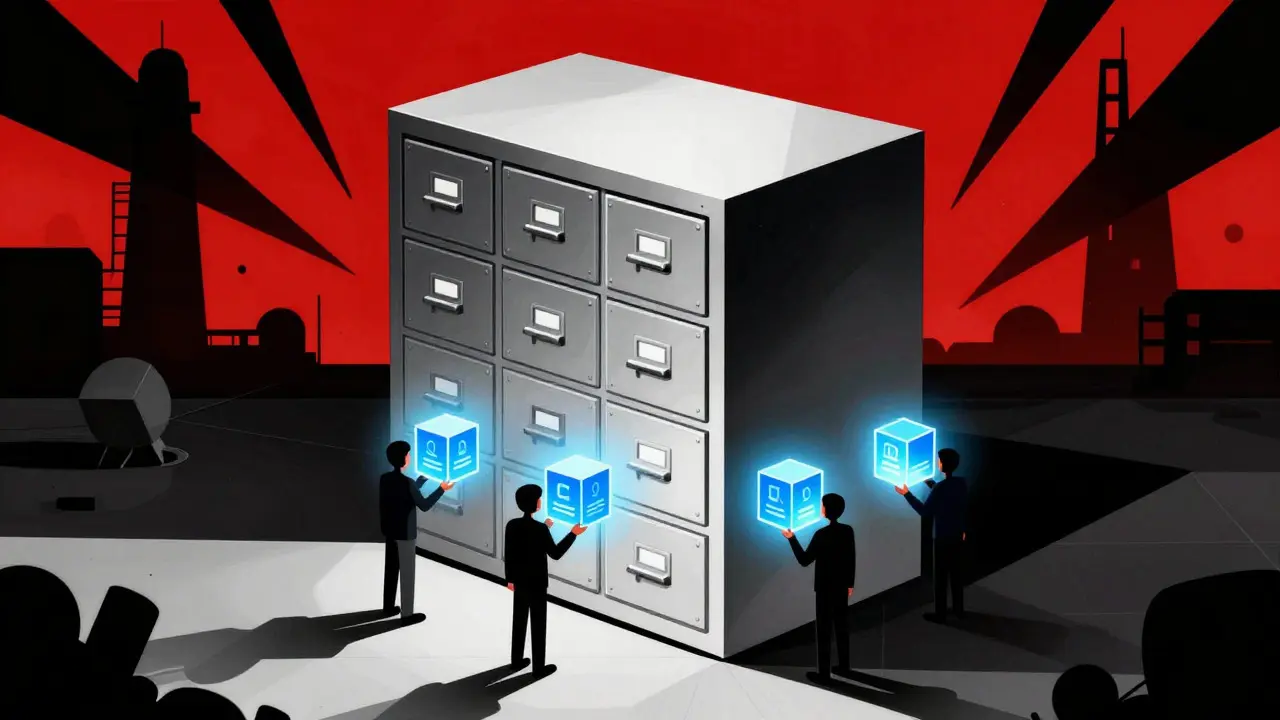
To understand why DID matters, we first need to look at what we’re replacing. Traditional identity systems rely on a centralized architecture. Imagine a giant filing cabinet owned by Google, Facebook, or your bank. Inside that cabinet are millions of files containing your birth date, address, social security number, and login credentials. When you want to prove who you are, you ask the owner of the cabinet to check your file.
This model is built on Identity and Access Management (IAM), which is a framework of policies and technologies used by organizations to verify user identities and manage access rights. In practice, this means you create an account with one provider, and then use that same account to log into dozens of other services via protocols like OAuth or SAML. It’s convenient. You get Single Sign-On (SSO) capabilities, meaning one password gets you everywhere. But convenience comes at a steep price.
The biggest issue? Single points of failure. Because all your data lives in one place, that place becomes a target. Hackers know that if they breach a major corporation, they can steal millions of records at once. We saw this play out in June 2022 when ID.me, a major identity verification provider, suffered a security lapse. Employees accidentally shared sensitive passport and driver’s license images on corporate messaging channels. Millions of people had their Personally Identifiable Information (PII) exposed because the system relied on a central repository that wasn’t secure enough.
In this model, you have almost no control. Once you give your data to a company, you hope they protect it. You can’t easily delete it, move it, or see exactly who else has access to it. You are essentially renting your identity from the largest tech companies in the world.
The New Way: Decentralized Identity Explained
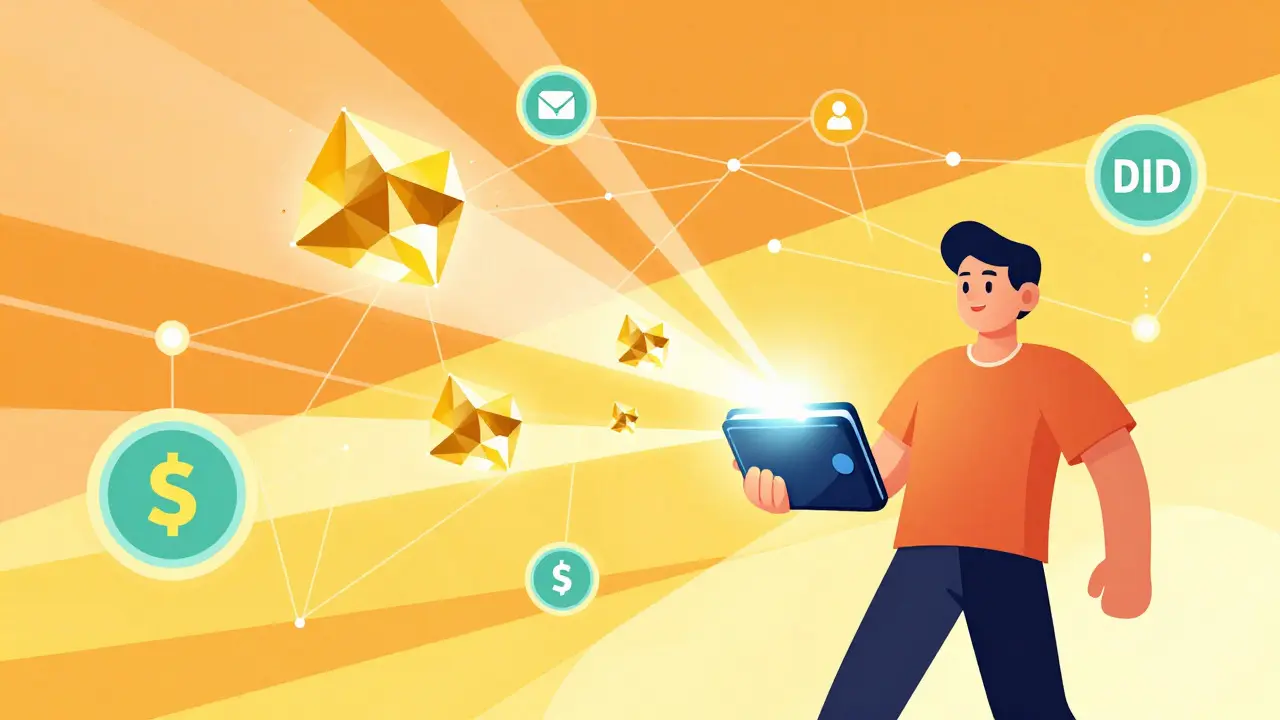
Decentralized Identity flips this script entirely. Instead of storing your data in a central server, DID stores it on your device-your phone, laptop, or hardware wallet. Think of it like a physical wallet. You carry your driver’s license, health insurance card, and student ID with you. When you need to prove something, you hand over only the specific document required. You don’t mail your entire wallet to every business you interact with.
This system relies on Distributed Ledger Technology (DLT), often implemented using Blockchain, to verify identities without a central authority. Here’s how it works in simple terms:
- You Create a DID: You generate a unique identifier that is recorded on a blockchain. This doesn’t contain your personal info; it’s just a pointer to your public key.
- You Receive Credentials: A trusted issuer, like a government agency or university, gives you a Verifiable Credential, which is a digitally signed statement of fact that can be cryptographically verified. For example, a diploma or a driver’s license. This credential is stored in your Digital Wallet, which is a software application that stores and manages decentralized identifiers and verifiable credentials.
- You Prove Your Identity: When a service needs to verify you, you present a Verifiable Presentation, which is a subset of credentials selected by the user to share with a verifier. The verifier checks the cryptographic signature against the blockchain to ensure it’s valid. No central database lookup is needed.
The magic here is selective disclosure. If a bar wants to know if you’re over 21, you don’t have to show them your full driver’s license with your address and mother’s maiden name. You can present a zero-knowledge proof that says “Yes, I am over 21” without revealing any other details. The verifier trusts the math, not the middleman.
Head-to-Head: Security, Privacy, and Control
So, which system is better? Let’s break down the differences across the metrics that matter most to users and businesses alike.
| Feature | Traditional Identity (Centralized) | Decentralized Identity (DID) |
|---|---|---|
| Data Ownership | Owned by the organization | Owned by the individual |
| Storage Location | Centralized servers (single point of failure) | User’s device + Distributed Ledger |
| Privacy Model | All-or-nothing sharing | Selective disclosure & Zero-Knowledge Proofs |
| Breach Risk | High (mass data exposure) | Low (no central honeypot) |
| User Experience | Familiar (passwords/logins) | New paradigm (digital wallets/keys) |
| Offline Capability | Usually requires internet | Possible with local verification tools |
| Trust Model | Trust the institution | Trust the cryptography |
The security difference is stark. In traditional systems, if a hacker breaches a server, they get everything. In DID, there is no central server to hack. Even if a hacker steals your digital wallet backup, they still need your private key to unlock it. And because each interaction is cryptographically signed, replay attacks are nearly impossible.
Privacy is where DID really shines. Today, when you sign up for a newsletter, you might also be agreeing to sell your browsing habits to advertisers. With DID, you decide exactly what data is shared. If a job applicant needs to prove they have a degree, they send a verifiable credential. The employer verifies it instantly without ever seeing the applicant’s GPA, major, or graduation date unless necessary. This reduces bias and protects personal information.
Why Adoption Is Slow (And Why It Matters)
If DID is so much better, why aren’t we all using it yet? The answer lies in inertia and complexity. Traditional identity systems are deeply embedded in our infrastructure. Banks, governments, and enterprises have spent billions building IAM frameworks around centralized databases. Switching to DID requires rethinking these architectures from the ground up.
There’s also the user experience hurdle. Most people are comfortable typing a password. They are less comfortable managing a seed phrase or understanding what a "verifiable presentation" is. Early adopters face a steep learning curve. However, as digital wallets become integrated into operating systems like iOS and Android, this friction will decrease. Apple and Google are already exploring decentralized identity standards, which could bring DID to billions of users overnight.
Regulation is another factor. Laws like GDPR in Europe emphasize data minimization and user consent-principles that align perfectly with DID. Governments are starting to take notice. Several countries are piloting national digital ID programs based on decentralized standards to reduce fraud and improve citizen services. For example, Estonia has long been a leader in e-governance, and its move toward blockchain-backed identity sets a precedent for others.
Real-World Use Cases Where DID Wins
Let’s look at scenarios where DID offers clear advantages over traditional methods.
- Healthcare: Patients currently struggle to share medical records between different hospitals. With DID, a patient holds their health records in a digital wallet. They grant temporary access to a specialist, who verifies the data’s authenticity without needing to query a central health database. This speeds up care and keeps sensitive health data private.
- Travel: Border control is ripe for disruption. Instead of handing over a physical passport that can be scanned and copied, travelers could present a verifiable credential proving citizenship and visa status. The border agent verifies the credential locally, reducing wait times and eliminating counterfeiting.
- Financial Services: Know Your Customer (KYC) processes are expensive and repetitive. Currently, you submit your ID to every bank you open an account with. With DID, you verify your identity once with a trusted issuer. Then, you share that verified credential with any financial institution. This cuts costs for banks and saves time for customers.
- Gaming and Metaverse: Gamers often lose access to their accounts when a game shuts down or a platform bans them. With DID, your gaming achievements and assets are tied to your identity, not a specific company’s database. You take your reputation and history with you wherever you go.
The Future: Convergence or Replacement?
Will DID completely replace traditional identity systems? Probably not overnight. For the foreseeable future, we’ll see a hybrid model. Legacy systems will continue to operate, but they’ll increasingly interface with decentralized layers. Imagine logging into a legacy banking app using your DID wallet instead of a password. The bank doesn’t need to change its core database; it just needs to accept verifiable presentations from external sources.
This convergence is already happening. Standards bodies like the W3C have established specifications for DIDs and Verifiable Credentials, ensuring interoperability across different platforms. As more industries adopt these standards, the network effect will kick in. Once enough issuers, holders, and verifiers join the ecosystem, switching back to centralized models will seem archaic.
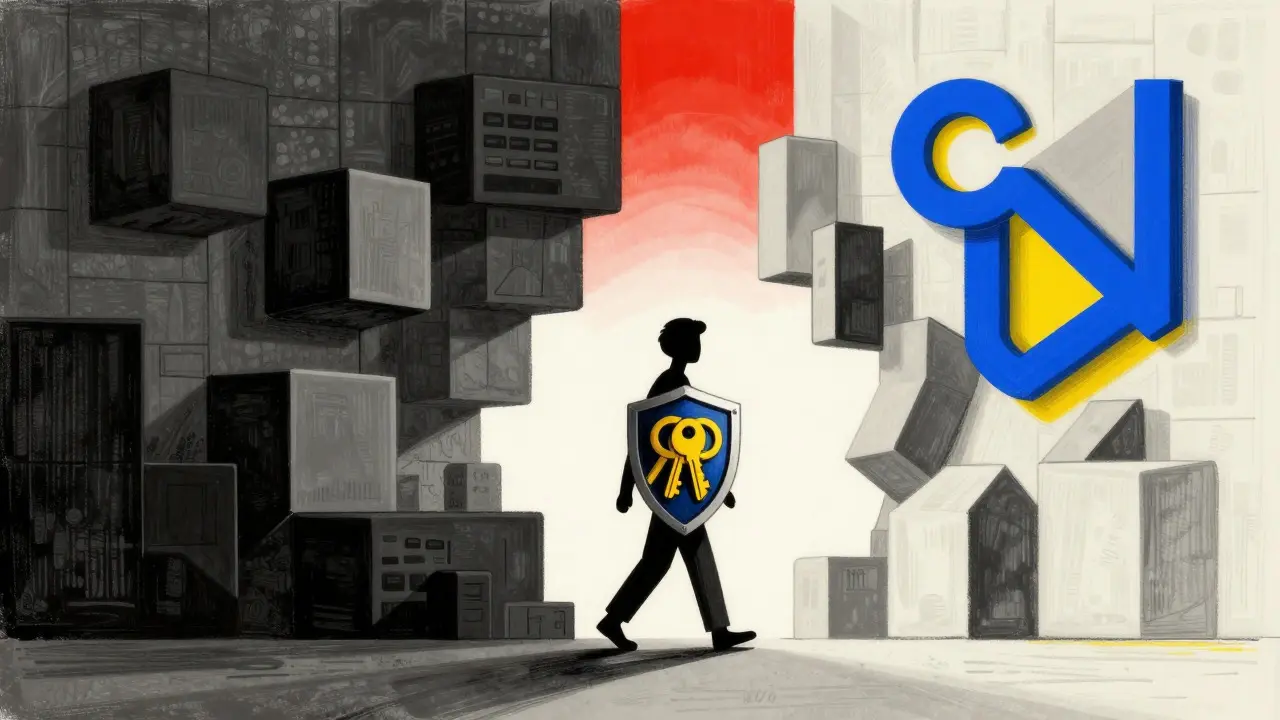
The shift toward decentralized identity is more than a technical upgrade; it’s a philosophical one. It challenges the notion that large institutions should act as gatekeepers of our personal information. By putting control back in the hands of individuals, DID promises a safer, more private, and more equitable digital world. The technology is ready. The question is whether we’re willing to embrace it.
What is the main difference between DID and traditional identity?
The main difference is control and storage. Traditional identity systems store your data in centralized databases owned by companies or governments. Decentralized Identity (DID) stores your credentials on your own device (like a smartphone) and uses blockchain to verify them, giving you full ownership and control over who sees your data.
Is Decentralized Identity secure?
Yes, DID is generally considered more secure than traditional systems because it eliminates single points of failure. Since there is no central database to hack, attackers cannot steal millions of records at once. Security relies on strong cryptography and the user keeping their private keys safe in their digital wallet.
Do I need a blockchain to use DID?
Not necessarily, but blockchain is the most common method for implementing DID. Blockchain provides a distributed ledger that allows anyone to verify the authenticity of a decentralized identifier (DID) without needing to trust a central authority. Other distributed ledger technologies can also be used.
What is a Verifiable Credential?
A Verifiable Credential is a digital equivalent of a physical credential, like a driver’s license or university degree. It is issued by a trusted entity, cryptographically signed, and stored in your digital wallet. You can share it with others to prove facts about yourself (like your age or education) without revealing unnecessary personal details.
How does selective disclosure work in DID?
Selective disclosure allows you to share only the specific information required for a transaction. For example, if a website asks if you are over 18, you can prove this using a zero-knowledge proof without showing your actual birth date or name. This enhances privacy by minimizing data exposure.
Can I use DID offline?
Yes, one of the advantages of DID is that it can support offline verification. As long as the verifier has the necessary public keys cached locally, they can validate a verifiable presentation without an active internet connection. This makes DID useful in areas with poor connectivity.
What happens if I lose my digital wallet?
If you lose access to your digital wallet and its associated private keys, recovering your identity can be difficult, similar to losing a physical wallet. However, many DID implementations include recovery mechanisms, such as social recovery (where trusted contacts help restore access) or backup keys. It is crucial to follow best practices for backing up your seed phrases.
Comments
Nick Darring
Look, I’ve been in IT security for fifteen years and honestly, this whole decentralized identity thing feels like a solution looking for a problem that doesn’t actually exist for the average person who just wants to buy groceries online. You’re talking about cryptographic keys and seed phrases as if they are intuitive concepts for someone who still writes their passwords on a sticky note under their keyboard. The friction is going to be immense because human beings are lazy by nature and convenience has always won out over theoretical privacy every single time. Sure, the data breaches are annoying, but how many of you have actually had your life ruined by a leaked password versus just having to reset it twice? Probably not many. So when you say we don’t own our data, well, most people don’t care enough to fight for ownership if it means carrying the burden of being their own bank vault. It’s a noble idea, sure, but let’s not pretend it’s going to replace the login screen any time soon because nobody wants to manage another layer of complexity in their already chaotic digital lives.
August 10, 2026 at 16:17
Namrata Mapgaonkar
hmm interesting point nick but here in india we deal with so much paper work and lost documents everyday that maybe this tech could help us alot :) i mean imagine not losing your degree certificate or birth cert again and again... it would be such a relief for students and job seekers especially. also zero knowledge proofs sound very cool like magic almost :)
August 11, 2026 at 06:44
Rita Dutta
You speak of laziness as if it were a virtue, yet history tells us that humanity only advances when forced to abandon the comfortable crutches of the past. The centralized model is not merely inconvenient; it is a philosophical cage, a panopticon where the gaze of the corporation never blinks. We are not merely users; we are the product, commodified and sold in real-time auctions of attention and behavior. To surrender one's identity to a third party is to surrender one's soul to the algorithm. The friction you describe is merely the growing pains of liberation, the necessary discomfort of waking up from the digital slumber imposed by Big Tech. One must embrace the chaos of self-sovereignty before one can find the peace of true autonomy. The key is not just a tool; it is a symbol of reclaiming agency in an age of surveillance capitalism.
August 11, 2026 at 14:55
Eric Zehr
I think Nick raises a valid concern regarding user experience, but let's not dismiss the potential benefits entirely. The healthcare example mentioned in the post is particularly compelling because it addresses a genuine pain point that affects millions of people daily. Being able to share medical records securely without relying on disparate hospital systems could save lives during emergencies. It is important to remember that technology adoption curves are steep initially but flatten out as interfaces become more intuitive. Apple and Google integrating these standards into iOS and Android will likely bridge the gap between complex cryptography and simple user interaction. We should remain optimistic about the trajectory while acknowledging the current hurdles.
August 11, 2026 at 19:26
Eden Tadesse
i agree with eric tht the health part is really important for everyone. its scary to think abt all our info being in one place. i hope this new system works out cuz privacy matters alot to me even if it takes time to get used too. typos happen sorry!
August 13, 2026 at 05:55
Paul Smith
This is such a great discussion! 🌟 I love how Eric highlighted the healthcare angle because that’s where I see the biggest win for regular folks. No more faxing records back and forth! 📄➡️🚫 Plus, the gaming use case is huge for my circle-losing progress because a server shuts down is the worst feeling ever 😩. If we can take our achievements with us across platforms, that changes everything. Let’s keep pushing for better UX though, because as Nick said, if it’s too hard, people won’t use it. 💪✨
August 14, 2026 at 23:38