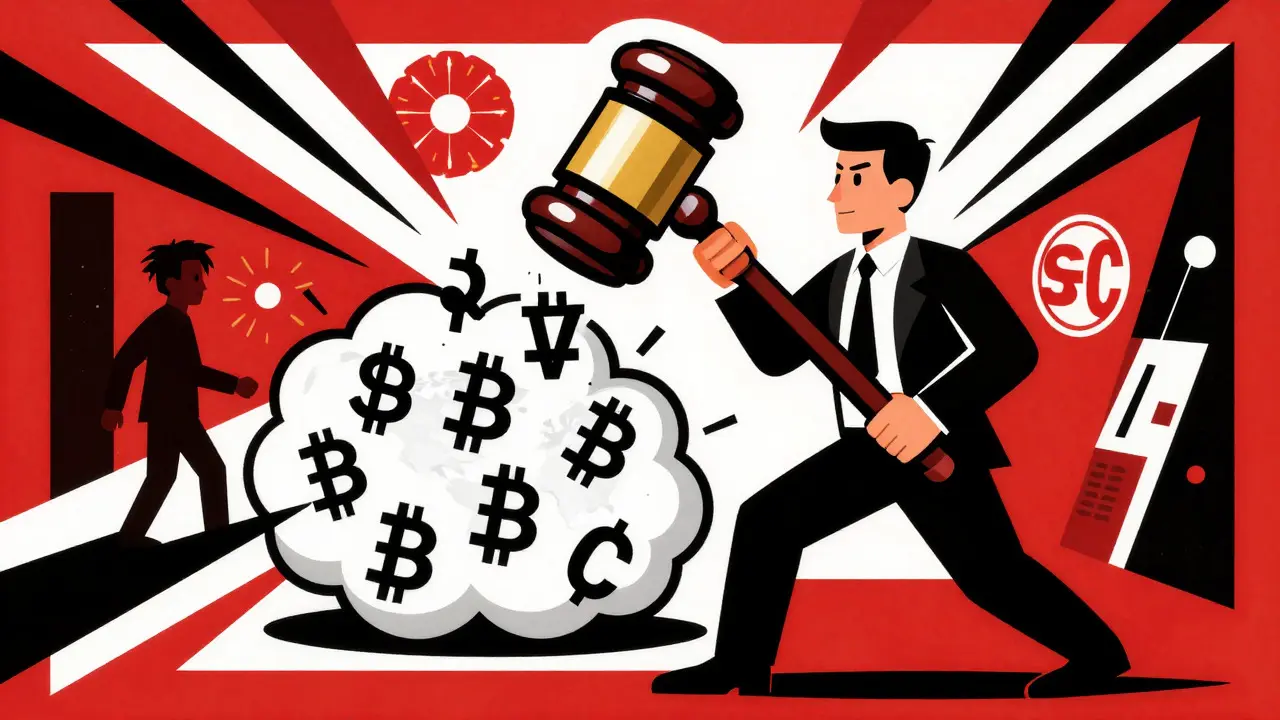
For years, Filipino crypto traders operated in a gray area. You could sign up for any global exchange, deposit pesos, and trade Bitcoin without much friction. But that era ended abruptly on July 5, 2025. The Securities and Exchange Commission (SEC) of the Philippines enforced its new comprehensive framework, effectively closing the door on unlicensed international platforms. If you are a Crypto Asset Service Provider (CASP) looking to operate in or target Filipino users, the rules have changed from "optional compliance" to "mandatory registration."
This isn't just about filling out a form. It is a structural overhaul requiring significant capital, physical presence, and rigorous operational standards. With penalties reaching millions of pesos and daily fines for non-compliance, understanding the exact requirements under SEC Memorandum Circular No. 04 and No. 05, Series of 2025 is critical for survival in this market.
The New Reality: What Are CASP Rules?
To understand the licensing process, you first need to define who needs a license. The SEC introduced the term Crypto Asset Service Provider (CASP). This covers any entity that facilitates transactions between crypto-assets and fiat money, exchanges one crypto for another, manages wallets, or participates in offerings of digital assets.
If your platform serves Filipino residents, you fall under this definition. The previous landscape allowed giants like Binance to operate freely until they were blocked in 2024 after failing to comply with local demands. Now, the path is clear: register as a domestic corporation or get blocked. The enforcement action on August 1, 2025, which targeted ten major exchanges including OKX, Bybit, KuCoin, and Kraken, signaled that the SEC is serious. These platforms were issued public advisories for operating without proper licenses while continuing to serve the Philippine market.
The goal here is investor protection. The regulator aims to prevent fund losses, curb fraud, and stop money laundering. For businesses, this means higher barriers to entry but also a more stable, trusted environment for long-term growth.
Core Licensing Requirements for CASPs
Getting licensed is not cheap or easy. The SEC has set high bars to ensure only serious, financially stable players enter the market. Here are the non-negotiable pillars of the CASP license:
- Domestic Corporation Status: You cannot be a foreign entity operating remotely. You must register as a domestic corporation with the SEC.
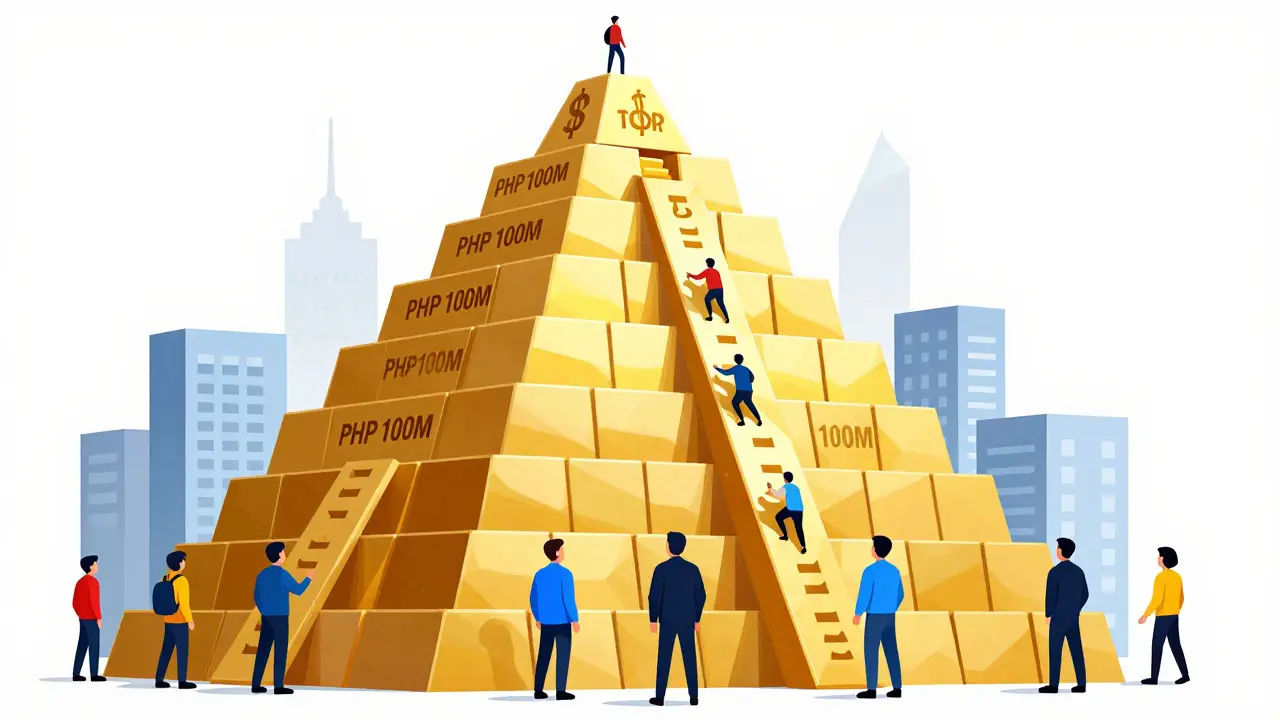
- Minimum Paid-Up Capital: The requirement is PHP 100 million (approximately $1.8 million USD). Crucially, this amount must be in cash or equivalent liquid assets, excluding any crypto-assets held by the company.
- Physical Office Presence: A virtual office won’t cut it. You must maintain a physical office within the Philippines where regulatory authorities can conduct inspections and audits.
- Registration with PhiliFintech Innovation Office: All applications go through this specific office within the SEC, which acts as the central hub for fintech regulation.
These requirements immediately filter out smaller startups and informal operators. They favor established platforms that have the resources to build infrastructure in Southeast Asia. For example, companies like Youholder and Bitget have moved quickly to implement enhanced security protocols and regulatory adherence, positioning themselves as compliant leaders in this new era.
Documentation and Operational Standards
Capital is just the entry ticket. To keep your license, you need robust systems. The application process requires extensive documentation submitted to the SEC before you can launch any activities. You must submit these documents at least 30 days prior to commencing operations.
Your submission must include detailed business rules, comprehensive Anti-Money Laundering (AML) policies, and Know Your Customer (KYC) procedures. The SEC wants to see exactly how you verify user identities and track suspicious transactions. Additionally, you need to outline your risk control mechanisms and disclosure plans.
One of the most critical operational mandates is the segregation of funds. Licensed CASPs must strictly separate customer funds from company assets. This rule was designed to protect users in the event of an exchange collapse, ensuring that client money isn't used to cover corporate debts or losses. Monthly financial reports must be submitted to the SEC to prove this separation is maintained.
Marketing and Public Offering Restrictions
How you talk about your product matters as much as how you run it. Under MC 4-2025, marketing crypto-assets in the Philippines is heavily regulated. You cannot simply sell or offer crypto-assets without regulatory compliance.
CASPs must produce disclosure documents that are filed with the SEC and published on their websites, social media accounts, and other communication channels. These disclosures must be live at least 30 days before any marketing activity or actual offering begins. This cooling-off period ensures investors have time to review the risks.
Furthermore, the rules prohibit assertions regarding future crypto-asset values, except for very specific statements allowed under Section 5.3 of the regulations. This prevents hype-driven marketing that often leads to retail investor losses. You must communicate transparently, avoiding promises of guaranteed returns or speculative price predictions.

Penalties for Non-Compliance
The cost of ignoring these rules is steep. The SEC has equipped itself with substantial penalty powers to enforce the CASP framework. Violations result in fines ranging from 50,000 to 10 million pesos per violation.
If a violation continues day after day, an additional daily penalty of 10,000 pesos is applied. This cumulative structure makes prolonged non-compliance financially unsustainable for any business. Beyond fines, the ultimate penalty is exclusion from the market. As seen with Binance in 2024, the government can block access to the platform entirely, forcing users to exit within a set timeframe (90 days in Binance's case).
| Scenario | Requirement | Consequence of Failure |
|---|---|---|
| Capital Adequacy | Maintain PHP 100M paid-up capital | License revocation; inability to operate legally |
| Fund Segregation | Separate customer vs. company funds | Daily fines of PHP 10,000; loss of trust |
| Marketing Disclosure | File docs 30 days prior to launch | Fines up to PHP 10M per violation |
| AML/KYC Systems | Implement strict verification protocols | Public advisory; potential blocking |
Market Impact and Future Outlook
Despite the strictness, the Philippine crypto market is growing. Adoption is projected to reach a 10.49% penetration rate in 2025, rising to 10.86% by 2026. The number of users is expected to hit 12.79 million, with crypto revenue growing to ₱1.1 billion. Annual growth rates remain positive at 4.59%, suggesting that regulation hasn't killed the market-it has matured it.
The framework positions the Philippines as a competitive hub in Southeast Asia. While some analysts criticize the high capital requirements for limiting competition, others praise the balance between investor protection and market development. The SEC’s approach creates a level playing field where compliant operators can thrive without being undercut by shady, unregulated competitors.
Looking ahead, the SEC indicates potential refinements based on market feedback. However, the core principles-domestic registration, capital adequacy, and transparency-are likely to remain. For businesses, the message is clear: adapt now, or be left out.
Who needs a CASP license in the Philippines?
Any entity operating as a Crypto Asset Service Provider (CASP) that targets or serves Filipino users needs a license. This includes exchanges, wallet providers, and firms facilitating crypto-to-fiat transactions. Even if your headquarters is abroad, if you accept Philippine Peso deposits or serve Philippine IP addresses, you fall under SEC jurisdiction.
What is the minimum capital required for a crypto license?
The SEC requires a minimum paid-up capital of PHP 100 million (approx. $1.8 million USD). This capital must be in cash or liquid equivalents and cannot include cryptocurrency holdings. It must be maintained throughout the operation of the business.
Can I operate a crypto exchange remotely from outside the Philippines?
No. The regulations mandate that CASPs register as domestic corporations and maintain a physical office presence in the Philippines. Remote-only operations targeting Filipino users are subject to enforcement actions, including fines and website blocking.
What happens if I don't file my monthly reports?
Failure to submit required monthly financial reports and maintain compliance with AML/KYC standards results in penalties. Fines can range from PHP 50,000 to PHP 10 million per violation, plus daily fines of PHP 10,000 for ongoing non-compliance.
How do I apply for a CASP license?
Applications must be submitted to the SEC's PhiliFintech Innovation Office. You need to provide extensive documentation including business rules, AML/KYC systems, risk controls, and proof of capital. Applications should be filed at least 30 days before starting operations.
Comments
Kat Bennett
It is genuinely fascinating to see how the regulatory landscape is shifting so rapidly in Southeast Asia, and I find myself feeling quite optimistic about what this means for long-term stability in the crypto space. The fact that the Philippines is taking such a proactive stance with these new CASP rules suggests that they are serious about protecting their citizens from the kind of volatility and fraud we have seen elsewhere. While it might seem daunting for smaller startups to meet the PHP 100 million capital requirement, I believe this will ultimately create a much healthier ecosystem where only the most robust and trustworthy platforms can operate. It reminds me of the early days of banking regulations, where strict standards were necessary to build public trust, and I think we are witnessing a similar maturation process here. The emphasis on physical office presence and domestic corporation status is particularly interesting because it forces companies to have real skin in the game rather than just operating as faceless entities from overseas. I wonder if this model will be adopted by other countries in the region, creating a unified standard for crypto compliance across ASEAN. Overall, I feel like this is a positive step forward, even if it feels a bit restrictive at first glance, because it prioritizes investor protection over unchecked speculation.
August 14, 2026 at 15:41
Candice Cornett
another day another government trying to kill innovation with red tape who actually wants to deal with this bureaucracy honestly nobody cares about your 'investor protection' when you are just making it harder for regular people to access their own money
the 100m php requirement is basically a pay to play scheme for big corps while small guys get shut out it is always the same story elites want control and call it safety
August 15, 2026 at 05:42
Lance Jantz
Ah, the beautiful dance of regulation! One must appreciate the sheer theatricality of it all, really. To think that one could simply deposit pesos and trade Bitcoin without a second thought is almost quaint now, isn't it? But no, we must have our SEC memorandums and our PhiliFintech Innovation Offices, oh how delightful. It is as if the regulators are playing a grand opera, with the stakes being millions of pesos and the audience being us, the hapless traders. I find myself wondering if the true purpose of these rules is not just protection, but perhaps a subtle assertion of power, a way to say 'we are watching you.' And let us not forget the penalties, those juicy fines that surely make the bureaucrats smile. It is a vibrant tapestry of compliance and fear, woven together with threads of AML policies and KYC procedures. Truly, it is an art form.
August 16, 2026 at 14:09
Ethan Yuwono
i suppose there is merit in having some structure especially after seeing what happened with binance and others getting blocked it does feel like a necessary evil to prevent total chaos
but i do worry about the daily fines adding up quickly for anyone who makes a small mistake in reporting
August 16, 2026 at 22:06
Jack Delasquez
WOW this is huge news!! everyone needs to read this before they start trading again!! the rules are super strict now so dont get caught unprepared!!
its gonna be tough for sure but if u follow the rules u should be fine right?? lets gooo!!
August 17, 2026 at 02:08
Harman Singh
why is this happening to us its so unfair i just wanted to trade bitcoin and now i need a license and an office and millions of pesos its a disaster my life is ruined because of this stupid rule
who even reads these long articles anyway its all just noise and stress for nothing
August 18, 2026 at 09:45
Qolbina Islami
FINALLY!!! The Philippines is standing up for itself!!! These foreign exchanges thought they could come in here and take our money without paying their fair share!!! It is about time we put them in their place!!!
The SEC is doing exactly what it should be doing!!! Protecting our sovereignty and our wallets!!! If they want to play in our sandbox, they better follow our rules!!! No more free rides for Binance or OKX!!! We are not a third-world dumping ground for unregulated crypto scams anymore!!! Long live the SEC!!!
August 18, 2026 at 11:38
Michael Mostyn
One must consider the philosophical implications of requiring a physical presence for a digital asset service. Is the essence of cryptocurrency not its borderless nature? By mandating a domestic corporation and a physical office, are we not contradicting the very spirit of decentralization that drew many to crypto in the first place? Yet, perhaps this tension between digital freedom and state control is inevitable as adoption grows. The question remains: does this regulation protect the user, or does it merely consolidate power among those who can afford the high entry barriers?
August 19, 2026 at 07:56
Ken G
they always say its for protection but we know the truth its about control and taxes the whole system is rigged against the little guy
soon they will want to ban cash too because fiat is evil but crypto is safe only if THEY control it classic move by the globalists
August 20, 2026 at 13:38