
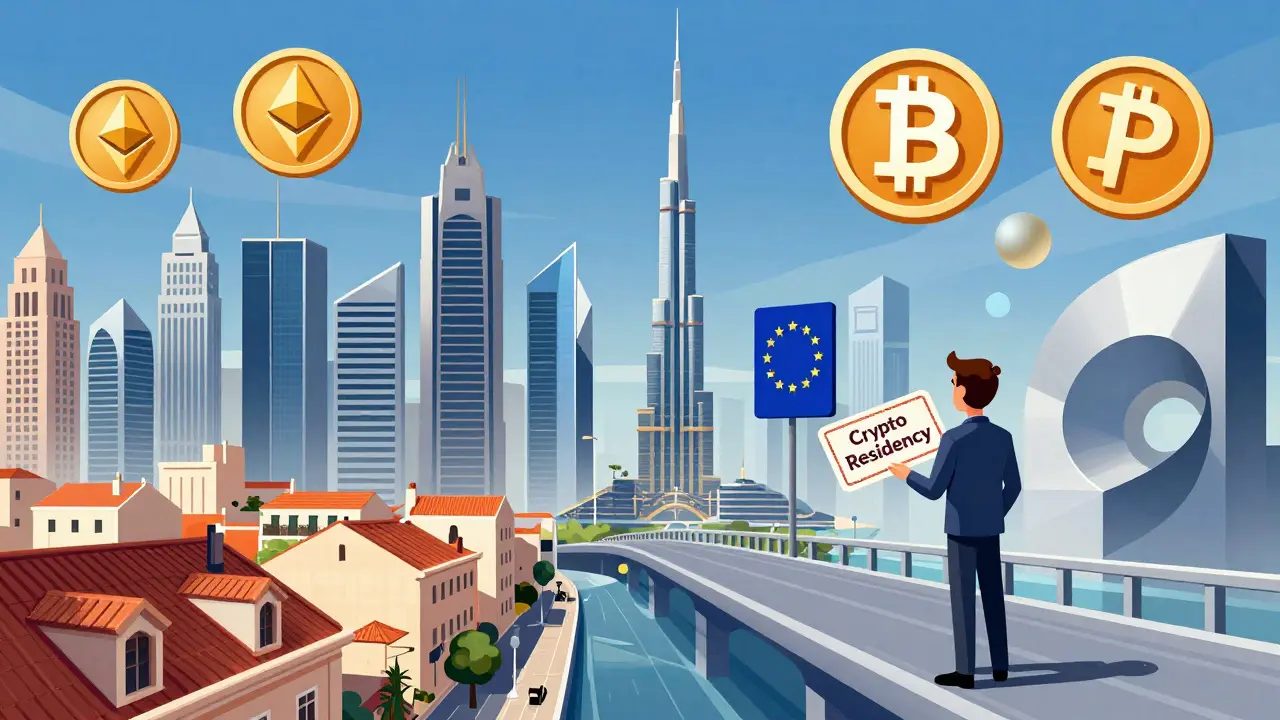
By 2025, the race to attract crypto capital isn’t just about innovation-it’s about tax policy, legal clarity, and lifestyle. If you’re holding Bitcoin, Ethereum, or other digital assets, where you live matters more than ever. Some countries don’t just tolerate crypto-they actively welcome it with zero taxes, clear rules, and even citizenship pathways. This isn’t speculation. It’s reality for thousands of digital nomads, investors, and blockchain founders already living in these places.
El Salvador: The First Bitcoin Nation
El Salvador made history in 2021 by making Bitcoin legal tender. That move wasn’t symbolic-it was structural. Since then, the country has built an entire ecosystem around crypto. There’s no capital gains tax on personal crypto trades. No income tax on crypto earnings. No reporting requirements for individuals holding digital assets. If you sell Bitcoin for dollars and buy a coffee, the government doesn’t care. It’s the only country in the world that enforces this policy nationwide.
Want to live there? The Freedom Passport program lets you invest $1 million in Bitcoin or USDT and apply for residency. After five years, you can apply for citizenship. It’s not easy, but it’s real. Thousands of crypto workers have already moved to San Salvador, drawn by low living costs, beachside co-working spaces, and the freedom to trade without paperwork. Local businesses now accept Bitcoin as easily as cash. ATMs dispense Bitcoin. Payroll systems pay in BTC. It’s not a test-it’s everyday life.
Portugal: Europe’s Crypto Oasis
While the EU tightened crypto rules with MiCA in 2024, Portugal stayed out of the pack. Personal crypto gains remain completely tax-free. That means if you bought Ethereum in 2020 and sold it in 2025 for a $500,000 profit, you owe $0. No reporting. No forms. No hidden fees.
The catch? You can’t be a professional trader. If you’re day-trading full-time, running a crypto fund, or operating a mining operation, the tax exemption doesn’t apply. But if you’re an investor-someone who buys and holds-Portugal is unmatched in Europe. Add to that the Golden Visa program: invest €500,000 in real estate or capital, and you get residency. After five years, you can apply for citizenship. You also get full EU access, healthcare, and Schengen travel.
Thousands of crypto investors have relocated to Lisbon and Porto. The city’s digital nomad community is one of the largest in the world. Banks here are crypto-friendly. You can open a bank account with a crypto wallet statement. Many fintechs in Portugal now offer crypto-linked debit cards. It’s not perfect-rent has risen-but for EU access and zero tax, it’s still the top pick.
United Arab Emirates: The Business Hub
The UAE doesn’t just allow crypto-it celebrates it. Dubai and Abu Dhabi have built entire districts for blockchain firms. No capital gains tax. No income tax. No corporate tax on crypto activities. Period. Whether you’re mining, staking, trading, or running a DeFi startup, the government doesn’t take a cut.
Residency is easy: invest AED 750,000 (about $204,000) in property, a business, or a government-approved fund, and you get a renewable residency visa. No citizenship path, but you don’t need it. Dubai has no minimum stay requirement. You can live there for six months a year and still keep your visa. Banking is straightforward-major banks like Emirates NBD and Mashreq offer crypto-friendly accounts. Many crypto firms have moved their HQs here from Europe.
What makes the UAE stand out? Regulatory clarity. The Virtual Assets Regulatory Authority (VARA) licenses crypto businesses, giving them legal standing. You know where you stand. You can open a corporate bank account. You can hire local staff. You can sign contracts. This isn’t a gray zone-it’s a regulated, thriving ecosystem. For businesses and high-net-worth individuals, it’s the most practical crypto haven on Earth.
Germany: The EU’s Hidden Gem
Germany is the only EU country that lets you avoid crypto taxes by simply waiting. If you hold Bitcoin or any other cryptocurrency for more than 12 months, any profit from selling it is tax-free. That’s it. No complex rules. No paperwork. Just keep your purchase records.
Here’s how it works: Buy 1 BTC in January 2024. Sell it in March 2025. Profit? Tax-free. Buy 10 ETH in June 2024. Sell in July 2025. Again, $0 tax. The rule applies to individuals-not businesses. If you’re trading daily, you’re considered a commercial trader and taxed normally. But for long-term holders, it’s one of the most generous policies in the entire EU.
Residency is also accessible. You can get a residence permit by investing €360,000 in real estate or a business. Citizenship comes after five years. German banks are cautious with crypto, but fintechs like N26 and Wirecard offer crypto-linked services. The country’s strong legal system and political stability make it a safe bet for long-term crypto investors who want EU access without the high costs of Switzerland or Singapore.
Switzerland: The Financial Anchor
Switzerland doesn’t offer zero tax-but it offers predictability. High-net-worth individuals can opt for a lump-sum tax based on living expenses instead of income. If you earn crypto profits but don’t have a salary, you pay a fixed annual fee-around CHF 250,000 (€268,000)-and the government leaves your crypto gains untouched.
It’s not for everyone. But if you’re sitting on a large crypto portfolio and don’t want to be taxed on every trade, this is one of the few legal ways in Europe to do it. Zurich and Zug (nicknamed “Crypto Valley”) host hundreds of blockchain firms. The Swiss Financial Market Supervisory Authority (FINMA) provides clear licensing rules for exchanges, wallets, and token issuers.
Citizenship takes 10 years, but residency is easy. You need to prove financial independence, show a rental agreement, and open a Swiss bank account. Many crypto investors use this route to live in Europe without being taxed on their holdings. The country’s neutrality, stability, and strong banking tradition make it a long-term safe haven-even if it’s not the cheapest.
Cayman Islands: The Offshore Powerhouse
No income tax. No capital gains tax. No corporate tax. The Cayman Islands have been a tax haven for decades-and crypto is just the latest wave. If you’re a non-resident holding crypto, you pay nothing. Even if you move there, you still pay nothing.
Residency requires a $600,000 investment in property or a government-approved fund. After five years, you can apply for citizenship. The islands have no minimum stay requirement. You can live there part-time and still keep your status. The government has no crypto reporting system. No KYC on personal holdings. No transaction tracking.
It’s not a tourist destination. The infrastructure is built for finance, not lifestyle. But for ultra-high-net-worth individuals who want total privacy and zero tax, it’s unmatched. Many crypto funds, DAOs, and token issuers are legally registered here. The legal system is based on English common law, making contracts enforceable. If you need a jurisdiction that says “no questions asked,” this is it.
Why These Five Dominate
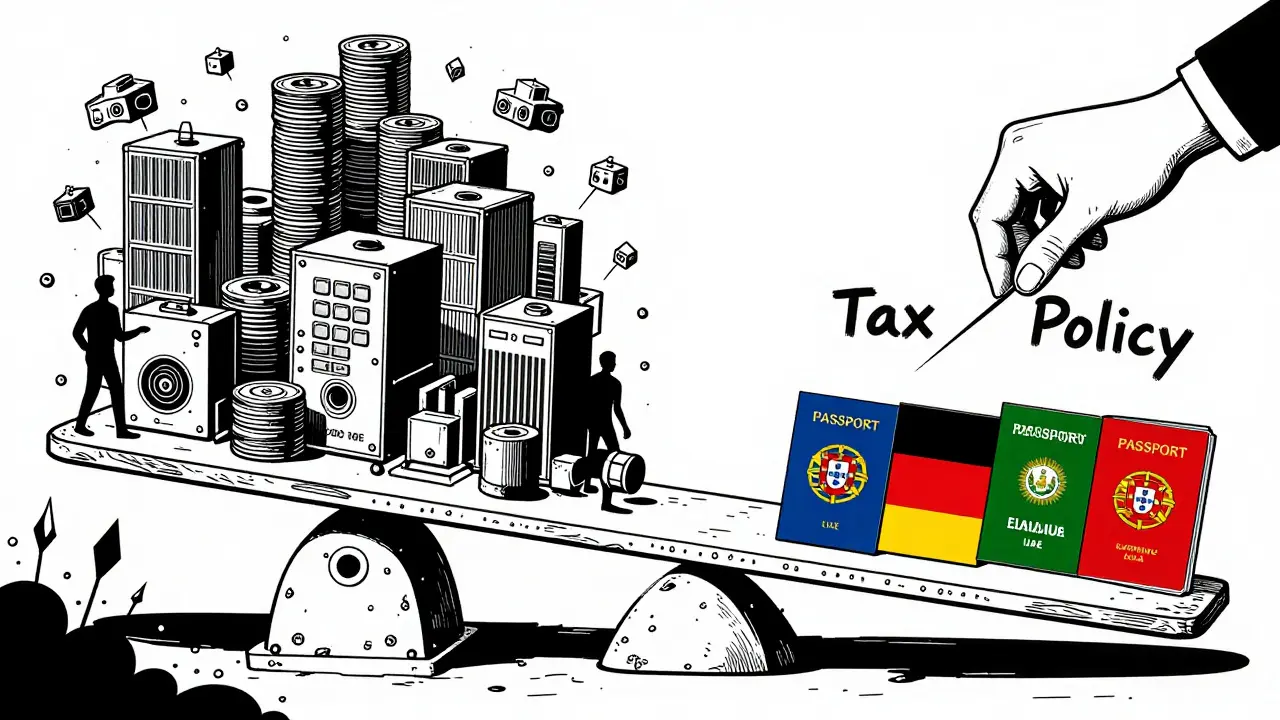
Not every country with low taxes is truly crypto-friendly. Some ban mining. Some require daily reporting. Some shut down bank accounts for crypto users. The top five in 2025-El Salvador, Portugal, UAE, Germany, and Cayman Islands-share three things:
- Zero or no tax on personal crypto gains
- Clear legal definitions-no ambiguity about whether crypto is property, currency, or asset
- Pathways to residency-you can actually live there without being turned away
Other countries like Singapore, Malta, and Panama have strong policies too. But Singapore demands $8.7 million to qualify. Malta’s program is on hold. Panama’s rules are unclear for foreigners. The top five are accessible, stable, and proven.
What About the US, Canada, or Australia?
The US taxes crypto like property. Every trade, every swap, every airdrop is taxable. Canada does the same. Australia has some favorable rules for personal use, but it’s complex and inconsistent. None offer zero tax. None offer residency through crypto investment. If you’re serious about minimizing tax, moving is the only real option.
Key Pitfalls to Avoid
- Don’t assume “no tax” means no reporting. Portugal and Germany require proof of holding periods. Keep your transaction history.
- Don’t confuse residency with citizenship. UAE gives you a visa, not a passport. Plan for renewal.
- Don’t move without a bank account. Some countries (like Germany) have crypto-friendly fintechs-but not all banks accept crypto users.
- Don’t ignore local laws. In El Salvador, you need to register your Bitcoin wallet with the central bank if you’re a resident.
These countries aren’t loopholes. They’re legal, established systems. You’re not hiding-you’re optimizing.
Can I live in a crypto-friendly country without investing money?
Yes, but it’s rare. Portugal and Germany allow residency through employment or retirement, not just investment. If you have passive income from crypto and can prove financial independence, you may qualify for a digital nomad visa. However, most top jurisdictions require a minimum investment to get a residency visa. Countries like El Salvador and the UAE offer pathways, but they’re not open to everyone without capital.
Is crypto really tax-free in Portugal?
Yes-for personal, non-commercial gains. If you bought Bitcoin as an investment and sold it years later for a profit, you pay zero tax. But if you’re trading daily, running a crypto business, or mining as a commercial operation, you’re taxed like a business. The key is documentation: keep your purchase dates, wallet addresses, and transaction records. If the tax authority questions you, you must prove you’re not a professional trader.
Why doesn’t the UAE offer citizenship?
The UAE has never offered citizenship through investment. Citizenship is reserved for Emiratis by birth or rare exceptional cases. But that doesn’t matter for most crypto users. The residency visa is renewable, valid for 5-10 years, and allows unlimited travel in and out of the country. Most people don’t need a passport-they need a bank account, a business license, and a place to live. The UAE gives all three without requiring you to become a citizen.
Can I move my crypto assets to these countries without triggering taxes?
Transferring crypto between wallets you own-like from Coinbase to a Ledger-is not a taxable event anywhere. You only trigger tax when you sell, trade, or convert it into fiat or another asset. So if you move your Bitcoin from the US to a wallet in Portugal, you owe nothing. But if you sell it in the US before moving, you’ll owe capital gains tax there. Plan your exit before you move.
Which country is best for a beginner crypto investor?
Portugal is the easiest for beginners. It requires only €500,000 for residency-far less than Singapore or the Cayman Islands. The tax rules are simple: hold for personal use, don’t trade daily, and you pay nothing. The cost of living is lower than Switzerland or Dubai. English is widely spoken. Banking is accessible. It’s the most balanced option for someone starting out who wants to reduce tax without a huge upfront investment.
Comments
Ann Liu
Portugal’s tax exemption for personal crypto gains is legitimately one of the best deals in the EU. The key is documentation-keep every transaction history, wallet address, and purchase date. No forms, no reporting, but if you’re audited, you need proof you’re not a professional trader. Also, note that the Golden Visa requires physical presence at least 7 days per year. Many assume it’s purely passive, but compliance is non-negotiable.
And yes, fintechs like N26 and Revolut now integrate with crypto wallets, but traditional banks still hesitate. Don’t rely on BCP or Caixa for crypto deposits-go with digital-first providers. Lisbon’s digital nomad infrastructure is real, but rent has spiked 40% since 2022. Budget accordingly.
March 16, 2026 at 04:31
Dionne van Diepenbeek
El Salvador is a joke
March 18, 2026 at 03:57
Gene Inoue
El Salvador is a joke? You’re telling me you don’t see the pattern? People move there because the government doesn’t care how you spend your Bitcoin. No one’s auditing your coffee purchases. No one’s tracking your wallet. That’s not chaos-that’s liberation. Meanwhile, the US taxes you on every satoshi you move, even if you’re just swapping BTC for ETH to avoid a loss. You call that freedom? Try living in a country where your money isn’t a tax event.
And don’t get me started on Germany’s 12-month rule. It’s not even a loophole-it’s a trap for people who think they can ‘just hold’ without tracking every single transaction. The IRS would kill for that kind of simplicity.
March 19, 2026 at 02:57
Billy Karna
There’s a lot of misinformation floating around about UAE residency. The AED 750,000 investment isn’t just for property-it includes business setup fees, government licensing, and even a minimum capital requirement for certain free zones. Many people think they can just buy a condo and call it a day, but the visa approval process is far more granular.
Also, while VARA provides regulatory clarity for businesses, individuals still operate in a gray zone. There’s no official guidance on personal crypto holdings, and while the government doesn’t tax you, they also don’t protect you. If your wallet gets hacked and you report it, there’s no recourse. No FDIC, no insurance, no legal framework for individual crypto owners.
Meanwhile, Germany’s 12-month rule is actually more robust than it seems. The tax office accepts blockchain analytics tools like Chainalysis and Elliptic as proof of holding periods. If you can show your BTC was purchased on Coinbase in January 2024 and moved to a hardware wallet in February 2024, and sold in March 2025, you’re golden. No need for notarized affidavits or accountant letters. Just clean on-chain data.
And let’s not forget: Portugal’s exemption doesn’t apply to NFTs. That’s a critical blind spot. If you’re trading NFTs as an investor, you’re still taxable. The law only covers fungible tokens. Most people don’t realize that until they get audited.
March 19, 2026 at 16:25
Cheri Farnsworth
The Cayman Islands are not for everyone. The $600,000 investment isn’t just a number-it’s a barrier designed to exclude anyone who isn’t already wealthy. And while the lack of reporting sounds appealing, it also means zero legal recourse. If someone steals your crypto and you file a complaint, they’ll ask for your wallet address, shrug, and say, ‘We don’t track that.’
Switzerland’s lump-sum tax is only viable if you have passive income above CHF 250,000 annually. If you’re sitting on $5 million in Bitcoin but don’t earn interest, dividends, or salary, you still have to pay the minimum. It’s a tax on presence, not profit. And don’t forget: Swiss banks require proof of funds from non-crypto sources to open accounts. Crypto alone won’t get you in.
Portugal remains the most balanced option. Low investment threshold, EU access, no capital gains, and a thriving English-speaking community. You can live there on $1,500/month and still qualify for residency. No one’s asking for your transaction history unless you’re trading daily. It’s the only place where you can be a crypto investor and still feel like a normal human being.
March 20, 2026 at 13:43
Jerry Panson
I must respectfully note that while the article presents these jurisdictions as objectively favorable, it omits critical considerations regarding long-term geopolitical stability, banking infrastructure resilience, and the evolving nature of international tax treaties. For instance, the EU’s MiCA framework, while not yet fully implemented, may eventually compel member states like Portugal to harmonize reporting standards. Similarly, the UAE’s regulatory environment, while currently permissive, is subject to shifts in global AML/CFT pressure, particularly from the FATF.
Moreover, the notion that one can ‘optimize’ tax liability through relocation assumes a level of personal mobility and capital access that is not universally attainable. For the vast majority of crypto holders, especially those with modest portfolios, the most prudent strategy remains diligent record-keeping, adherence to home jurisdiction regulations, and avoidance of speculative relocation without professional legal counsel.
It is also worth emphasizing that citizenship pathways, while attractive, often entail cultural, linguistic, and social integration requirements that are underrepresented in these summaries. Residency is not merely a transactional arrangement-it is a lifelong commitment to a legal and social system.
March 21, 2026 at 04:35