Imagine logging into your favorite crypto exchange to check your balance, only to find it locked. Your funds are gone, or worse, frozen by international authorities because of where you live. For Iranian cryptocurrency users, this isn't a hypothetical nightmare-it is a daily reality shaped by a complex web of U.S. sanctions, domestic regulations, and security threats.
The landscape for crypto in Iran has shifted dramatically in 2025 and 2026. With the reactivation of UN sanctions and aggressive enforcement actions by entities like Tether, the margin for error has vanished. Choosing the wrong platform can lead to permanent asset loss, legal trouble with the Iranian government, or exposure to sophisticated hacks. This guide breaks down exactly which types of exchanges you must avoid, why they are dangerous, and what safer alternatives might look like in this volatile environment.
The Danger of Major International Exchanges
You might think that using a big-name global exchange offers safety due to their size and reputation. In reality, these platforms pose one of the highest risks for Iranian residents. Tier-1 exchanges such as Coinbase, a leading U.S.-based cryptocurrency exchange known for strict regulatory compliance, Binance, the world's largest crypto exchange by volume, which actively complies with international sanctions regimes, and Kraken, a secure digital asset exchange that enforces rigorous KYC and AML protocols operate under stringent U.S. Treasury Department (OFAC) guidelines.
These platforms use advanced screening tools to detect users connected to sanctioned jurisdictions. If an algorithm flags your IP address, bank details, or even just your geographic location as Iranian, the consequence is immediate: account suspension and fund freezing. There is no customer support hotline to call, no negotiation possible. The assets are simply held indefinitely while investigations proceed. Many Iranian users have lost life savings this way, believing that "big" meant "safe." It does not. For anyone residing in Iran, centralized exchanges with strong ties to Western financial systems are off-limits.
Why Nobitex and Local Giants Are Risky
If international exchanges are too restrictive, many turn to local heroes like Nobitex, Iran's largest domestic cryptocurrency exchange, serving over 11 million users but facing severe security and sanction-related challenges. While convenient, relying on Nobitex carries hidden dangers that went public in mid-2025.
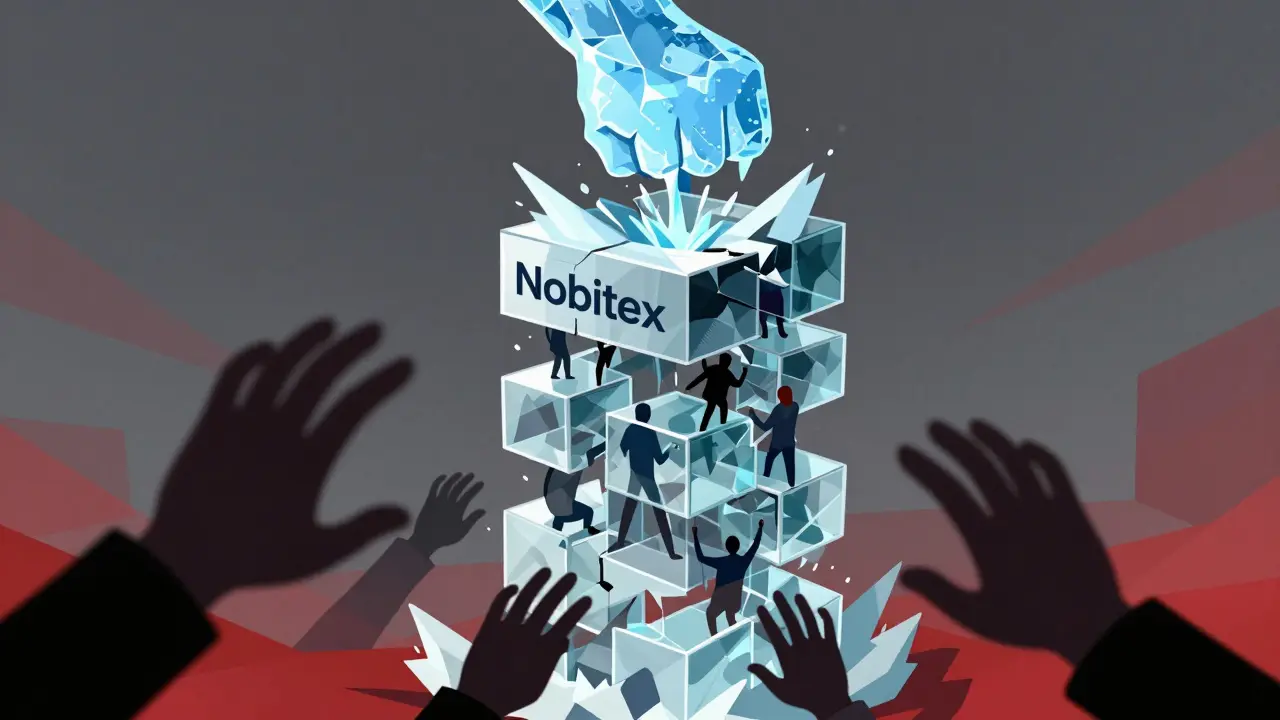
In June 2025, Nobitex suffered a devastating hack exceeding $90 million. This wasn't just a technical glitch; it exposed critical vulnerabilities in how local exchanges manage security. More concerning was the revelation from blockchain analytics firm Elliptic, which linked Nobitex wallets to activities consistent with the Islamic Revolutionary Guard Corps (IRGC). When an exchange becomes part of a sanctions evasion network, it becomes a target.
On July 2, 2025, Tether executed its largest-ever freeze of Iranian-linked funds, blocking 42 addresses. More than half of these had direct transactional flows to Nobitex. This event proved that using a popular local exchange does not shield you from international enforcement. In fact, it may make you a bigger target because your activity is tied to a sanctioned entity. Ordinary users seeking legitimate trading services found themselves caught in the crossfire between Tehran and Washington.
The Stablecoin Trap: USDT and New Restrictions
Most Iranian traders rely heavily on Tether (USDT) because it provides stability against the fluctuating Rial. However, stablecoins have become a minefield. Following the July 2025 freezes, Tether demonstrated it would aggressively comply with sanctions, effectively weaponizing its ledger against Iranian users.
Simultaneously, the Iranian government tightened its own grip. In September 2025, Deputy Central Bank Governor Asghar Abolhasani announced strict limits: individuals can buy a maximum of $5,000 in stablecoins annually and hold no more than $10,000 at any time. Those holding excess faced one-month deadlines to comply, with unspecified penalties for non-compliance.
This creates a double bind. If you use a platform that facilitates large USDT transactions, you risk government scrutiny in Iran. If you hold significant USDT balances, you risk them being frozen by Tether internationally. Exchanges that focus primarily on stablecoin trading are now high-risk zones. Users were quickly advised to pivot toward decentralized alternatives like DAI on the Polygon network, which offered less centralized control and thus lower seizure risk.
Unregulated Platforms and Informal Markets
As licensed platforms face tighter regulations, some users migrate to informal or unregulated trading groups, often found on Telegram or through peer-to-peer (P2P) networks without proper oversight. These platforms seem attractive because they promise anonymity and lack of restrictions. They are, however, extremely dangerous.
Unregulated exchanges lack the security infrastructure of major platforms. They do not undergo regular audits, meaning your funds could be stolen by hackers or embezzled by the operators themselves-commonly known as "exit scams." Without legal recourse or insurance, there is nothing you can do if things go wrong. Furthermore, the Iran FinTech Association and other bodies have warned that these informal channels are breeding grounds for fraud. By avoiding regulated platforms, you strip away the last layer of consumer protection available to you.
Government-Linked and IRGC-Affiliated Channels
A subtle but critical risk involves exchanges promoted by state-affiliated media or organizations. Tasnim News Agency, which has ties to the IRGC, has actively warned about Tether freezes while simultaneously promoting certain domestic financial channels. Engaging with platforms endorsed by such entities increases your exposure to sanctions risks.
When an exchange is viewed by international authorities as part of the state's financial apparatus, it becomes a primary target for enforcement. Using these platforms signals alignment with sanctioned entities, making your personal wallets vulnerable to secondary sanctions. Always verify the ownership and backing of any exchange. If it has deep roots in government structures, assume it will be flagged by international compliance algorithms.
| Exchange Type | Primary Risk | Sanction Exposure | Security Reliability |
|---|---|---|---|
| Tier-1 International (Coinbase, Binance) | Account Freeze / Ban | High (Automatic Screening) | High (But inaccessible) |
| Local Licensed (Nobitex) | Hack / Secondary Sanctions | Medium-High (Linked to IRGC) | Low-Medium (Recent Hacks) |
| Stablecoin-Focused Platforms | Asset Seizure / Gov Penalty | High (Tether Compliance) | Variable |
| Unregulated / P2P Groups | Fraud / Exit Scams | Low (Anonymity) | Very Low (No Protection) |
| Decentralized Protocols (DEXs) | User Error / Smart Contract Bugs | Low (Non-Custodial) | Medium (Depends on Code) |

Safer Alternatives: Decentralized Finance (DeFi)
Given the risks above, many experts suggest shifting toward non-custodial solutions. Decentralized Exchanges (DEXs) like Uniswap or PancakeSwap do not require KYC (Know Your Customer) verification and do not hold your funds. You trade directly from your private wallet. This removes the intermediary that usually triggers sanctions checks.
However, DeFi is not foolproof. You are responsible for your own security. If you lose your seed phrase, your money is gone forever. Additionally, bridging assets between chains can expose you to smart contract vulnerabilities. The key is to use reputable, audited protocols and keep your assets in hardware wallets when not trading. This approach minimizes exposure to both international sanctions and domestic government crackdowns, provided you maintain operational security (OpSec).
Tax Implications and Regulatory Changes
Do not overlook the domestic legal landscape. In August 2025, Iran enacted the Law on Taxation of Speculation and Profiteering, introducing capital gains taxes on cryptocurrency trading. Crypto is now treated similarly to gold, real estate, and forex. Exchanges that cannot report your activities to Iranian tax authorities may leave you liable for back taxes and penalties.
This means that even if an exchange avoids international sanctions, it might fail to meet domestic reporting requirements. Licensed Iranian exchanges must now submit comprehensive transaction data to multi-agency oversight bodies. While this adds a layer of government transparency, it also reduces privacy. Users must weigh the benefit of legal compliance against the risk of having their financial history fully visible to the state.
Can I use Binance if I am living in Iran?
No. Binance strictly complies with U.S. sanctions and prohibits users from Iran. Attempting to bypass geo-restrictions using VPNs is risky; if detected, your account will be permanently banned and funds frozen without recourse.
Is Nobitex safe for storing large amounts of crypto?
No. Nobitex suffered a massive $90 million hack in June 2025 and has been linked to IRGC-aligned activities. These factors increase the risk of both theft and international sanctions enforcement affecting user funds.
What happened to Tether (USDT) in Iran?
In July 2025, Tether froze hundreds of millions of dollars in Iranian-linked wallets, including those connected to local exchanges. This demonstrates that USDT is not immune to sanctions and poses a high seizure risk for Iranian holders.
Are there any legal ways to trade crypto in Iran?
Yes, but with limitations. You must use licensed Iranian exchanges that comply with new KYC and tax reporting laws. Be aware that these platforms share data with the government, reducing privacy, and are subject to annual stablecoin purchase caps ($5,000) and holding limits ($10,000).
Is using a Decentralized Exchange (DEX) completely safe?
It is safer regarding sanctions because DEXs do not hold your funds or require ID. However, you bear full responsibility for security. Risks include smart contract bugs, phishing sites, and losing your private keys. Never store large sums on a DEX; move assets to a cold wallet after trading.