
Imagine you run a mid-sized electronics shop in Moscow. A customer pulls out their phone to pay for a laptop using Bitcoin. You smile, ready to ring up the sale, but then panic sets in. Is this legal? Will your bank freeze your accounts tomorrow? For most Russian businesses, the answer is a hard no. But for a select few giants, it’s a strategic yes.
This isn’t just a theoretical debate anymore. As of late 2025 and into 2026, Russia has carved out a very specific, narrow lane where cryptocurrency works for business. It’s not about buying coffee with Dogecoin; it’s about moving billions across borders when traditional banking channels are blocked by sanctions. If you’re wondering whether your company can legally accept crypto, the answer depends entirely on who you are, what you sell, and where your customers are located.
The Big Picture: Property vs. Money
To understand the rules, you have to look at how the law defines crypto. In Russia, digital assets are recognized as Digital Financial Assets (DFAs) or property, but they are explicitly not legal tender. This distinction is crucial. Because crypto isn't "money" in the eyes of the Bank of Russia, you cannot use it to settle domestic debts or buy goods within the country under standard commercial law.
The Federal Law No. 259-FZ, which came into full effect in 2021, laid the groundwork. It allowed people to own crypto but banned its use as a means of payment for goods and services inside Russia. Fast forward to 2026, and this stance hasn’t softened for regular retail. If you try to accept Bitcoin for a pair of shoes in St. Petersburg, you’re technically violating the ban on using non-monetary instruments for domestic payments.
Why does this matter? Because enforcement is real. The Central Bank and Rosfinmonitoring (the federal financial monitoring service) actively monitor transactions. They aren’t looking for every small peer-to-peer swap, but they are watching businesses that advertise crypto payments. Advertising that you accept crypto for domestic sales can trigger administrative fines ranging from 50,000 to 300,000 rubles. That’s a steep price for a marketing mistake.
The Exception: Cross-Border Trade and the ELR
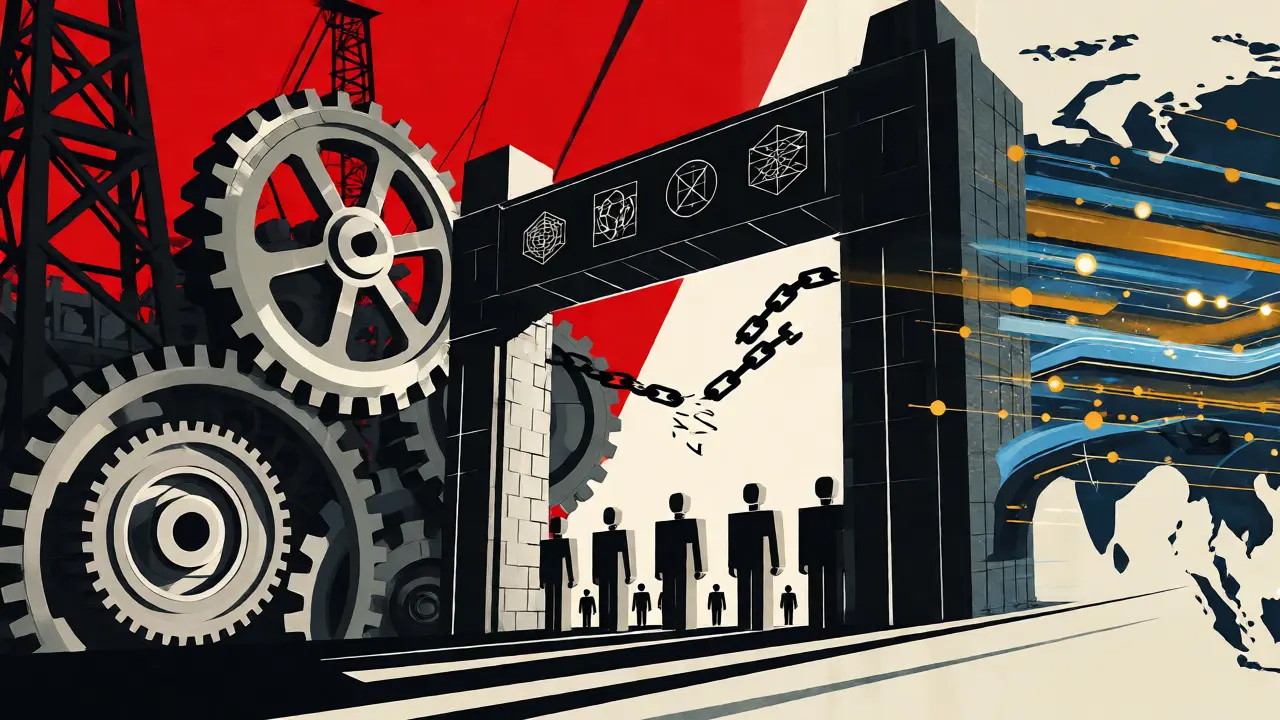
If domestic payments are off-limits, why do we hear so much about crypto in Russian business news? The answer lies in international trade. Western sanctions disrupted traditional SWIFT transfers, forcing Russian exporters to find new ways to get paid. Enter the Experimental Legal Regime (ELR), a special regulatory sandbox launched to allow cross-border settlements in digital currencies.
The ELR is not open to everyone. It’s designed for large enterprises involved in foreign economic activity. Think oil, gas, metals, and major tech exports. Under this regime, companies can receive cryptocurrency from foreign partners and convert it into rubles through authorized banks. This bypasses the domestic ban because the transaction is viewed as part of an external settlement process, not a local purchase.
Finance Minister Anton Siluanov has been vocal about this shift, noting that digital currencies are becoming essential tools for maintaining foreign economic activity. By late 2025, the Ministry of Finance reported that hundreds of companies were participating in this program, processing billions in monthly volume. But there’s a catch: you need to be big enough to qualify.
Who Can Actually Play? The Qualified Investor Barrier
Here is the harsh reality for most SMEs: the barrier to entry is massive. To participate in the ELR framework, a business must register as a "qualified investor." What does that mean in practice?
- Capital Requirements: You need minimum capital of ₽100 million (approx. $1.24 million) in securities and deposits.
- Income Verification: Your annual income must exceed ₽50 million ($620,000).
- Licensed Infrastructure: You can’t just use any wallet. Transactions must go through Central Bank-licensed providers.
These thresholds effectively lock out 99.8% of Russian businesses. A local café, a boutique clothing store, or a freelance design agency simply doesn’t meet these criteria. So, while headlines talk about "Russia embracing crypto," the average entrepreneur is still excluded from the legal benefits.
| Scenario | Legality | Risk Level | Target Audience |
|---|---|---|---|
| Domestic Retail Payment | Illegal | High (Fines, Account Freezes) | All Businesses |
| Cross-Border Export Settlement | Legal via ELR | Low (If compliant) | Qualified Investors (Large Corps) |
| Internal Corporate Transfer | Grey Area | Medium (Tax Ambiguity) | Holding Companies |
| Salaried Employee Payouts | Generally Prohibited | High (Labor Law Violations) | All Employers |
The Technical and Compliance Burden
Even if you’re a giant corporation eligible for the ELR, accepting crypto isn’t as simple as posting a QR code. The compliance overhead is heavy. The Central Bank requires strict reporting. Any crypto transaction exceeding 600,000 rubles ($7,400) must be reported to the Unified State Information System (ESIS) within five business days.
You also need specialized software. Blockchain analytics tools are mandatory to screen counterparties for sanctions risks. These systems cost upwards of 1.2 million rubles annually. Plus, you must integrate with one of the roughly 17 approved wallet providers. If your transaction flags a false positive in their anti-money laundering checks, your funds could be held for days while manual reviews take place.
Norilsk Nickel, a mining giant, reported that using crypto settlements cut their payment processing time from 14 days to just 4 hours for Asian contracts. That efficiency is real, but it comes with a setup cost that ranges from $47,000 to $89,000 initially. For a small exporter, that upfront investment might not yield returns for years.
Risks for the Unwary: When Things Go Wrong
What happens if you ignore the rules? The consequences are swift. Banks are instructed to monitor suspicious activity closely. If a retail chain starts accepting Bitcoin domestically without the proper ELR status, regulators may view it as an attempt to circumvent currency controls.
A notable case in 2025 involved a Moscow electronics retailer, TechnoPoint. They began accepting Bitcoin payments for high-end gadgets. Within weeks, their bank accounts were frozen for 45 days pending an investigation. They faced tax audits and had to reverse transactions, losing both revenue and customer trust. Similarly, a restaurant chain called Sakhalin lost nearly $222,000 when their crypto payment processor was blocked by Rosfinmonitoring due to insufficient documentation.
These aren’t isolated incidents. They serve as warnings. The system is designed to protect the ruble’s dominance in the domestic market. Allowing widespread crypto adoption could lead to "dollarization"-or rather, "bitcoinization"-of prices, which the Central Bank fears would destabilize monetary policy.
Is Change Coming? The 2026 Outlook
The landscape is shifting, albeit slowly. There is growing pressure from the Ministry of Finance to ease restrictions. Deputy Finance Minister Ivan Chebeskov hinted in late 2025 that the rigid "qualified investor" status might be replaced by a tiered system with lower thresholds. If this happens, more medium-sized exporters could join the club.
However, don’t expect a free-for-all. The Central Bank remains conservative. First Deputy Governor Vladimir Chistyukhin has stated that expanding crypto beyond the current limited class could threaten financial stability. The goal is controlled integration, not mass adoption.
For now, the strategy for most businesses is clear: watch the regulatory updates, keep domestic operations in rubles, and explore crypto only if you have significant international exposure and the capital to handle the compliance load.
Frequently Asked Questions
Can I pay my employees in cryptocurrency in Russia?
Generally, no. Labor laws require salaries to be paid in rubles. Paying wages in crypto creates complex tax liabilities and potential violations of labor rights regulations. While some tech firms experiment with bonuses in crypto, base salaries remain strictly fiat-based to avoid legal pitfalls.
What happens if a small business accepts Bitcoin for a local sale?
You risk administrative fines and account freezes. Since crypto is not legal tender, accepting it for domestic goods violates the prohibition on using non-monetary instruments for payments. Banks may flag these transactions as suspicious, leading to temporary holds on your funds while they investigate compliance with anti-money laundering laws.
Which cryptocurrencies are allowed for business use under the ELR?
As of late 2025, the Experimental Legal Regime primarily recognizes Bitcoin (BTC), Ethereum (ETH), and Ripple (XRP). The list is curated by the Central Bank and may expand, but stablecoins and altcoins outside this approved list generally face stricter scrutiny or exclusion from official settlement channels.
Do I need to report all crypto transactions to the tax authority?
Yes, especially if you are an ELR participant. Transactions over 600,000 rubles must be reported to the Unified State Information System. Tax authorities cross-reference this data with banking records. Failure to report can result in penalties and audits, even if the underlying transaction was legitimate.
Can tourists pay in crypto in Russian shops?
Technically, the same domestic ban applies. However, some tourist-heavy areas have gray-market solutions where merchants convert crypto to rubles instantly via third-party apps. But legally, the merchant is taking a risk. Most reputable hotels and larger retailers stick to cards and cash to ensure compliance.
Comments
Dominic Hird
It’s fascinating how the law draws such a sharp line between domestic convenience and international survival.
For most folks, it’s just annoying that you can’t buy coffee with Bitcoin, but for the big exporters, this regulatory sandbox is literally keeping their supply chains alive.
I think we need to appreciate the nuance here instead of just calling it a ban or an embrace.
The qualified investor barrier is tough, sure, but it makes sense if they’re trying to prevent capital flight while still allowing trade.
It’s a balancing act, and honestly, pretty clever in its own way.
September 14, 2026 at 21:48
Abby Walker
This entire premise is flawed because American financial dominance is still the only thing that matters globally.
Russia is playing catch-up with toys while the US dollar remains the undisputed king of commerce.
The fact that they need a special regime just to move money shows their system is broken beyond repair.
We should not be impressed by their bureaucratic gymnastics when our banks work seamlessly across borders.
They are merely reacting to sanctions imposed by superior American policy.
Their crypto experiments are desperate measures from a failing economy.
No amount of digital assets will fix their fundamental lack of economic freedom.
They are isolating themselves further with these complex regulations.
Our system is simple, robust, and proven.
Their approach is convoluted and fragile.
They will continue to struggle until they accept Western standards.
Until then, this is just noise from a peripheral market.
September 15, 2026 at 06:02
Frances Schnepfleitner
ugh the fines are so high for just advertising it feels like a trap honestly i hate how they punish small businesses for trying to adapt
September 16, 2026 at 05:50
Sean Patterson
typical overcomplicated mess again why cant they just let people use it lol its like they dont understand tech at all
the thresholds are insane too who has 100 mill in securities lying around :/
seems like another way to keep control rather than help innovation imo
September 16, 2026 at 23:12
Andy Hunns
You are missing the point entirely! This isn't about convenience, it's about sovereignty!
Do you realize what happens when you rely on SWIFT? You get choked out by foreign powers!
These companies are surviving against impossible odds using digital rails!
It is heroic resilience in the face of total isolation!
The complexity is the price of freedom!
Without this ELR, those exports would have vanished into thin air!
Stop crying about fines and look at the billions moving through these channels!
It is a masterpiece of regulatory engineering under pressure!
Everyone else is just sleeping on the potential here!
Wake up and smell the blockchain revolution happening right under your nose!
September 18, 2026 at 01:16
clarence bustos
Morally speaking, forcing workers to take rubles while owners speculate in crypto creates a two-tier society. :(
It is unjust that labor is tied to fiat while capital flows freely in digital space. :(
We must demand equality in payment methods for all citizens. :(
The current system favors the wealthy elite disproportionately. :(
It undermines the dignity of the working class. :(
Regulators should prioritize fairness over stability. :(
Otherwise, we see growing resentment among employees. :(
This imbalance needs to be addressed urgently. :(
Justice requires consistent rules for everyone. :(
Let us hope for reform soon. :)
September 18, 2026 at 17:15
Wanda Terral
The operational friction introduced by mandatory ESIS reporting and licensed provider integration significantly increases transaction costs for mid-cap entities.
Furthermore, the latency issues associated with manual AML reviews create unacceptable liquidity constraints.
From a macroeconomic perspective, this bifurcation of payment systems risks creating parallel markets with divergent velocity metrics.
The reliance on specific approved tokens limits hedging capabilities for corporate treasuries.
Consequently, the efficiency gains touted by large conglomerates may not translate to broader economic utility.
We are observing a highly regulated enclave rather than a generalized adoption curve.
This structural rigidity could stifle the very innovation it aims to harness.
The compliance overhead effectively acts as a regressive tax on smaller participants.
Thus, the net benefit remains concentrated within the oligarchic tier.
A more decentralized verification protocol might alleviate these bottlenecks.
September 19, 2026 at 21:47
Tish Dalton
I’m curious about the practical side for freelancers who serve international clients.
If I invoice a client in Europe and receive stablecoins, do I really have to convert them immediately?
It seems like there’s a lot of gray area for service-based businesses that aren’t exporting physical goods.
Maybe the tiered system mentioned at the end could help bridge that gap for us.
It would be great if there were clearer guidelines for non-qualified investors too.
Thanks for breaking down the legal hurdles, it’s definitely complicated.
September 21, 2026 at 16:06
Gary Schneeberger
Oh please, spare me the 'sovereignty' speech.
It’s just a way for the state to monitor every single transaction while pretending to allow innovation.
They want the benefits of crypto without giving up control.
Classic authoritarian move: allow it, but make it so painful you barely use it.
The 'qualified investor' rule is just a gatekeeping mechanism for friends of the regime.
Don’t pretend this is some grand technological leap forward.
It’s just bureaucracy with a blockchain sticker on it.
September 22, 2026 at 00:48
John Failla
The distinction between property and legal tender is crucial for maintaining monetary integrity.
Allowing widespread crypto payments domestically would erode the Central Bank's ability to manage inflation.
We must respect the sovereign right of nations to define their currency.
The current restrictions are necessary safeguards against speculative bubbles.
Financial stability should always take precedence over consumer convenience.
The Russian approach demonstrates prudent caution in the face of volatile assets.
Other nations would do well to study this disciplined framework.
Unregulated adoption leads to chaos, not progress.
The rule of law demands clear definitions for all instruments.
We cannot afford to gamble with the national economy.
September 23, 2026 at 07:50