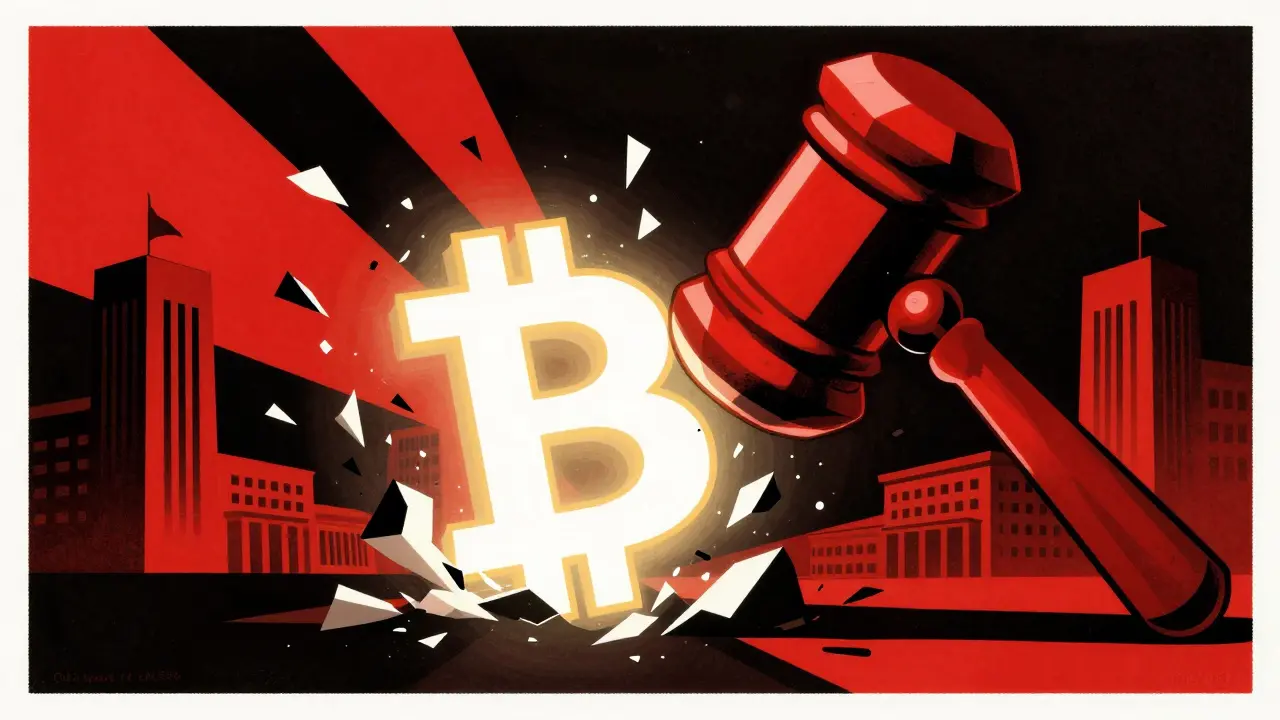
Back in May 2014, a small South American nation made headlines not for adopting new technology, but for slamming the door on it. Bolivia is a landlocked country in western South America that became the first sovereign state to formally ban cryptocurrencies like Bitcoin. While other governments were still debating what digital money even was, the Central Bank of Bolivia (BCB) issued Resolution No. 24-14-001, declaring any currency not issued by the government illegal. This wasn't just a warning; it was a strict prohibition that lasted for over a decade. If you are trying to understand how early regulatory fears shaped today's crypto landscape, Bolivia’s story is the ultimate case study.
The First Strike: How Bolivia Banned Bitcoin in 2014
To understand why Bolivia moved so fast, you have to look at the mindset of 2014. Bitcoin was trading around $650, and many central banks viewed it as a threat to monetary sovereignty. The BCB didn't just target Bitcoin; they listed specific altcoins like Namecoin, Peercoin, Quark, Primecoin, and Feathercoin. The resolution stated clearly: "It is illegal to use any kind of currency that is not issued and controlled by a government or an authorized entity."
This decision positioned Bolivia ahead of every other major economy. China would later restrict exchanges in 2017. Russia drafted laws but never passed them. Thailand issued non-binding warnings. But Bolivia went all-in on prohibition. The justification was protectionist: the bank wanted to safeguard the Boliviano (BOB), the national currency with ISO code BOB, from what they called "uncontrolled currencies" that could lead citizens to lose their money. At the time, this seemed like a bold move to protect financial stability. In hindsight, it created a complex underground economy.
| Country | Regulatory Action | Year | Outcome |
|---|---|---|---|
| Bolivia | Full Ban (Resolution 24-14-001) | 2014 | Illegal to use or denominate prices in crypto |
| Japan | Licensing Framework | 2014 | Exchanges required to register; legal tender status denied |
| China | Exchange Restrictions | 2017 | Banks barred from facilitating transactions; mining later banned |
| United States | Targeted Enforcement | 2014+ | Legal property status recognized; IRS taxation rules applied |
Enforcement and the Underground Reality
A ban on paper looks different than a ban in practice. The BCB enforced its rule through the Financial System Supervisory Authority (ASFI), which monitored commercial banks. Banks were strictly prohibited from processing any crypto-linked transactions. They had to implement transaction monitoring systems to flag suspicious activity. If a bank failed to comply, they faced penalties. The rule also forbade citizens from denominating prices in unapproved currencies-meaning you couldn't legally list a product for sale in Bitcoin.
However, prohibition often drives innovation underground. By 2023, estimates suggested that 1.2 million Bolivians-about 10.3% of the population-were engaging in cryptocurrency activity despite the ban. How? Through peer-to-peer (P2P) networks. Platforms like LocalBitcoins and Paxful became lifelines for users who needed to bypass banking restrictions. A 2021 survey by the Bolivian Digital Rights Observatory found that 68% of crypto users operated through informal channels. Many used stablecoins like USDT to protect their savings from boliviano depreciation. As one Reddit user noted in 2022: "The ban doesn't stop us, it just makes everything more expensive and risky." Users paid premiums of 8-12% above market rates to convert fiat to crypto, accepting the risk because traditional remittance fees were even higher.

Economic Impact: Did the Ban Work?
The original goal of the ban was to protect the Boliviano and prevent capital flight. Did it succeed? The data suggests otherwise. During the ban period, Bolivia experienced inflation exceeding 3.5% annually by 2023, rising to 5.2% according to the National Statistics Institute. Without access to global financial instruments, citizens lacked tools to hedge against this inflation. Meanwhile, neighboring countries with more open policies saw different outcomes.
The ban also failed to stop cross-border economic flows. In border regions, where trade naturally crosses jurisdictions, the prohibition created a regulatory vacuum. Informal networks filled this gap. Chainalysis reported a 27% increase in unregulated P2P transactions in Bolivia between 2018 and 2022 compared to regional averages. Remittance corridors using cryptocurrency grew by 19% annually. Essentially, the ban pushed activity into the shadows, making it harder-not easier-for regulators to monitor.
Experts were divided on the effectiveness of the strategy. Dr. Carlos Newland, a former advisor to the BCB, argued in 2015 that emerging economies cannot risk alternative monetary systems undermining national policy. Conversely, Dr. Rebecca Liao from Stanford University criticized the ban as a protectionist measure that cut citizens off from global innovation without addressing underlying economic vulnerabilities. The International Monetary Fund (IMF) eventually shifted its stance, stating in 2020 that blanket bans often drive activity underground, reducing oversight rather than enhancing it.
The Turning Point: Lifting the Ban in 2024
After ten years of strict prohibition, the tide turned. On June 26, 2024, the Central Bank of Bolivia officially lifted the ban on cryptocurrency trading. This wasn't a sudden change of heart; it was a response to reality. The underground market was too large to ignore, and the economic costs of isolation were becoming clear. However, the shift was measured. The government allowed trading but maintained the prohibition on using crypto as a means of payment for goods and services. The Boliviano remains the only legal tender.
The impact was immediate. According to Central Bank data, cryptocurrency transactions surged by 630% from $46.5 million in early 2024 to $294 million in the first half of 2025. Total transaction value reached $430 million by May 2025. Platforms like Binance saw massive growth, with local wallet provider Meru reporting a 6,600% surge in users. The demographic was distinct: 86% of transactions were driven by individuals, primarily male, using USDT and Bitcoin for savings and transfers rather than business operations.

New Regulatory Framework: ASFI and VASP Registration
Lifting the ban didn't mean deregulation. Instead, Bolivia introduced a structured framework under the supervision of ASFI. Virtual Asset Service Providers (VASPs)-including exchanges and custodians-must now register with the authority. They are required to implement strict Anti-Money Laundering (AML) and Counter-Financing of Terrorism (CFT) protocols. Daily transaction reporting is mandatory for amounts exceeding certain thresholds.
This approach mirrors trends seen in other Latin American nations but retains unique Bolivian characteristics. For instance, Bolivia entered a memorandum of understanding with El Salvador’s National Commission of Digital Assets to share regulatory knowledge. However, unlike El Salvador, which adopted Bitcoin as legal tender, Bolivia maintains a cautious stance. The Ministry of Economy projects crypto transaction volumes to reach $1.2 billion by 2026, but the payment ban remains in place to protect monetary sovereignty. The Inter-American Development Bank suggests this "measured adoption" model may offer lower fiscal risk than El Salvador’s aggressive strategy, potentially leading to sustainable growth without destabilizing the national currency.
Lessons from Bolivia’s Crypto Journey
Bolivia’s experience offers critical lessons for regulators worldwide. First, outright prohibition rarely stops adoption; it merely pushes it underground, increasing risks for consumers. Second, protecting national currency requires balancing control with access to global financial tools. Third, transparency and regulation are more effective than secrecy. By moving from a total ban to a regulated trading environment, Bolivia has aligned itself with global standards while maintaining core protections for the Boliviano. For citizens, this means safer access to assets. For regulators, it means better visibility into market activities. The era of blind prohibition is over; the era of informed oversight has begun.
When did Bolivia ban Bitcoin?
Bolivia banned Bitcoin and other cryptocurrencies on May 6, 2014, through Resolution No. 24-14-001 issued by the Central Bank of Bolivia. It was the first country in the world to implement such a formal ban.
Why did Bolivia lift the crypto ban in 2024?
Bolivia lifted the ban on June 26, 2024, because the prohibition failed to stop usage, driving activity underground. The government sought to bring crypto trading into a regulated framework to improve oversight, reduce fraud, and allow citizens safer access to digital assets while still protecting the Boliviano.
Is Bitcoin legal tender in Bolivia?
No, Bitcoin is not legal tender in Bolivia. While trading is now permitted, using cryptocurrency to pay for goods and services remains illegal. The Boliviano (BOB) is the only official legal tender.
How do Bolivians buy crypto now?
Bolivians can now use registered Virtual Asset Service Providers (VASPs) like Binance. These platforms must comply with ASFI regulations, including AML/CFT protocols. Previously, users relied heavily on informal P2P networks due to banking restrictions.
What was the impact of the ban on the Bolivian economy?
The ban contributed to a rise in unregulated P2P transactions and limited citizens' ability to hedge against inflation. Despite the prohibition, an estimated 10.3% of the population engaged in crypto activity via informal channels, paying high premiums and facing security risks.