
Ever wonder if that bag of coffee beans really came from the farm in Colombia listed on the label? Or if your prescription medication is genuine and not a dangerous counterfeit? We live in an era where "trust us" isn't enough. Consumers want proof, regulators demand audits, and businesses need to prove their claims without hiring an army of inspectors. This is where NFT supply chain solutions step in. Unlike the JPEGs of monkeys people bought for millions, these Non-Fungible Tokens act as digital passports for physical goods. They create an unbreakable link between what you buy and where it came from, solving the age-old problem of opaque supply chains.
The Problem with Traditional Tracking
Traditional supply chains are messy. They rely on paper invoices, disparate Excel spreadsheets, and centralized databases that can be hacked or altered. If a supplier wants to hide the fact that they used unethical labor practices, they can just change a record in their private database. You have no way of knowing unless there's a massive scandal. Standard tracking methods give you snapshots-maybe a check-in at shipping, another at customs-but they miss the gaps in between. This fragmentation creates blind spots where fraud thrives. When a food safety issue hits, like an E. coli outbreak, tracing the source can take weeks because data lives in silos. By then, products are already in homes, and recalls are expensive and chaotic.
How NFTs Change the Game
So, how does this actually work? Imagine every batch of products gets a unique digital token-an NFT-minted on a blockchain at the very start of its journey. This isn't just a receipt; it's a living record. As the product moves from the farm to the factory, then to the exporter, importer, and finally the retailer, each handoff updates the NFT. Because blockchains use one-way encryption and distributed ledgers, once a piece of data is written, it cannot be changed without changing every copy across the network. This makes tampering nearly impossible.
Product provenance is the chronological documentation or paper trail that records the sequence of custody, ownership, and location of an asset. With NFTs, this provenance is immutable. If a shipment of cocoa beans arrives late or was stored at the wrong temperature, IoT sensors can automatically update the NFT. No human needs to manually type it in, reducing the chance of error or intentional deception. The result is a transparent audit trail that anyone with permission can view in real-time.
Technical Architecture: Public vs. Private Chains
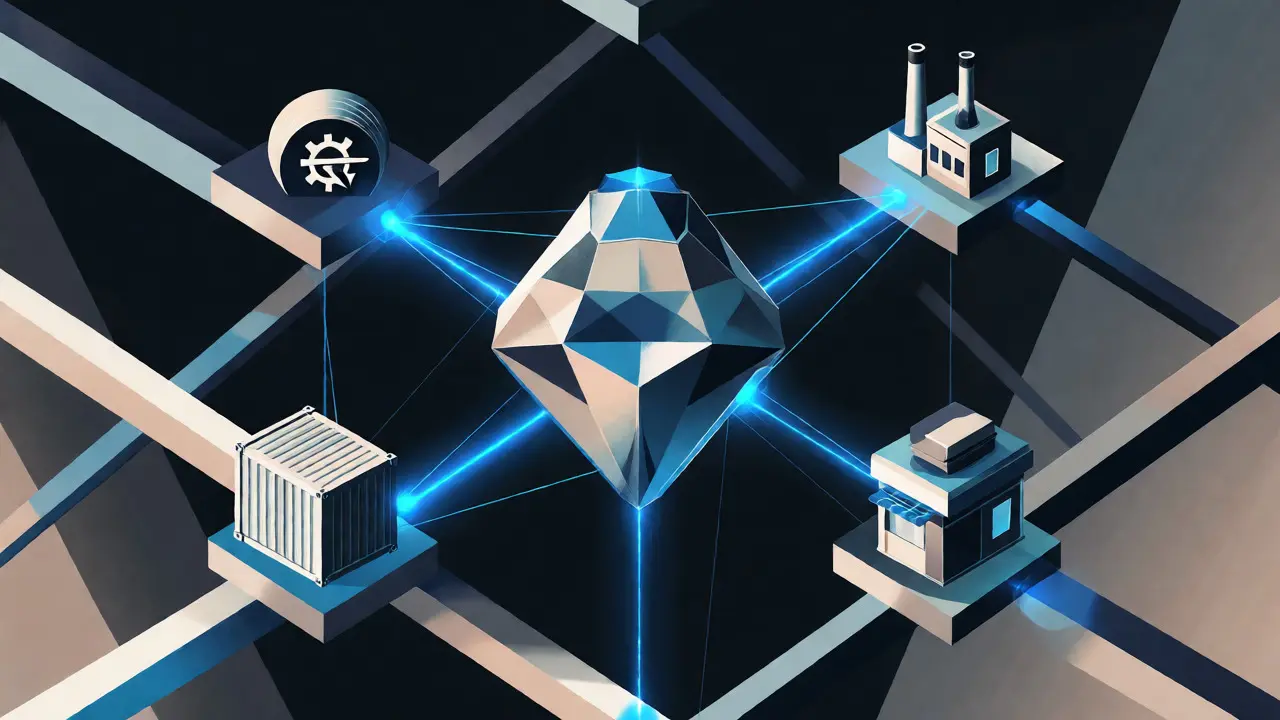
You might think all blockchains are public like Bitcoin, but for business, that’s often too open. Companies don’t want competitors seeing their exact supplier prices or volumes. That’s why many enterprises use private or consortium blockchains like Hyperledger Fabric. These platforms allow controlled access, ensuring privacy while still providing the security benefits of decentralization. On the other end, public chains like Ethereum or Polygon offer maximum transparency, which is great for consumer-facing brands wanting to show off their ethical sourcing.
Smart contracts play a huge role here. These are self-executing contracts with the terms directly written into code. For example, a smart contract could automatically release payment to a farmer only when the NFT confirms the goods have passed quality inspection at the port. This removes delays and disputes. Advanced systems also use hashing techniques to protect sensitive data. Instead of putting the exact price on the public ledger, they put a cryptographic hash (a unique code) representing that data. Only authorized parties can decode it, keeping business secrets safe while proving the data hasn't been altered.
Real-World Applications and Benefits
This isn't just theory. In the pharmaceutical industry, counterfeiting is a deadly issue. The World Health Organization estimates that about 10% of medical products in low- and middle-income countries are substandard or falsified. NFT-based tracking allows patients to scan a QR code and verify the entire history of their medication, from manufacturing to the pharmacy shelf. Similarly, in the luxury goods market, brands like LVMH are exploring similar tech to combat fake handbags. If your Louis Vuitton doesn't have a matching digital twin on the blockchain, it’s likely a knockoff.
For food safety, the speed advantage is critical. Walmart partnered with IBM Food Trust years ago and reduced the time it takes to track the origin of mangoes from seven days to 2.2 seconds. While that specific pilot used standard blockchain tokens, modern implementations using NFTs add layers of detail, such as carbon footprint data or fair-trade certification status embedded directly into the token metadata.
| Feature | Traditional Systems | NFT-Based Blockchain |
|---|---|---|
| Data Integrity | Vulnerable to alteration by central admins | Immutable; requires consensus to change |
| Transparency | Siloed; limited visibility | End-to-end visibility for authorized parties |
| Traceability Speed | Days or weeks during recalls | Seconds via automated queries |
| Cost of Verification | High due to manual audits | Lower after initial setup; automated checks |
| Consumer Engagement | Minimal interaction | High; interactive digital twins |
Implementation Challenges and Solutions
It’s not all smooth sailing. Integrating these systems with existing Enterprise Resource Planning (ERP) software like SAP or Oracle can be tricky. Many companies run legacy systems that don't talk to blockchains easily. You need middleware or APIs to bridge the gap. Another hurdle is the "garbage in, garbage out" problem. If a worker inputs bad data at the source, the blockchain will immutably record that bad data. Training staff and automating data entry via IoT devices are essential mitigations.
Energy consumption is another concern, though less so now than five years ago. Ethereum moved to Proof-of-Stake in 2022, cutting its energy use by over 99%. Polygon and Solana are even more efficient. Still, companies must choose platforms wisely based on their volume and sustainability goals. Scalability is also key; if you’re tracking billions of individual items, transaction fees (gas) can add up. Layer-2 solutions help reduce these costs significantly.
The Future: AI and Interoperability
Looking ahead, we’re seeing the convergence of AI and blockchain. AI can analyze the vast amounts of data stored in NFT histories to predict supply chain disruptions before they happen. Imagine an AI noticing weather patterns affecting a coffee region and alerting retailers to potential price hikes months in advance. Interoperability protocols are also developing, allowing NFTs to move between different blockchains. This means a product tracked on a private Hyperledger network could eventually share verification data with a public Ethereum-based consumer app seamlessly.
Regulatory pressure is driving adoption too. The EU’s Digital Product Passport initiative aims to require detailed lifecycle data for batteries, textiles, and electronics by 2027. Companies that adopt NFT-based tracking now will be far ahead of those scrambling to comply later. It’s becoming less of a "nice-to-have" tech experiment and more of a compliance necessity.
Are NFTs only for digital art?
No. While popularized by digital art, NFTs represent any unique asset. In supply chains, they serve as digital certificates for physical goods, verifying authenticity and origin.
Do consumers need a crypto wallet to use this?
Not necessarily. Most retail implementations hide the complexity behind simple QR codes. Scanning the code brings up a web page showing the product's history, handled by the brand's backend system.
Is blockchain tracking secure against hacking?
The blockchain itself is highly secure due to cryptography and decentralization. However, security depends on how data enters the system. Physical tags (like NFC chips) can be swapped, so combining blockchain with tamper-proof hardware is crucial.
Which industries benefit most from NFT supply chains?
Industries with high value, strict regulations, or strong consumer ethics demands benefit most. This includes luxury goods, pharmaceuticals, organic food, and sustainable fashion.
What is the difference between public and private blockchains in this context?
Public blockchains (like Ethereum) are open to everyone, offering maximum transparency. Private blockchains (like Hyperledger) restrict access to known participants, offering better privacy and speed for B2B transactions.