Remember when buying Bitcoin meant worrying about losing your private key or dealing with sketchy exchanges? That anxiety is fading fast. The SEC has fundamentally reshaped how Americans access digital assets. We are no longer talking about experimental financial products. Spot Bitcoin ETFs and Ethereum ETFs are now mainstream investment vehicles, sitting right next to gold and stocks in brokerage accounts.
This shift didn't happen overnight. It took over a decade of legal battles, rejected applications, and regulatory standoffs. But as of late 2025 and into 2026, the landscape looks completely different. If you've been on the sidelines, wondering whether these funds are safe, efficient, or worth the fees, this guide breaks down exactly where we stand. We'll look at what changed technically, how much it costs you, and why the recent move to "in-kind" trading matters for your wallet.
The Long Road to Approval
For years, the U.S. Securities and Exchange Commission said no. Between 2013 and 2023, they rejected 13 separate applications for spot Bitcoin ETFs. Their argument was simple but stubborn: they claimed the underlying markets were too easy to manipulate. Then came the turning point. In August 2023, the U.S. Court of Appeals for the D.C. Circuit ruled in favor of Grayscale Investments. The court stated that the SEC had applied inconsistent standards, effectively forcing their hand.
On January 10, 2024, the dam broke. The SEC approved the first batch of spot Bitcoin ETFs. Just six months later, on July 23, 2024, they greenlit spot Ethereum ETFs. This wasn't just a bureaucratic checkbox. It validated both assets as legitimate classes within regulated capital markets. Before this, many regulators treated cryptocurrencies like unregistered securities. Now, they are investable commodities, similar to gold or oil, traded through familiar stock market mechanisms.
The initial rollout had quirks. Early funds operated on a cash-only model. If you wanted to create new shares of an ETF, you had to give the fund cash, which then bought Bitcoin. You couldn't just hand over actual Bitcoin. This created friction and tax headaches for large investors. But the rules have since evolved significantly, making these products far more efficient for everyone involved.
What Are Spot ETFs and Why Do They Matter?
A spot ETF tracks the current price of an asset directly. Unlike futures-based ETFs, which bet on future prices, a spot ETF holds the actual cryptocurrency in custody. When you buy a share of BlackRock’s iShares Bitcoin Trust (IBIT), you own a fractional claim on real Bitcoin held in secure vaults.
Why does this matter to you? Accessibility. You don't need a crypto exchange account. You don't need to understand cold storage or seed phrases. You can buy these ETFs in your existing retirement account, like an IRA or 401(k), often with lower fees than traditional mutual funds. For many people, this removes the biggest barrier to entry: technical complexity.
Ethereum ETFs add another layer. Because Ethereum uses a proof-of-stake system, it generates yield. Some ETF providers pass these staking rewards to shareholders. This turns Ethereum from a purely speculative asset into one that pays you just for holding it, much like a dividend-paying stock. Not all funds offer this yet, but it's a major differentiator from Bitcoin ETFs, which generally do not generate native yield.
The Game Changer: In-Kind Creation and Redemption
If you remember one thing from this article, let it be this: the SEC's July 29, 2025, approval of in-kind creation and redemption mechanisms. This sounds technical, but it saves money.
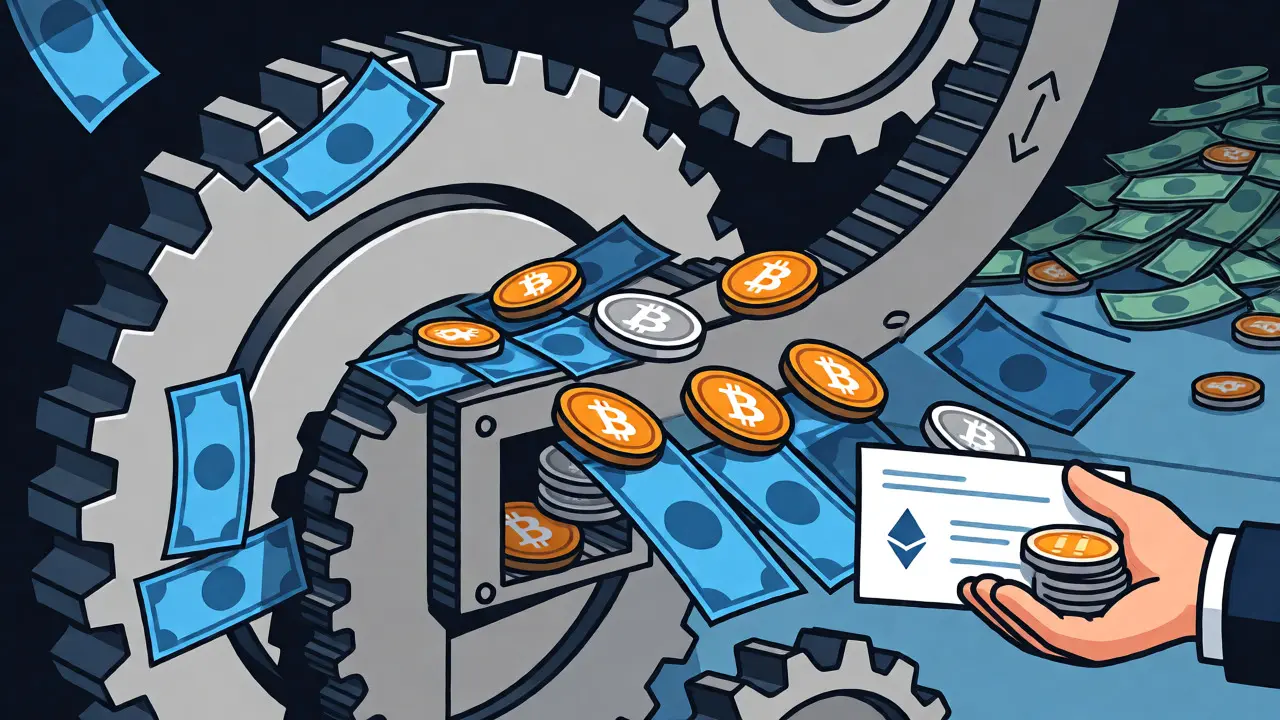
Under the old cash-only model, authorized participants (big institutions that help keep ETF prices stable) had to convert cash to crypto and back again constantly. This caused slippage-small losses due to price changes during trades-and triggered taxable events. With in-kind processing, these institutions can deliver actual Bitcoin or Ether to create shares, or receive actual coins when redeeming them. No cash conversion means fewer taxes and tighter tracking of the asset's price.
According to Jamie Selway, Director of the Division of Trading and Markets, this change reduces operational costs by approximately 0.15% to 0.25% annually. Across a $100 billion market, that translates to hundreds of millions in savings. By October 2025, BlackRock alone processed over $3 billion in in-kind conversions. This efficiency helps keep the ETF price closer to the actual spot price of the cryptocurrency, reducing the premium or discount you might pay.
Comparing the Top Players: Fees and Features
Not all ETFs are created equal. Fees vary widely, and so do features like staking participation. Here is a snapshot of the current market leaders as of late 2025.
| Fund Name | Ticker | Asset | Expense Ratio | Key Feature |
|---|---|---|---|---|
| iShares Bitcoin Trust | IBIT | Bitcoin | 0.25% | Largest AUM ($16.9B) |
| Fidelity Wise Origin Bitcoin Fund | FBTC | Bitcoin | 0.00%* | Fee waiver until 2027 |
| Grayscale Bitcoin Mini Trust | BTC | Bitcoin | 0.15% | Low-cost alternative |
| iShares Ethereum Trust | ETHA | Ethereum | 0.25% | Staking enabled |
| VanEck Ethereum ETF | EETH | Ethereum | 0.15% | Lowest fee tier |
| Grayscale Ethereum Staking ETF | ETHE | Ethereum | 1.50% | Legacy trust structure |
*Fidelity's 0.00% fee is temporary. Always check the prospectus for expiration dates. Notice the gap between Grayscale's older ETHE product and newer competitors. Grayscale charges significantly more because it converted from a closed-end trust rather than launching a new open-ended fund. Unless you have specific reasons to hold ETHE, cheaper options usually make more sense.
Market Impact and Institutional Adoption
The numbers tell a story of massive adoption. By September 2025, spot Bitcoin ETFs held $54.3 billion in assets under management (AUM). Ethereum ETFs followed with $18.7 billion. These aren't retail day-traders pumping volume; institutional giants are driving this. Hedge funds, pension plans, and family offices are using these ETFs for easier collateralization and estate planning.
However, the market isn't uniform. In Q3 2025, Bitcoin ETFs saw $1.2 billion in net outflows amid rising interest rates, while Ethereum ETFs attracted $478 million in inflows. This divergence suggests investors view Ethereum differently-as a growth tech play with yield potential-rather than just a store of value like Bitcoin.
Large holders, often called "whales," are increasingly swapping their raw coins for ETF shares. Why? Simplicity. Holding Bitcoin in an ETF makes it easier to borrow against in prime brokerage accounts. A survey of 142 institutional investors showed 78% prefer ETF exposure for these practical benefits. The convenience factor is powerful.
Risks and Regulatory Uncertainty
Don't let the hype blind you. Risks remain. First, regulatory clarity isn't absolute. While Bitcoin and Ethereum are approved, other altcoins face uncertain futures. SEC Chairman Paul Atkins has stated clearly that "not all crypto assets will qualify for ETP treatment." Don't assume every coin will get an ETF soon.
Second, there are technical risks with Ethereum staking. Only about 45% of Ethereum ETFs currently participate in staking. Those that do distribute rewards quarterly, but this introduces complexity. If the network faces issues, or if staking penalties occur, those impacts flow through to the ETF. Former SEC Acting Chairman John Coates warned that rapid approvals without clear staking regulations could pose systemic risks.
Finally, remember that these are still volatile assets. An ETF wrapper doesn't eliminate price swings. Bitcoin dropped sharply in September 2025, causing billions in outflows despite the structural improvements. Your principal can still decline.
What Comes Next?
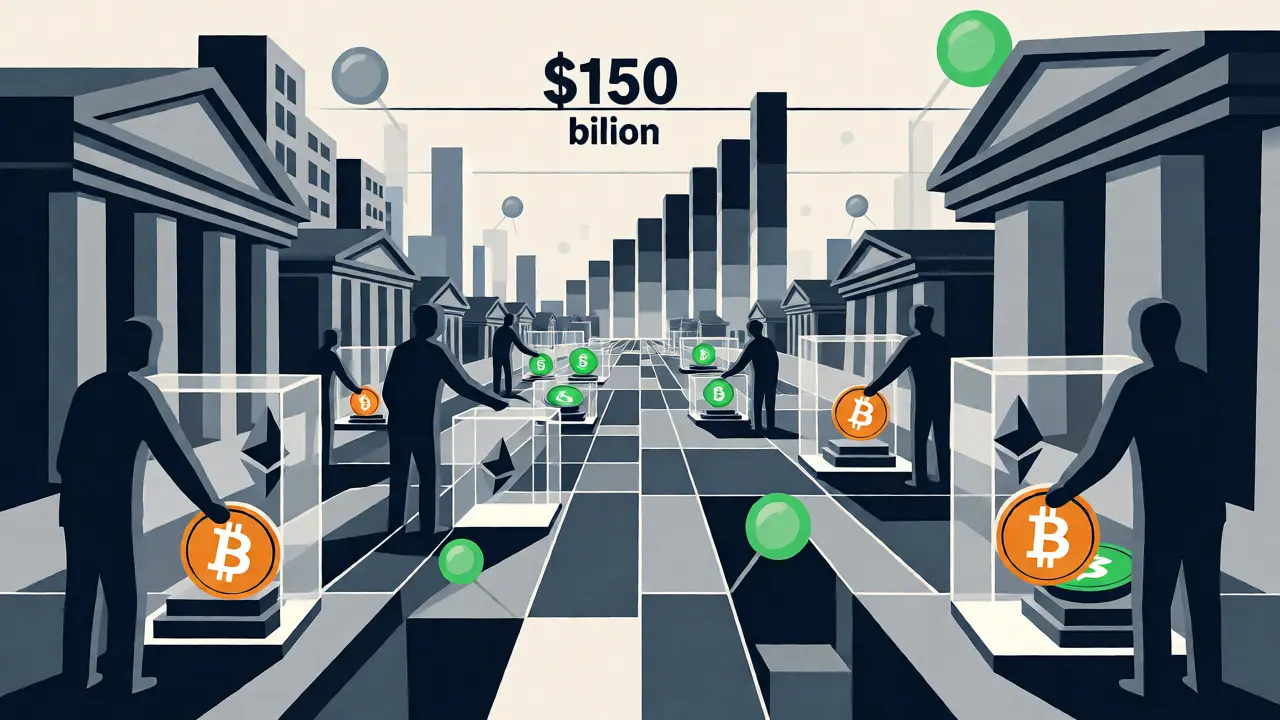
The pipeline is full. Following the success of Bitcoin and Ethereum, regulators are looking at Solana, XRP, and others. Hong Kong already approved a spot Solana ETF in October 2025. Similar products are expected in Singapore and the EU by mid-2026. Analysts project the combined Bitcoin and Ethereum ETF market could hit $150 billion by December 2026.
For you, this means more choices and likely lower fees as competition heats up. Keep an eye on fee waivers expiring and new entrants offering innovative structures. The era of crypto being a wild west experiment is over. It's now part of the regulated financial fabric, and understanding these tools puts you ahead of the curve.
Do I need a crypto wallet to buy a Bitcoin ETF?
No. You buy and sell Bitcoin ETFs just like regular stocks through your brokerage account. You do not manage private keys or wallets yourself.
Are Ethereum ETFs taxed differently than Bitcoin ETFs?
Generally, both are treated as property for tax purposes in the US. However, Ethereum ETFs that distribute staking rewards may report those as ordinary income, whereas Bitcoin ETF gains are typically capital gains. Consult a tax professional for your specific situation.
What is the difference between cash-only and in-kind ETFs?
Cash-only ETFs require authorized participants to use fiat currency to create or redeem shares. In-kind ETFs allow them to deliver or receive actual cryptocurrency. In-kind reduces transaction costs and tax inefficiencies, leading to tighter pricing.
Which Bitcoin ETF has the lowest fees?
As of late 2025, Fidelity's FBTC offers a 0.00% expense ratio temporarily. Grayscale's Mini Trust (BTC) also offers a low 0.15% fee permanently. Always check for fee waiver expiration dates.
Can I lose money in a Bitcoin ETF?
Yes. The ETF tracks the price of Bitcoin. If Bitcoin's price falls, the value of your ETF shares falls. The ETF structure protects you from custody risks, not market volatility.