
Imagine trying to buy Bitcoin with your local currency, only to find out the exchange you picked doesn't support it. Or worse, you live in Japan, and every global platform demands a foreign bank account or charges hefty conversion fees. This is exactly where Bitbank steps in. Founded in 2015 and headquartered in Tokyo, this Japanese cryptocurrency exchange has carved out a unique niche by focusing almost exclusively on the domestic market. If you are based in Japan, or if you are an international trader curious about why this platform consistently claims the top spot for trading volume in the region, this review breaks down everything you need to know.
We aren't just listing features here. We're looking at whether Bitbank actually delivers on its promises of low fees, high security, and regulatory safety. Because let's be honest: not every "top-rated" exchange deserves your hard-earned money. By the end of this article, you'll know exactly who should use Bitbank and who should probably look elsewhere.
Who Can Actually Use Bitbank?
This is the first hurdle, and it’s a big one. Unlike Binance or Coinbase, which let almost anyone sign up from anywhere, Bitbank has strict geographic boundaries. As of 2026, retail services are available only to residents of Japan. You need a valid Japanese address, a Japanese bank account, and typically a My Number card or residence card to pass verification.
If you’re an expat living in Tokyo or Osaka, you’re likely eligible. But if you’re sitting in New York, London, or Singapore hoping to trade on Bitbank because you heard good things about their fees, you’ll hit a wall. The platform does offer API access and institutional services to global corporations, but for the average individual trader outside Japan, Bitbank remains off-limits. This exclusivity is both its greatest strength-creating a focused, compliant community-and its biggest limitation for global expansion.
Fees and Costs: The Big Draw
Why do Japanese traders flock to Bitbank? Money. Specifically, the lack of it being taken away. Most global exchanges charge you to deposit fiat, they charge you to trade, and then they charge you again to withdraw. Bitbank flips this model on its head.
- Deposit Fees: $0. Whether you’re sending Yen via bank transfer or moving crypto in, there are no deposit fees.
- Trading Fees: Spot trading commissions generally range between 0.12% and 0.15%. However, Bitbank often runs promotions or offers "minus maker" rebates, meaning liquidity providers can sometimes earn a small percentage back rather than paying it.
- Withdrawal Fees: This is where you pay. Withdrawing Bitcoin costs approximately 0.0001 BTC, while Litecoin withdrawals cost around 0.001 LTC. These rates are competitive but not the cheapest globally; however, compared to platforms that charge flat USD fees regardless of network congestion, these dynamic rates can save you money during quiet periods.
The absence of deposit fees is particularly valuable for Japanese users who frequently move funds between banks and exchanges. In a country where banking transfers can sometimes incur minor costs, having zero friction on entry is a massive psychological and financial win.
Supported Assets and Trading Pairs
Bitbank isn’t trying to list every meme coin that launches overnight. They maintain a curated selection of roughly 28 to 35 cryptocurrencies. While this might seem small compared to platforms listing hundreds of tokens, the focus is on quality and liquidity within the Japanese market.
The core offerings include the heavy hitters: Bitcoin (BTC), Ethereum (ETH), Ripple (XRP), and Litecoin (LTC). But they also support a solid array of altcoins like Stellar (XLM), NEM (XEM), EOS, and TRON (TRX). More recently, they’ve added DeFi and Layer-1 projects such as Chainlink (LINK), Aave (AAVE), and Algorand (ALGO).
| Category | Examples | Note |
|---|---|---|
| Major Coins | BTC, ETH, XRP, LTC | Highest liquidity, tightest spreads. |
| Altcoins & DeFi | LINK, AAVE, MKR, ALGO | Good variety for diversified portfolios. |
| Japan-Specific | MonaCoin (MONA) | Unique to Japanese markets, popular locally. |
| Stablecoins | USDT, USDC | Used primarily for hedging against JPY volatility. |
A critical point for international readers: Bitbank trades primarily against the Japanese Yen (JPY). While some pairs exist against USDT, the primary fiat gateway is JPY. This means if you’re holding USD, you’re effectively double-converting, which eats into profits unless you’re already dealing in Yen.
Security and Regulation: The FSA Stamp
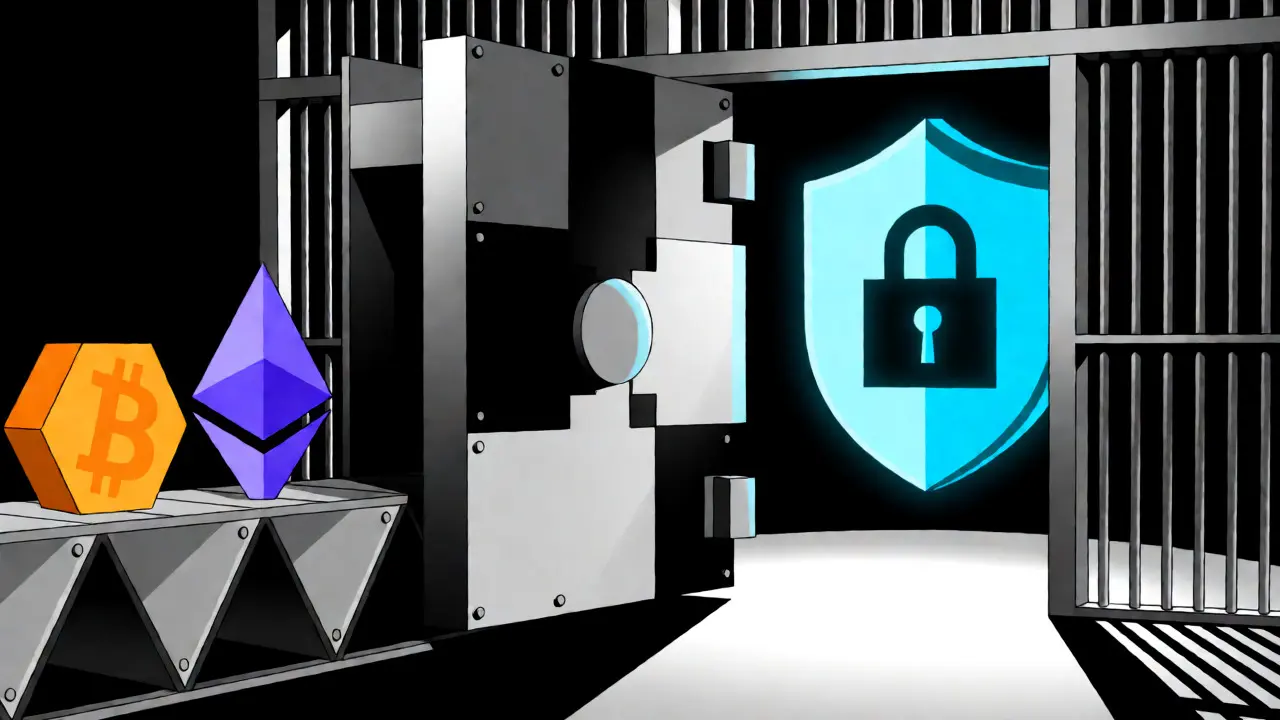
In the world of crypto, regulation is the ultimate trust signal. Bitbank operates under a license from Japan’s Financial Services Agency (FSA). Japan has some of the strictest crypto regulations in the world, requiring exchanges to segregate customer assets and hold reserves. When Bitbank says they are regulated, it’s not just marketing fluff-it’s a legal requirement backed by government oversight.
Technologically, they employ a multi-layered security approach:
- Cold Wallet Storage: The majority of user funds are kept offline, immune to online hacks.
- Multisig Security: Transactions require multiple private key signatures, reducing the risk of internal theft or single-point failures.
- Two-Factor Authentication (2FA): Mandatory for all accounts, adding a necessary layer of protection against phishing.
Since its inception, Bitbank has maintained a clean record regarding major breaches. For Japanese investors, this reputation is worth more than any new feature. The fear of losing assets to a hack is real, and Bitbank’s track record helps alleviate that anxiety.
User Experience and Tools
Does the platform feel good to use? For most, yes. The interface is clean, minimalist, and functional. It doesn’t overwhelm you with unnecessary widgets or aggressive upsells. The mobile app, in particular, has received high praise, often ranking #1 in Japan’s App Store for finance apps. Users appreciate the stability and the ability to execute trades quickly without lag.
For technical traders, Bitbank integrates TradingView charts directly into the interface. This gives you access to over 50 technical indicators and 60+ analysis tools. If you’re used to TradingView on other platforms, the transition is seamless. You can draw trendlines, apply Fibonacci retracements, and set alerts without leaving the exchange.
However, there is a language barrier. The customer support chatbot operates exclusively in Japanese. While the ticket system accepts English and Chinese, the immediate help is often in Japanese. If you don’t speak the language, navigating support issues can be frustrating. Additionally, the platform does not offer leverage trading. Everything is spot trading (1:1 ratio). If you’re looking to short-sell or use margin, Bitbank isn’t the place for you.

Additional Features: Lending and Engagement
Bitbank tries to keep users engaged beyond just buying and selling. They offer a crypto lending service where you can earn interest on idle assets. Rates go up to 5% annually for supported coins like BTC, ETH, XLM, and DOGE. There are no minimum amount requirements, making it accessible even for small holders.
They also run a daily lottery system. It’s a gamification element designed to encourage regular login and activity. While the prizes vary, it adds a fun, low-stakes incentive to check the platform daily. These features won’t make you rich, but they add value to an otherwise standard trading experience.
Pros and Cons Summary
To help you decide quickly, here’s a snapshot of where Bitbank shines and where it falls short.
| Pros | Cons |
|---|---|
| Zero deposit fees | Restricted to Japanese residents only |
| Highly secure, FSA-regulated | No leverage or margin trading |
| Excellent mobile app UX | Limited asset selection compared to global giants |
| Integrated TradingView charts | Support chatbot is Japanese-only |
| Earn interest via lending | Primary fiat is JPY, inconvenient for USD holders |
Final Verdict: Should You Choose Bitbank?
If you live in Japan, Bitbank is arguably one of the best choices you can make. The combination of regulatory safety, low fees, and a user-friendly interface makes it a standout in the domestic market. The fact that it holds the highest trading volume in Japan speaks volumes about local trust.
If you are outside Japan, Bitbank is likely irrelevant to your daily trading needs due to residency restrictions. You might watch their listings for insights into what’s popular in Asia, but you won’t be able to trade there directly. For global traders, stick to exchanges like Kraken, Coinbase, or Binance, depending on your jurisdiction.
Bitbank proves that you don’t need to be everywhere to be successful. By focusing intensely on one market and delivering a polished, secure, and compliant product, they’ve built a loyal user base. It’s a masterclass in regional specialization.
Can I use Bitbank if I don't live in Japan?
Generally, no. Retail trading on Bitbank is restricted to residents of Japan. You must provide proof of Japanese residency and a Japanese bank account to complete the KYC (Know Your Customer) process. International users cannot open personal trading accounts.
What are the withdrawal fees on Bitbank?
Withdrawal fees vary by cryptocurrency. For example, withdrawing Bitcoin typically costs around 0.0001 BTC, while Litecoin costs about 0.001 LTC. These fees are dynamic and may change based on network congestion, but they are clearly displayed before you confirm the transaction.
Does Bitbank offer leverage trading?
No, Bitbank currently only supports spot trading. This means you can only trade with the funds you have in your account (1:1 leverage). If you are looking for margin trading or futures contracts, you will need to use a different exchange.
Is Bitbank safe to use?
Yes, Bitbank is considered very safe. It is licensed and regulated by Japan’s Financial Services Agency (FSA), which enforces strict security standards. The platform uses cold storage for most assets, multisig security, and two-factor authentication to protect user funds.
How many cryptocurrencies does Bitbank support?
Bitbank supports approximately 28 to 35 cryptocurrencies. The list includes major assets like Bitcoin, Ethereum, and Ripple, as well as various altcoins and stablecoins. The selection is curated rather than exhaustive, focusing on assets with sufficient liquidity and compliance status.