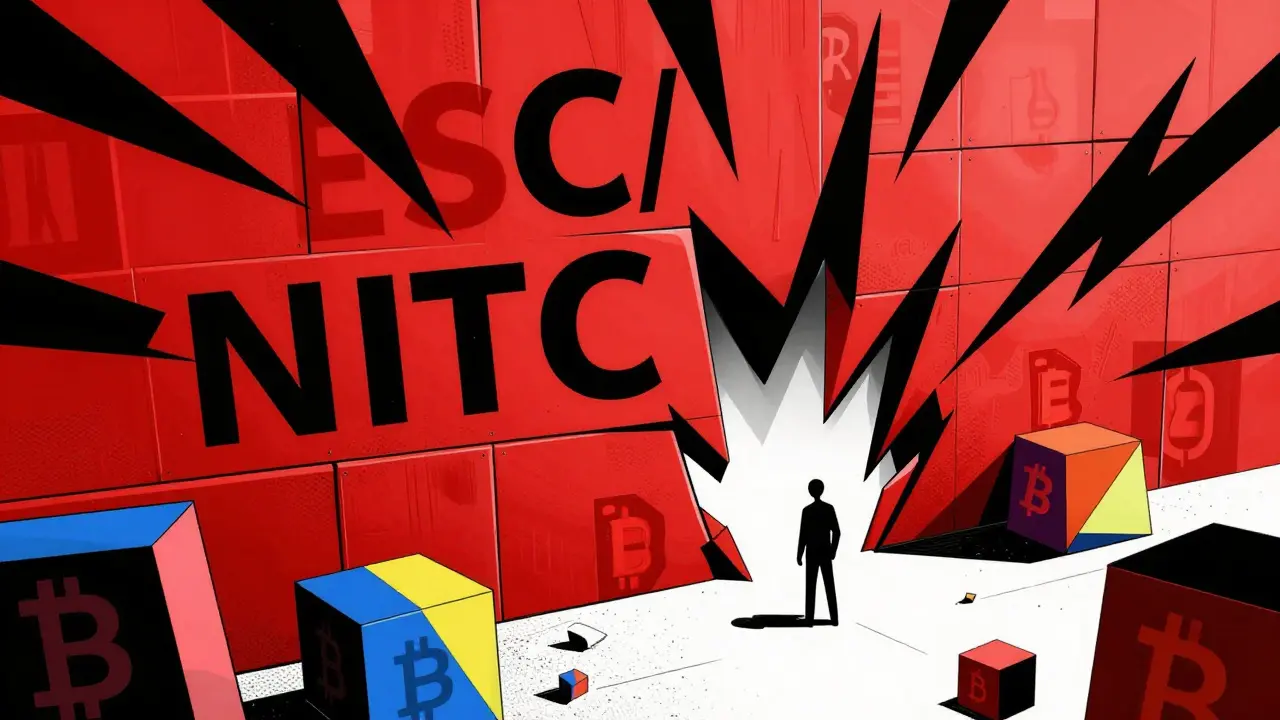
The landscape for cryptocurrency traders in the Philippines changed drastically over the last two years. If you are trying to log into Binance or check your balance on Bitget, you might be hitting walls that didn't exist before. The government has moved from a hands-off approach to one of the strictest regulatory crackdowns in Southeast Asia. For many users, this means their favorite platforms are no longer accessible directly. Understanding why this happened and what it means for your assets is critical right now.
The Binance Ban: How It Happened
Binance is the world's largest cryptocurrency exchange by trading volume, offering a wide range of digital assets and trading services. However, its operations in the Philippines came to an abrupt halt in March 2024. This wasn't a sudden decision. The Securities and Exchange Commission (SEC) had been warning the company since November 2023 that it was operating without proper authorization. When Binance failed to comply with local licensing requirements, the SEC partnered with the National Telecommunications Commission (NTC) to block access to the platform entirely.
This move was part of a broader global trend. Before the Philippines, Binance had already faced bans or operational exits in at least 17 other countries, including the United States, the Netherlands, and Nigeria. The SEC’s goal was clear: protect Filipino investors from unregistered investment products. They argued that without domestic oversight, users had little recourse if something went wrong. The blocking of Binance’s website and app access was executed swiftly, leaving many users scrambling to withdraw their funds within a 90-day grace period.
Even after the ban, tensions remained high. The SEC issued further advisories highlighting that Binance continued to run promotional campaigns on social media targeting Filipinos. The regulator made it clear that anyone acting as a promoter, influencer, or agent for Binance within the country could face criminal liability. This aggressive stance signaled that the government was serious about enforcing its borders, even against a global giant.
New Rules: The CASP Framework of 2025
The real game-changer arrived in May 2025 with the introduction of SEC Memorandum Circular No. 4 and No. 5. These documents established the first comprehensive Crypto Asset Service Provider (CASP) framework in the Philippines. Effective July 5, 2025, these rules set a new standard for how crypto exchanges must operate if they want to serve Filipino customers legally.
Under the CASP framework, any entity providing crypto services must register as a domestic corporation. This isn't just paperwork; it requires significant financial commitment. Companies must have a minimum capital requirement of 100 million pesos (approximately $1.8 million USD). They also need to maintain physical offices within the Philippines and submit detailed monthly financial reports to regulators.
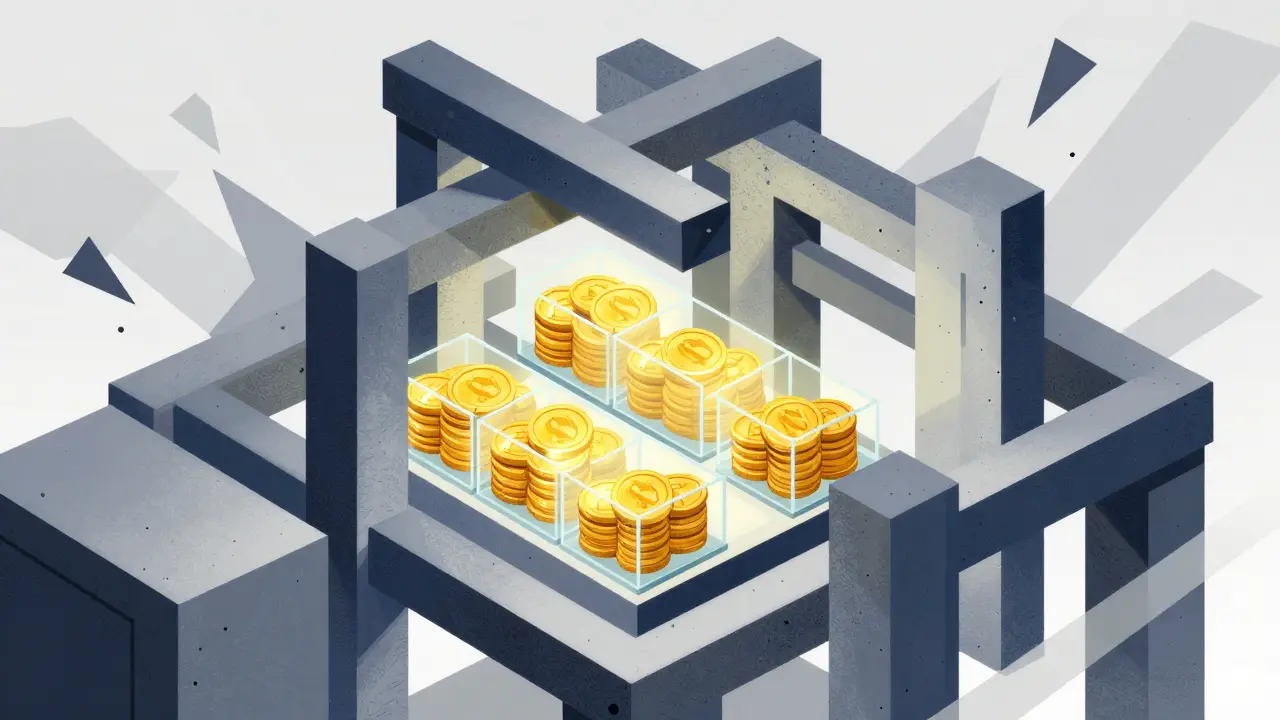
A key feature of these regulations is the mandatory separation of customer funds from company assets. This rule was designed to prevent losses similar to those seen in global collapses like FTX. By keeping user money in segregated accounts, regulators aim to ensure that if an exchange fails, customer deposits remain intact. Violations of these rules carry heavy penalties, ranging from 50,000 to 10 million pesos per offense, plus daily fines for ongoing non-compliance.
| Requirement | Details | Penalty for Non-Compliance |
|---|---|---|
| Corporate Registration | Must be registered as a domestic corporation | Fines up to 10 million pesos |
| Capital Requirement | Minimum 100 million pesos ($1.8M USD) | Daily fines of 10,000 pesos |
| Physical Presence | Maintain office within the Philippines | Operational suspension |
| Fund Segregation | Customer funds separated from company assets | Criminal liability for executives |
| Reporting | Monthly financial reports to SEC | Fines and license revocation |
Where Does Bitget Stand?
While Binance received the most attention, the question remains: what about Bitget? As of mid-2026, Bitget has not been explicitly named in the same high-profile blocking orders as Binance. However, the regulatory net has widened significantly. On August 1, 2025, the SEC issued a public advisory targeting ten major exchanges for operating without licenses under the new CASP framework. Platforms like OKX, Bybit, KuCoin, and Kraken were specifically called out.
Although Bitget was not listed in that specific advisory, the CASP rules apply universally to all cryptocurrency service providers serving Philippine customers. If Bitget does not register as a domestic corporation with the required capital and physical presence, it operates in violation of the law. The precedent set by Binance suggests that the SEC will eventually target other non-compliant platforms. Users should assume that any international exchange not officially licensed by the SEC is at risk of being blocked.
The ambiguity around Bitget creates a risky environment. While access may still work today, there is no guarantee it will tomorrow. The SEC has shown it can act quickly once it decides to enforce compliance. Traders relying on Bitget should monitor official SEC announcements closely and consider moving assets to compliant platforms to avoid potential lockouts.
The Rise of VPNs and Legal Risks
Despite the bans, demand for cryptocurrency in the Philippines remains strong. Many users have turned to Virtual Private Networks (VPNs) to bypass regional blocks. VPNs mask IP addresses, allowing users to connect to servers in countries where Binance or other restricted exchanges are still available. Some VPN providers even market their services specifically for accessing banned crypto platforms, promising "secure" trading through encryption.
However, using a VPN to trade on a banned exchange is not without risk. The SEC has stated that circumventing these blocks can expose users to legal liability. While individual traders haven't been widely prosecuted yet, the regulatory language is broad. Engaging in transactions on unlicensed platforms could be interpreted as participating in illegal financial activities. Moreover, if a banned exchange suffers a hack or insolvency while you are accessing it via a VPN, you have zero protection from Philippine authorities. Your funds are effectively outside the legal system.
This gray area forces users to weigh convenience against security. Is the ability to trade on Binance worth the potential legal exposure and lack of consumer protection? For many, the answer is becoming increasingly difficult as enforcement tightens.
Regional Context: A Southeast Asian Crackdown
The Philippines is not alone in this shift. Across Southeast Asia, governments are tightening control over cryptocurrency markets. Thailand’s SEC ordered the blocking of five exchanges, including Bybit and OKX, in May 2025 as part of anti-money laundering efforts. Indonesia increased tax rates on offshore crypto trades from 0.2% to 1%, making international platforms much less attractive.
This coordinated regional approach indicates a long-term strategy. Regulators are working together to close loopholes that allow international exchanges to operate unchecked. For Filipino traders, this means the window for using unlicensed platforms is closing fast. The era of unrestricted access to global crypto markets is ending, replaced by a regulated, localized ecosystem.
What Should You Do Now?
If you are currently holding assets on Binance or Bitget, time is of the essence. Here are practical steps to protect yourself:
- Withdraw Assets Immediately: Move your funds to a personal wallet where you control the private keys. This gives you custody of your assets regardless of exchange status.
- Use Compliant Exchanges: Look for platforms that have registered under the CASP framework. These exchanges offer legal protection and regulatory oversight.
- Avoid Promoters: Do not engage with influencers or agents promoting banned exchanges. The SEC has warned that these individuals can be held criminally liable, and associating with them may draw unwanted attention.
- Monitor Official Sources: Follow updates from the Philippine SEC and NTC. Regulatory actions can happen quickly, and early awareness helps you react appropriately.
- Consider Tax Implications: Ensure you are reporting crypto gains correctly under Philippine tax laws. Using offshore platforms complicates tax compliance and increases audit risk.
The transition to a regulated market is challenging but necessary for long-term stability. By adapting to these changes, you can continue participating in the crypto economy safely and legally.
Is Binance completely banned in the Philippines?
Yes, Binance has been blocked in the Philippines since March 2024. The SEC and NTC prevented access to its website and apps because it operated without proper licensing. Users were given 90 days to withdraw funds before the block was enforced.
Can I use Bitget in the Philippines in 2026?
Bitget is not currently blocked, but it operates without full compliance with the new CASP framework. This means it could be targeted for blocking in the future. Using it carries legal and financial risks as it is not authorized under Philippine law.
What is the CASP framework?
The Crypto Asset Service Provider (CASP) framework, effective July 2025, requires crypto exchanges to register as domestic corporations, hold 100 million pesos in capital, maintain local offices, and segregate customer funds. It aims to protect investors from unregulated platforms.
Is using a VPN to access Binance legal?
Using a VPN to bypass regulatory blocks exists in a legal gray area. While not explicitly criminalized for individual users, the SEC warns that engaging with banned platforms can lead to liability. Additionally, you lose consumer protections if something goes wrong with your account.
Which exchanges are safe to use in the Philippines?
Only exchanges that have registered under the CASP framework and obtained approval from the SEC are considered safe and legal. Always verify an exchange's status on the official SEC website before depositing funds.
What happens if I don't withdraw my funds from Binance?
If you cannot access Binance due to the block, your funds remain on the platform but are inaccessible without a VPN. If Binance faces global issues, you have no legal recourse in the Philippines to recover your assets. Withdrawal is strongly recommended.
Why did the Philippines crack down on crypto exchanges?
The crackdown aims to protect investors from fraud, money laundering, and exchange failures. By requiring local registration and fund segregation, regulators ensure that companies are accountable and that user funds are safe from corporate mismanagement.
Are there penalties for promoting Binance in the Philippines?
Yes, the SEC has stated that influencers, agents, and promoters who encourage Filipinos to use Binance can face criminal liability. This includes online endorsements and recruitment activities.
Comments
Daniel J. Cox
Man, this is wild. I remember when crypto was just the wild west out there. Now it feels like they're building a cage around it. :/
June 29, 2026 at 16:03
Emma Rémond
The sheer incompetence of the retail trader demographic is precisely why these regulatory frameworks are not merely necessary but existential imperatives for market stability. The notion that one can simply 'opt-out' of sovereign jurisdiction via a Virtual Private Network is a testament to the profound legal illiteracy plaguing the masses. We are witnessing the inevitable maturation of digital asset markets from speculative fiascos into institutionalized financial instruments, and those who cling to the nostalgia of unregulated arbitrage opportunities will find themselves increasingly marginalized by sophisticated compliance architectures.
June 30, 2026 at 20:43
Scott Miller
Wake up people! This is exactly what they want you to think! The SEC isn't protecting you, they're protecting their own wallets! Don't let them scare you into moving your money to some local bank where they can freeze it whenever they feel like it! Fight back! Keep using VPNs! Stay strong!
July 1, 2026 at 16:04
Rob Morton
It's interesting to consider the philosophical shift here. We used to view code as law, immutable and beyond reach. Now, physical borders are being re-imposed on digital spaces. It makes you wonder if true decentralization was ever possible in a world governed by nation-states with taxing powers and enforcement agencies. Perhaps the future isn't about escaping regulation, but integrating with it in a way that preserves autonomy.
July 2, 2026 at 19:35
Routh Middaugh
I mean... look at it this way; maybe it's for the best? Like... really... think about it. If Binance goes down again... who do you call? No one. Right? So having some rules... even if they are annoying... might actually save someone's life savings. Just saying. ;)
July 4, 2026 at 06:26
Ryan Peters
Typical third-world regulatory overreach. They can't manage their own economy so they ban technology. Meanwhile, we in the US have actual innovation hubs. Let them choke on their red tape. The smart money moves to jurisdictions that understand capital flow dynamics and don't treat entrepreneurs like criminals. Pathetic.
July 5, 2026 at 07:32
ross harris
The great digital iron curtain descends upon the archipelago, shrouding the neon dreams of decentralized finance in the gray fog of bureaucratic suffocation. One must ponder the irony: in seeking to protect the sheep from the wolves of volatility, the shepherds have locked the barn door while the wolves are already inside, wearing suits and holding clipboards. A tragicomic ballet of control versus chaos, where the dancers are our private keys and the music is the slow drip of compliance audits.
July 6, 2026 at 01:53
Carl Belgrave
Listen to me closely because I am only going to say this once. You are stupid if you keep using Bitget. It is a ticking time bomb. Move your assets to a compliant exchange or get left behind. The government knows what is best for you. Stop acting like a rebellious teenager and follow the laws. It is simple logic. Do it now.
July 7, 2026 at 19:18
Carl Hanzel
You all are missing the point entirely. The real issue is not the regulation but the collective delusion that any platform is safe. Whether it is Binance, Bitget, or some new compliant exchange, they are all centralized points of failure. The only true security is self-custody. But no, everyone prefers the comfort of a user interface and customer support tickets. Disappointing.
July 8, 2026 at 04:53