
Buying Bitcoin or Ethereum feels simple enough: you click buy, the asset sits in your wallet, and you wait for the price to go up. But if you want to make a living-or even just consistent profits-from that process, 'waiting' isn't a strategy. It’s gambling. The difference between a gambler and a trader is structure. In spot trading is the practice of buying and selling assets at their current market price for immediate settlement, giving you full ownership without the complexity of leverage or expiration dates. This simplicity is its greatest strength, but it also means you can’t rely on margin to save a bad trade. You need a plan.
We are now in mid-2026. The markets have matured. AI tools are no longer novelties; they are standard equipment. The gap between institutional traders and retail investors has narrowed significantly thanks to better data access. Yet, most new traders still lose money because they chase hype instead of following a system. This guide breaks down the best spot trading strategies used by professionals today, how to adapt them to current market conditions, and-most importantly-how to protect your capital when things go wrong.
The Core Mindset: Ownership Over Leverage
Before diving into specific tactics, let’s clarify why spot trading remains the preferred method for many serious investors. Unlike futures or perpetual contracts, where you bet on price direction using borrowed funds, spot trading means you actually own the underlying asset. If Bitcoin drops 50%, you don’t get liquidated. You just hold a bag that might take years to recover. This safety net allows for long-term thinking, which is crucial in volatile markets like cryptocurrency.
However, owning the asset doesn’t mean you should just buy and forget. Active spot trading involves timing entries and exits to maximize gains and minimize drawdowns. The goal is to capture value from market movements while keeping risk strictly controlled. Every strategy below assumes this baseline: you are trading with real money, you cannot afford to lose it all, and you need a repeatable process.
Day Trading: Capturing Small Moves Fast
Day trading is a high-frequency strategy where positions are opened and closed within the same trading session. The idea is simple: profit from small price fluctuations throughout the day. In 2026, with advanced charting platforms and real-time data feeds, day traders can execute dozens of trades based on precise technical signals. Typical profit targets range from 0.5% to 2% per trade. It sounds small, but compounded over hundreds of trades, these percentages add up.
This approach requires intense focus. You are essentially playing against algorithms and other humans who are watching every tick of price movement. The advantage? No overnight risk. If the market crashes while you’re sleeping, you’re not exposed because you’ve already closed your positions. The downside? High stress and significant time commitment. You need to be glued to your screens during peak volatility hours.
- Best For: Traders with full-time availability and high stress tolerance.
- Key Tools: Real-time order book depth, Level 2 data, and automated alerts.
- Risk: Psychological burnout and transaction costs eating into profits.
Successful day traders in 2026 often use AI-powered pattern recognition software to identify short-term trends faster than humanly possible. They look for liquidity imbalances and sudden volume spikes. Remember, in day trading, speed is everything. If you hesitate, the move is gone.
Swing Trading: Riding the Medium-Term Waves
If day trading feels too exhausting, swing trading is a strategy that holds positions for days to weeks to capture intermediate price trends. This is arguably the most popular approach among retail crypto traders because it balances opportunity with lifestyle. You don’t need to watch charts every minute. Instead, you analyze trends, set entry and exit points, and let the market work for you.
Swing traders rely heavily on technical analysis. They look for support and resistance levels, moving averages, and momentum indicators like the Relative Strength Index (RSI). In 2026, tools like TradingView have made backtesting these strategies incredibly easy. You can simulate how a strategy would have performed over the last year before risking a single dollar. This removes much of the guesswork.
The main risk here is overnight exposure. Crypto markets never sleep. A major news event can happen while you’re asleep, causing a sharp drop or spike. Swing traders must use stop-loss orders to protect themselves from black swan events. However, if managed correctly, swing trading offers some of the best risk-reward ratios in the game.
| Feature | Day Trading | Swing Trading |
|---|---|---|
| Holding Period | Minutes to Hours | Days to Weeks |
| Time Commitment | High (Full-time) | Moderate (Part-time) |
| Overnight Risk | None | Yes |
| Stress Level | Very High | Moderate |
| Transaction Costs | High (Many trades) | Low (Fewer trades) |

Momentum Trading: Surfing the Hype Wave
Momentum trading is a strategy focused on buying assets that are rising rapidly and selling those falling sharply. The core belief is that an asset in motion tends to stay in motion. In the crypto world, momentum is often driven by news, social media buzz, or macroeconomic shifts. When Bitcoin breaks a key resistance level with high volume, momentum traders jump in, expecting the rally to continue.
This strategy thrives in volatile markets. In 2026, AI sentiment analysis tools scan Twitter, Reddit, and news outlets in real-time to gauge market mood. If the sentiment turns overwhelmingly positive, momentum traders see it as a signal to enter. Conversely, negative sentiment triggers exits. It’s about riding the wave until it starts to break.
The danger? False breakouts. Prices can surge briefly due to low liquidity or manipulation, only to reverse sharply. Momentum traders must be disciplined about exiting. Greed is the enemy here. Set clear profit targets and stick to them. Don’t try to catch the absolute top; take what the market gives you and move on.
Trend Following: Patience Pays Off
Trend following is a strategy that aims to capture large price movements by staying in trades as long as the dominant trend persists. Inspired by the famous Turtle Trading experiments of the 1980s, this approach ignores short-term noise. If the market is going up, you buy. If it’s going down, you sell or stay cash. Simple, right? Not really. It requires immense patience and discipline.
In 2026, trend-following systems often incorporate AI-driven filters to distinguish genuine trends from false signals. These systems might use multiple timeframe analysis, looking at weekly, daily, and hourly charts simultaneously to confirm direction. Volume confirmation is critical. A trend supported by increasing volume is far more likely to sustain itself.
Trend following works exceptionally well in strong bull or bear markets. However, it struggles in sideways, choppy markets where prices oscillate without clear direction. During these periods, trend followers may experience a series of small losses (whipsaws) as they enter and exit prematurely. Accepting these losses as part of the cost of doing business is essential.
Breakout Trading: Timing the Explosion
Breakout trading is a strategy that enters positions when price moves outside a defined consolidation range. Markets spend a lot of time consolidating, forming patterns like triangles, flags, or rectangles. Breakout traders wait for the price to burst out of these patterns, anticipating a significant move in that direction.
The key to successful breakout trading is volume. A breakout accompanied by high volume is likely genuine. Low-volume breakouts are often traps designed to lure in inexperienced traders. Common patterns include symmetrical triangles, ascending triangles, and cup-and-handle formations. In 2026, automated scanners can alert you instantly when these patterns form and break, allowing you to act quickly.
Professional breakout traders emphasize one rule: cut losses fast. If the breakout fails and price reverses back into the consolidation zone, exit immediately. Don’t hope it will come back. Let winners run, but kill losers early. This asymmetry is what makes the strategy profitable over time.
Risk Management: The Non-Negotiable Foundation
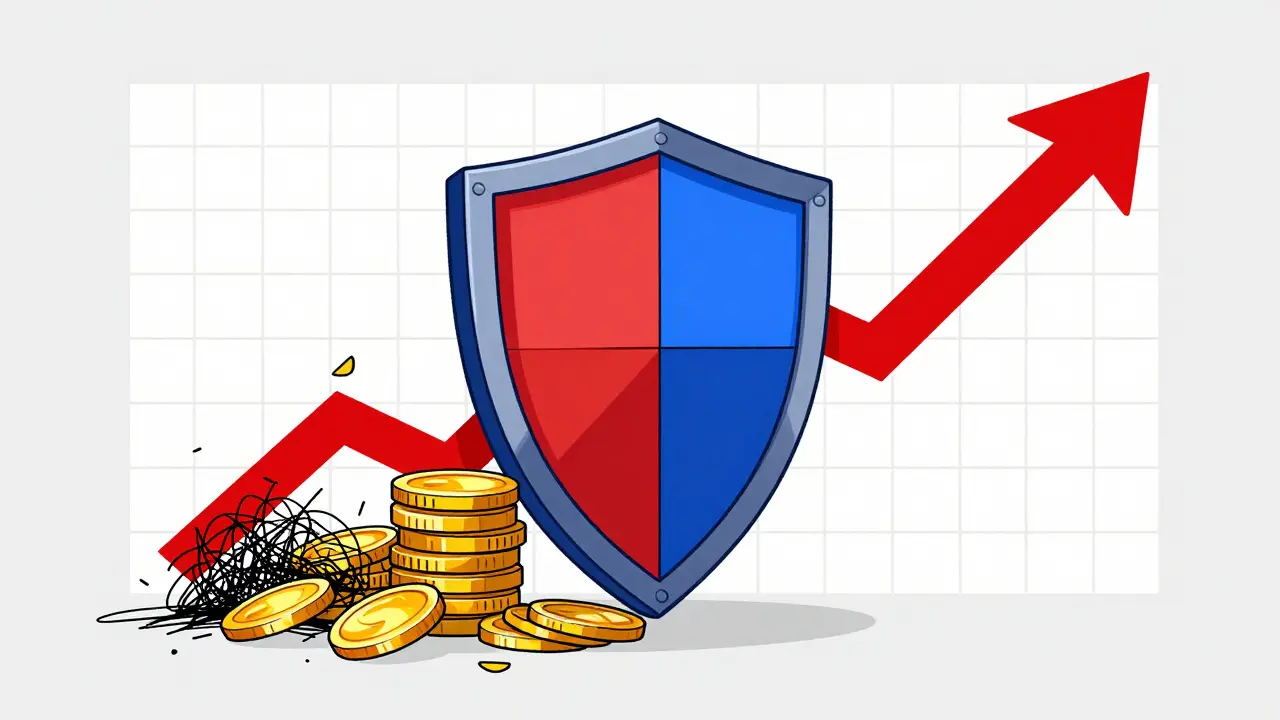
No strategy matters if you blow up your account. Risk management is not a separate topic; it is the foundation of every trade. In spot trading, since you aren’t leveraged, the primary risk is opportunity cost and permanent capital loss from buying failing projects. However, proper position sizing and stop-losses still apply.
Here are the golden rules of risk management for 2026:
- Position Sizing: Never risk more than 1-2% of your total portfolio on a single trade. If you have $10,000, your maximum loss on any trade should be $100-$200. This ensures you can survive a string of losses.
- Risk-Reward Ratio: Aim for at least 1:2 or 1:3. If you risk $100, your potential profit should be $200-$300. This way, you can be wrong 50% of the time and still break even or profit.
- Stop-Loss Orders: Always use them. Define your exit point before you enter the trade. Emotional decision-making leads to holding losing positions hoping they’ll recover. Stops remove emotion from the equation.
- Diversification: Don’t put all your eggs in one basket. Spread your capital across different assets (Bitcoin, Ethereum, altcoins) and sectors (DeFi, Gaming, Infrastructure).
Keep a detailed trading journal. Record every trade, including entry/exit reasons, emotions felt, and outcome. Review it weekly. You’ll spot patterns in your behavior that no algorithm can detect. Are you revenge trading after a loss? Are you exiting winners too early? Data reveals truth.
Tools of the Trade in 2026
You don’t need expensive proprietary software anymore. The democratization of technology has leveled the playing field. Here are the essential tools for modern spot traders:
- Charting Platforms: TradingView remains the industry standard for technical analysis. Its community scripts and drawing tools are unmatched.
- Data Aggregators: CoinGecko and CoinMarketCap provide reliable price data, market caps, and volume metrics. Cross-reference sources to avoid errors.
- Sentiment Analysis: Tools like LunarCrush or alternative data providers offer insights into social media buzz and whale movements.
- Backtesting Software: ThinkOrSwim or custom Python scripts allow you to test strategies against historical data. Never deploy a new strategy without testing it first.
Remember, tools amplify skill; they don’t replace it. A beginner with fancy tools will still lose money. Focus on mastering the basics first.
Conclusion: Finding Your Fit
There is no single "best" strategy. The best strategy is the one that fits your personality, schedule, and risk tolerance. If you love action and can handle stress, try day trading. If you prefer analysis and patience, swing or trend following might suit you better. Start small. Paper trade for 3-6 months. Refine your approach. Then, and only then, commit real capital. The market will always be there tomorrow. Make sure you are too.
What is the biggest mistake beginners make in spot trading?
The biggest mistake is lacking a defined risk management plan. Beginners often focus solely on how much they can win, ignoring how much they can lose. Without stop-losses and proper position sizing, a single bad trade can wipe out weeks of profits.
Is spot trading safer than futures trading?
Yes, significantly. In spot trading, you own the asset. Even if the price drops 90%, you still own the coins and can wait for recovery. In futures trading, leverage can lead to liquidation, meaning you lose your entire margin balance instantly if the market moves against you.
How much capital do I need to start spot trading?
You can start with very little, but realistically, having at least $500-$1,000 allows for meaningful diversification and fee absorption. With smaller amounts, transaction fees can eat into your profits disproportionately. More importantly, only trade with money you can afford to lose entirely.
Can AI tools guarantee profitable trades?
No tool can guarantee profits. AI enhances decision-making by processing data faster and identifying patterns humans might miss, but it cannot predict black swan events or irrational market behavior. AI is an assistant, not a crystal ball. Human judgment and risk management remain critical.
Which strategy is best for someone with a full-time job?
Swing trading or position trading is ideal for employed individuals. These strategies require less screen time and allow you to analyze markets during evenings or weekends. They focus on medium-to-long-term trends rather than minute-by-minute fluctuations, reducing stress and fitting better around a regular schedule.