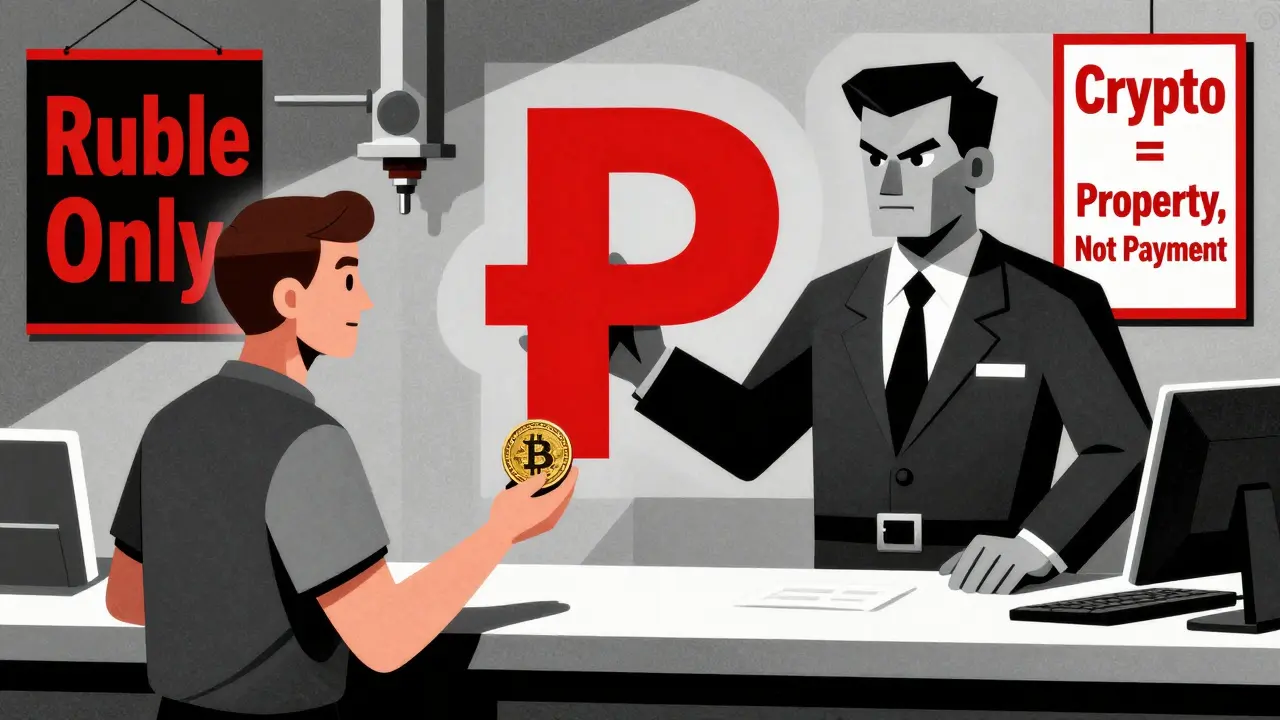
Can you pay for groceries, rent, or a new phone with Bitcoin in Russia? The short answer is no-not legally, not for everyday use. But the full picture is far more complicated than a simple ban. While Russians can hold crypto, mine it, trade it, and even earn interest on it, using it to buy anything inside the country is against the law. The government isn’t trying to stop people from owning digital assets-it’s trying to stop them from using them as money.
Ownership vs. Payment: The Big Divide
Owning cryptocurrency in Russia isn’t illegal. In fact, millions of Russians hold Bitcoin, Ethereum, and other coins. Estimates put the total value of crypto held by Russian citizens at over $40 billion as of 2025. People buy it on foreign exchanges like Binance or Kraken because local exchanges aren’t licensed. They mine it in Siberia, where electricity is cheap. They stake it for yield. But the moment they try to use that crypto to pay a local vendor, they cross a legal line. The Central Bank of Russia has been clear: the ruble is the only legal tender. Any other form of payment-whether it’s US dollars, euros, or Dogecoin-isn’t allowed for domestic transactions. This isn’t just a rule; it’s backed by law. The government doesn’t want crypto to compete with the ruble, especially after years of Western sanctions that pushed people to seek alternatives.The One Exception: International Trade
There’s one big loophole: international business. Russia created an Experimental Legal Regime (ELR) that lets companies use cryptocurrency to pay foreign suppliers, partners, or customers. This isn’t a favor-it’s a survival tool. With banks like SWIFT cut off and Western payment processors refusing Russian clients, crypto became a lifeline for exporters and importers. In 2025, crypto-facilitated trade between Russia and other countries hit 1 trillion rubles (about $11 billion). That’s not small change. Companies in energy, metals, and tech are using Bitcoin and stablecoins to settle invoices with buyers in Turkey, India, Kazakhstan, and even China. The ELR only applies to cross-border deals. You can’t use crypto to pay your Russian plumber, but you can use it to pay your Chinese factory for machinery.What Happens If You Get Caught?
Starting in 2026, the penalties for using crypto as payment inside Russia will get much harsher. A new draft law sets fines of 100,000 to 200,000 rubles ($1,100-$2,200) for individuals and 700,000 to 1 million rubles ($7,700-$11,000) for businesses. That’s not just a slap on the wrist-it’s a serious financial hit. And it doesn’t stop there. Any cryptocurrency used in an illegal transaction will be seized by authorities. No warning. No second chance. Just taken. The government isn’t just targeting big companies. Ordinary people who use crypto to pay for services online-like buying a subscription from a foreign provider or paying for a freelance job-could also be fined. The law is broad enough to cover anyone who transfers crypto in exchange for goods or services within Russia.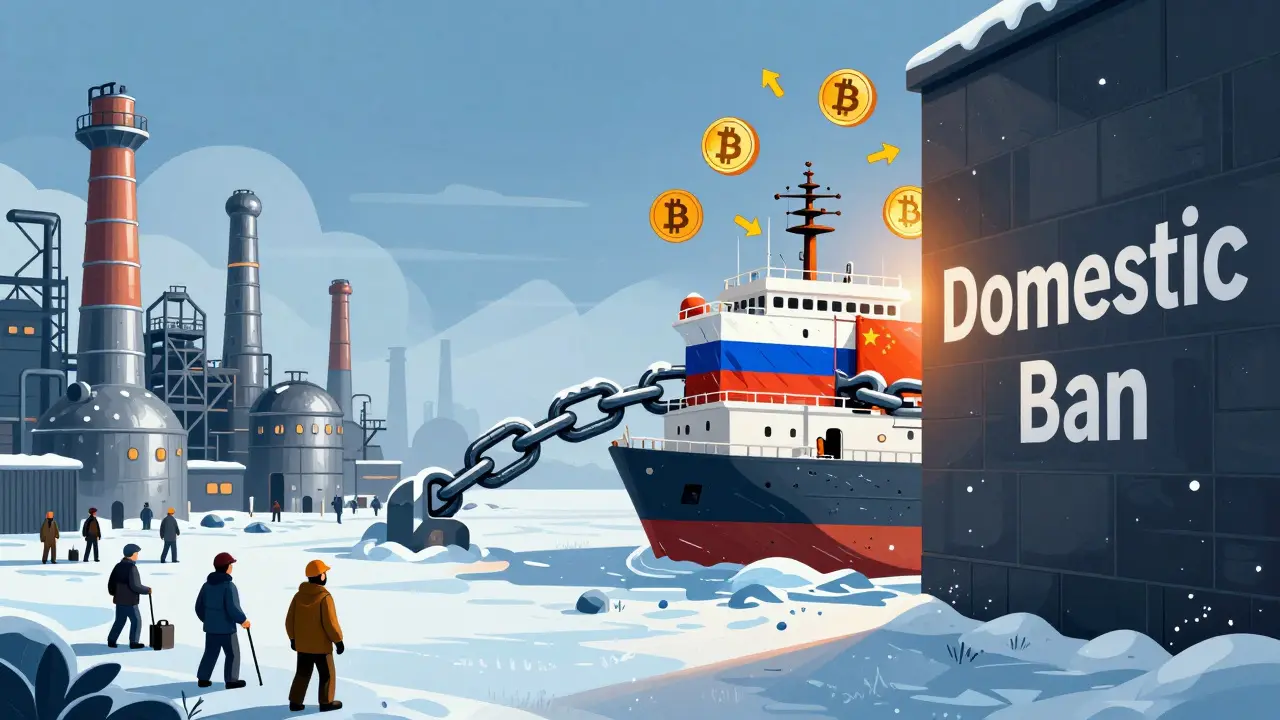
Taxes Are a Whole Other Layer
Even if you’re just holding crypto and not spending it, the tax rules are strict. Russian citizens must report all crypto income by April 30 each year and pay taxes by July 15. That includes:- Profits from selling Bitcoin or Ethereum
- Earnings from mining
- Staking rewards
- Airdrops
- Lending interest
- Sales of NFTs
Why Is Russia So Strict?
Russia’s stance isn’t about hating crypto. It’s about control. The Central Bank wants to protect the ruble’s role as the only accepted currency. After the invasion of Ukraine, Western sanctions froze Russian banks’ access to global systems. That forced people to turn to crypto-not because they loved it, but because they had no other choice. Now, the government is trying to clean up the mess. They’re not trying to ban crypto entirely-they’re trying to contain it. Let people own it. Let companies use it abroad. But keep it out of daily life. Why? Because if everyone starts paying with Bitcoin, the ruble loses value. And if the ruble weakens, the state loses control over inflation, interest rates, and economic policy. Some officials, like Deputy Treasury Head Ivan Chebeskov, argue that crypto could help Russia’s economy grow. But the Central Bank and the State Duma’s financial committee are holding firm. They see crypto as a threat-not to the financial system, but to state power.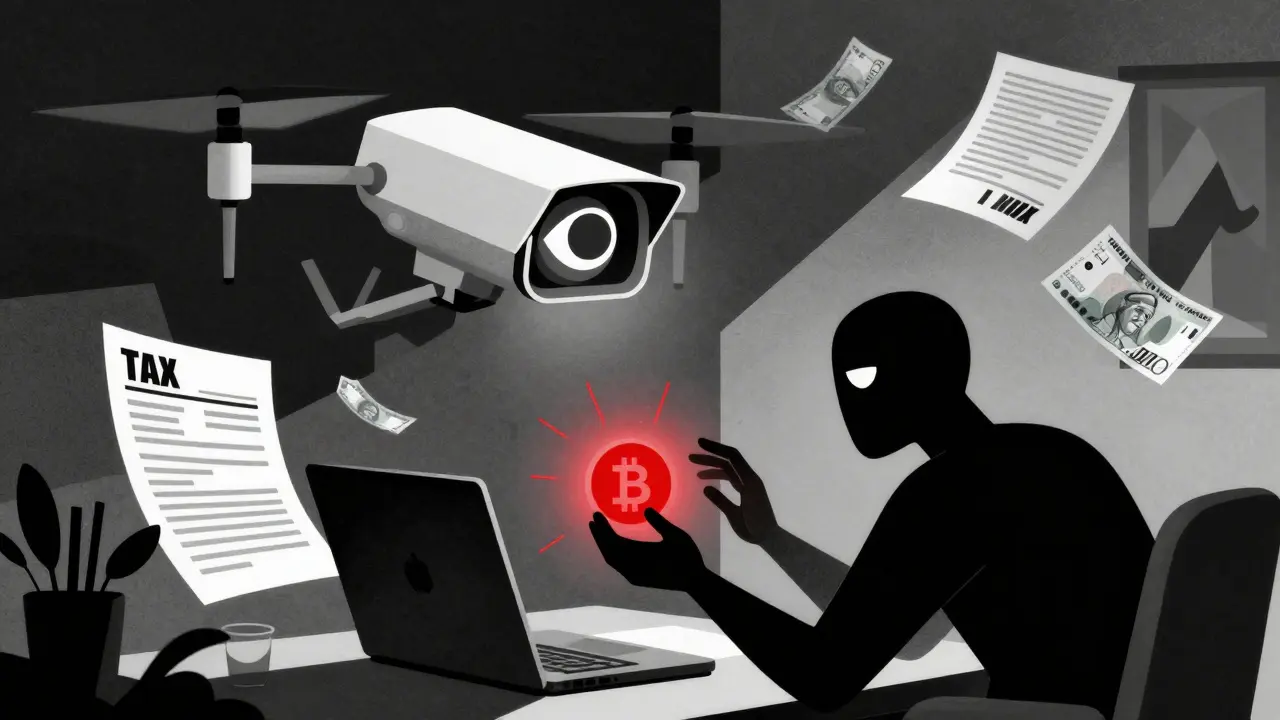
How Are People Getting Around It?
Despite the risks, people still find ways. Some use peer-to-peer platforms to trade crypto for rubles in cash. Others use crypto gift cards or prepaid cards that convert crypto to local currency at the point of sale. A few businesses quietly accept crypto, then immediately convert it to rubles through a third-party service. But these workarounds are risky. The government’s monitoring tools are getting better. Blockchain analysis firms are working with Russian tax authorities. Every transaction leaves a digital trail. What once felt like a gray zone is now a minefield.What’s Next for Crypto in Russia?
The future isn’t clear. The Finance Ministry has recently asked for broader access to crypto for investors. Lawmakers are pushing to license domestic exchanges. But the Central Bank still says no. One thing is certain: crypto won’t disappear from Russia. Demand is too high. People need alternatives. But the government’s message is loud and clear: you can own it. You can trade it. You can even profit from it. But you can’t use it to buy anything here. By 2026, the rules will be stricter, the fines heavier, and the surveillance tighter. The experiment isn’t about making crypto legal-it’s about making sure it never becomes money.What This Means for You
If you’re a Russian citizen: don’t use crypto to pay for anything inside the country. The risk isn’t worth it. Report every transaction. Keep records. Pay your taxes. And remember-ownership is fine. Payment is not. If you’re a foreign business dealing with Russian partners: you can legally accept crypto for international sales. Just make sure your contracts specify that payments are made under the Experimental Legal Regime. Don’t assume your Russian client can pay you in crypto for local services. They can’t. And if they try, you could be caught in the crossfire. If you’re just curious: Russia’s crypto story isn’t about freedom or innovation. It’s about control. The state isn’t afraid of Bitcoin. It’s afraid of losing control over its own economy.Is it legal to own cryptocurrency in Russia?
Yes, owning cryptocurrency is completely legal in Russia. You can buy, hold, mine, and trade Bitcoin, Ethereum, and other digital assets without breaking the law. The government treats crypto as property, not currency, so ownership is permitted. However, using it to pay for goods or services inside Russia is illegal.
Can I pay for rent or groceries with Bitcoin in Russia?
No, you cannot legally pay for rent, groceries, or any other domestic goods or services using Bitcoin or any other cryptocurrency. Russian law requires all payments within the country to be made in Russian rubles. Using crypto for these purposes violates the Central Bank’s regulations and can lead to fines or confiscation of funds.
What happens if I get caught using crypto for payments in Russia?
If you’re caught using cryptocurrency for domestic payments, you could face fines of 100,000 to 200,000 rubles ($1,100-$2,200) as an individual, or 700,000 to 1 million rubles ($7,700-$11,000) as a business. The crypto used in the transaction will be seized. Starting in 2026, enforcement will be stricter, with automated systems tracking blockchain activity and cross-referencing it with tax filings.
Can Russian companies accept crypto from foreign customers?
Yes, Russian companies can legally accept cryptocurrency from foreign customers under the Experimental Legal Regime (ELR). This framework was created to help Russian businesses bypass Western financial sanctions. The payments must be for international trade-like exporting oil, metals, or software-and cannot be used for domestic transactions. Companies must comply with reporting rules and convert crypto to rubles for accounting purposes.
Do I have to pay taxes on my crypto earnings in Russia?
Yes, you must pay income tax on all crypto-related earnings, including profits from sales, mining rewards, staking, airdrops, and NFT sales. You’re required to report this income by April 30 each year and pay taxes by July 15. All amounts must be converted to Russian rubles using official exchange rates. Failure to report can lead to fines of up to 2 million rubles or even prison time for large unreported amounts.
Is Russia planning to ban cryptocurrency completely?
No, Russia is not planning to ban cryptocurrency entirely. The government has no intention of outlawing ownership or mining. Instead, it’s focusing on restricting its use as a payment method domestically. The goal is to keep the ruble as the only legal tender while allowing crypto to function as a tool for international trade under strict oversight.
Why did Russia drop in the Chainalysis Crypto Adoption Index?
Russia dropped to the bottom of the top 10 in the 2025 Chainalysis Global Adoption Index because domestic peer-to-peer trading and usage for everyday payments declined sharply. Even though Russians held more crypto than ever, the government’s crackdown on payments and lack of local exchanges made it harder to use crypto in daily life. Most activity shifted to international trade under the Experimental Legal Regime, which doesn’t count toward consumer adoption metrics.
Can I use crypto to send money to family in Russia?
Sending crypto to someone in Russia is not illegal, but if they convert it to rubles and use it to pay for goods or services, they could be violating the law. The act of receiving crypto is fine. The problem arises when it’s used as payment. To stay safe, it’s better to send rubles directly through legal channels rather than relying on crypto transfers that might trigger compliance issues.
Comments
Abhisekh Chakraborty
Bro this is wild. I just sent crypto to my cousin in Moscow last week and he turned it into rubles at a kiosk near the metro. No one asks questions. The cops are busy with other stuff. They don't care until you get too loud. Just keep it lowkey and you'll be fine.
January 3, 2026 at 11:57
Jordan Fowles
The real story here isn't about crypto. It's about sovereignty. Russia isn't banning Bitcoin because it's dangerous-it's banning it because it's uncontrollable. The ruble is a political tool, not an economic one. When you remove the state's monopoly on money, you remove its monopoly on power. That's why they're so terrified of peer-to-peer transactions. Not because of inflation. Because of freedom.
January 4, 2026 at 23:57
nayan keshari
Everyone's acting like this is some new crackdown but it's always been this way. The government lets you hoard crypto like a dragon with gold but punishes you if you try to spend it. Classic. They want the asset appreciation without the actual decentralization. Hypocrites.
January 5, 2026 at 16:01
Bianca Martins
Just a heads-up for anyone thinking of using crypto for rent: even if you convert it instantly through a third party, the transaction trail still exists. Tax authorities are using on-chain analytics now. I know someone who got audited because their wallet sent 0.3 BTC to a known P2P exchanger. They paid a 60k ruble fine. It’s not worth the risk.
January 7, 2026 at 11:18
alvin mislang
People who use crypto for payments in Russia are basically funding sanctions evasion. You think you're being clever? You're enabling a regime that bombs civilians and steals land. Pay with rubles like everyone else. Or better yet-don't support this dictatorship at all. 🤮
January 7, 2026 at 17:22
Monty Burn
They say you can't use crypto to pay for groceries but they don't say you can't buy groceries with rubles you got from selling crypto. The loop is still open. The law doesn't ban conversion. It bans direct payment. So you convert then buy. That's not illegal. It's just inconvenient. And that's the whole point
January 8, 2026 at 18:23
Kenneth Mclaren
They're lying. This isn't about protecting the ruble. The Central Bank is working with the FSB. Every crypto wallet is being mapped. Every transaction flagged. They're building a digital surveillance state and crypto is the excuse. Soon they'll require all wallets to be registered with state IDs. Then they'll freeze accounts based on political views. This is how dictatorships start. They don't ban crypto because it's dangerous. They ban it because it's free.
January 9, 2026 at 10:12
Alexandra Wright
Oh wow, so Russians are supposed to be grateful the government lets them own digital assets like some kind of pet goldfish? You can own it, you can trade it, you can even pay taxes on it-but don't you DARE use it to buy bread. How about we call it what it is: economic slavery wrapped in a spreadsheet. And the fact that people still find ways around it? That's not rebellion. That's survival. And honestly? Respect.
January 10, 2026 at 16:35