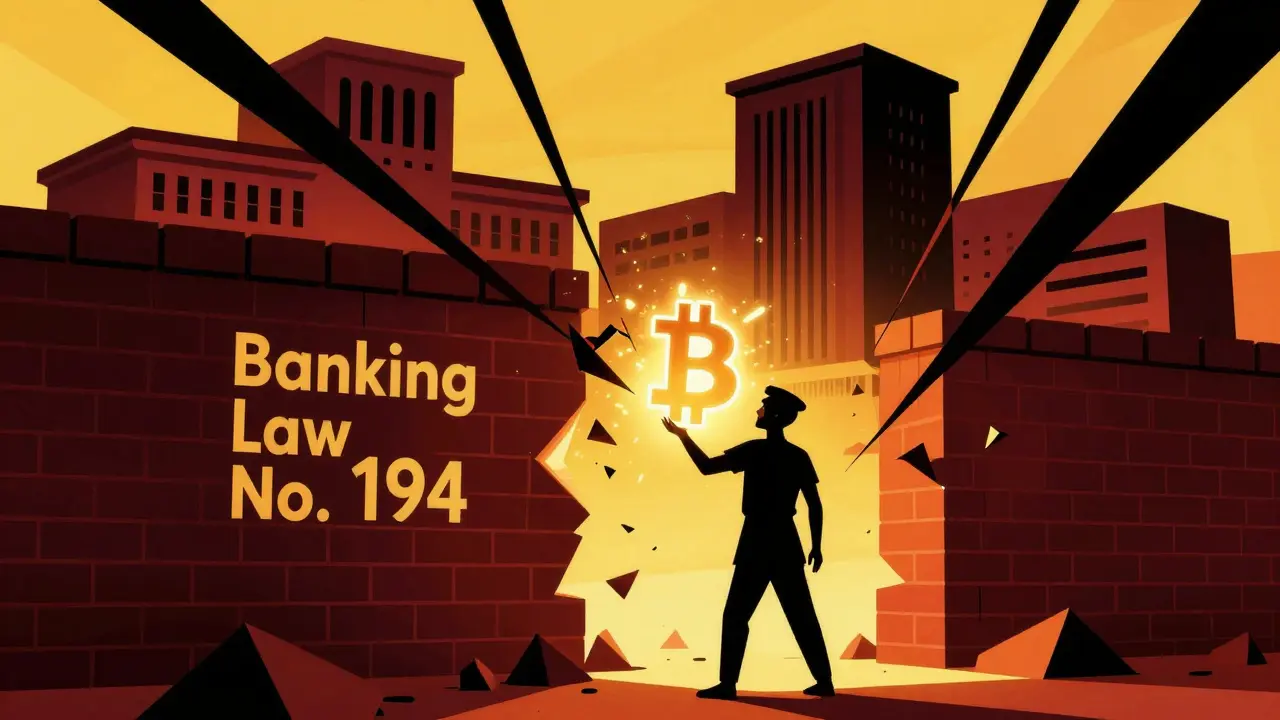
Imagine living in a country where holding Bitcoin is technically illegal. Now imagine that millions of people there are doing it anyway. This is the reality for Egypt, a nation that has enforced one of the strictest cryptocurrency bans in the world since 2020. Despite legal prohibitions and severe penalties, estimates suggest up to 3 million Egyptians hold digital assets. How does this happen? The answer lies not in defiance of law, but in the decentralized nature of the technology itself.
The Legal Wall: Banking Law No. 194
To understand why Egyptian users take such risks, we must first look at the rules they are breaking. In 2020, the Central Bank of Egypt (CBE) passed Banking Law No. 194. Article 206 of this law is blunt: it prohibits the issuance, trading, promotion, or operation of any platform dealing with crypto assets without prior approval from the CBE.
This isn't just a warning. It is a criminal offense. Individuals caught trading can face imprisonment. Financial institutions found facilitating these transactions face fines ranging from EGP 1 million to EGP 10 million (approximately $32,000 to $320,000 USD). For context, this places Egypt alongside countries like China, Bangladesh, and Algeria in enforcing total bans. The government’s stance is clear: cryptocurrencies pose a threat to financial stability, facilitate money laundering, and drain foreign currency reserves.
So, if banks block transfers and exchanges are banned, how do ordinary Egyptians buy Bitcoin?
The Rise of Peer-to-Peer (P2P) Trading
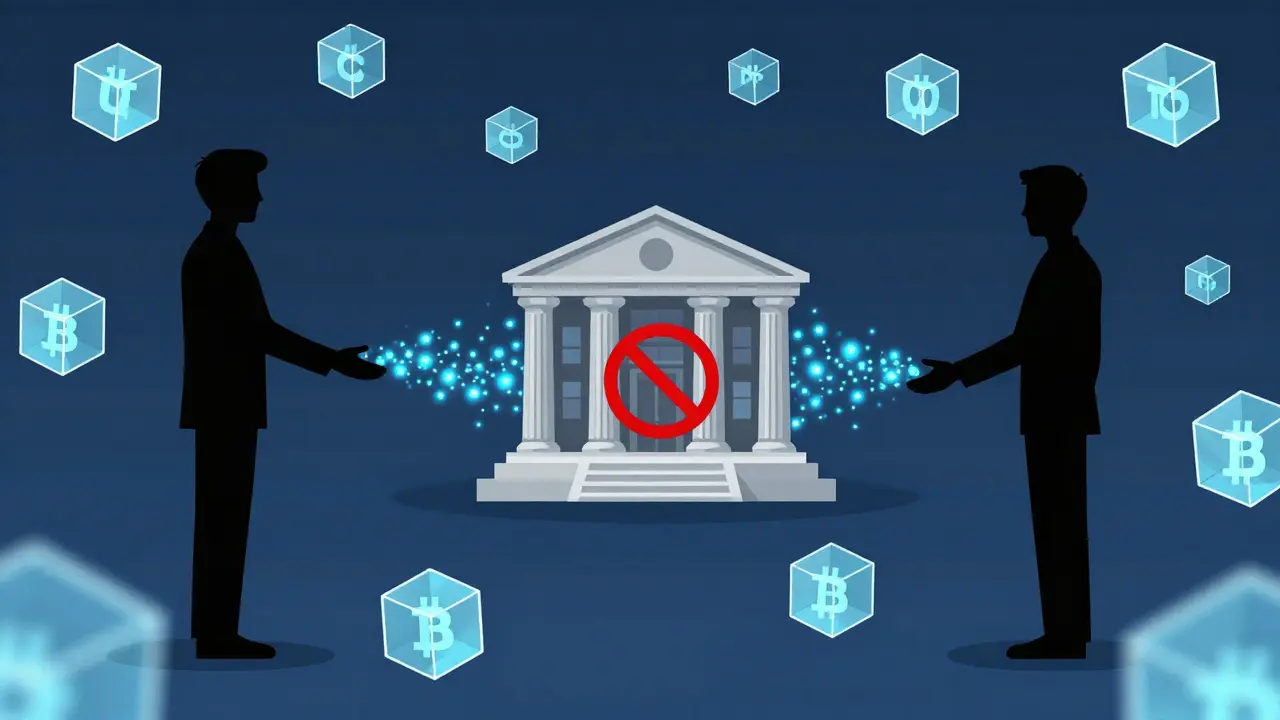
The loophole isn’t in the code; it’s in the method. Since centralized exchanges cannot operate legally within Egypt, users have turned to Peer-to-Peer (P2P) trading platforms. Platforms like Binance P2P, Bybit P2P, and Huobi P2P allow users to trade directly with each other.
Here is how it works in practice:
- No Central Exchange: You don’t deposit money into an exchange account. Instead, you find another user willing to sell you Bitcoin.
- Direct Bank Transfers: The buyer sends Egyptian Pounds (EGP) via standard bank transfer, mobile wallet (like Vodafone Cash), or even cash pickup services to the seller.
- Escrow Protection: The P2P platform holds the cryptocurrency in escrow. Once the seller confirms receipt of EGP, the platform releases the crypto to the buyer.
This method bypasses the need for a licensed crypto exchange. To the bank processing the EGP transfer, it looks like a normal person-to-person payment. The crypto movement happens on the blockchain, which is invisible to traditional banking surveillance. This decentralization is exactly what regulators fear, yet it is what keeps the market alive.
Why Do Egyptians Risk It All?
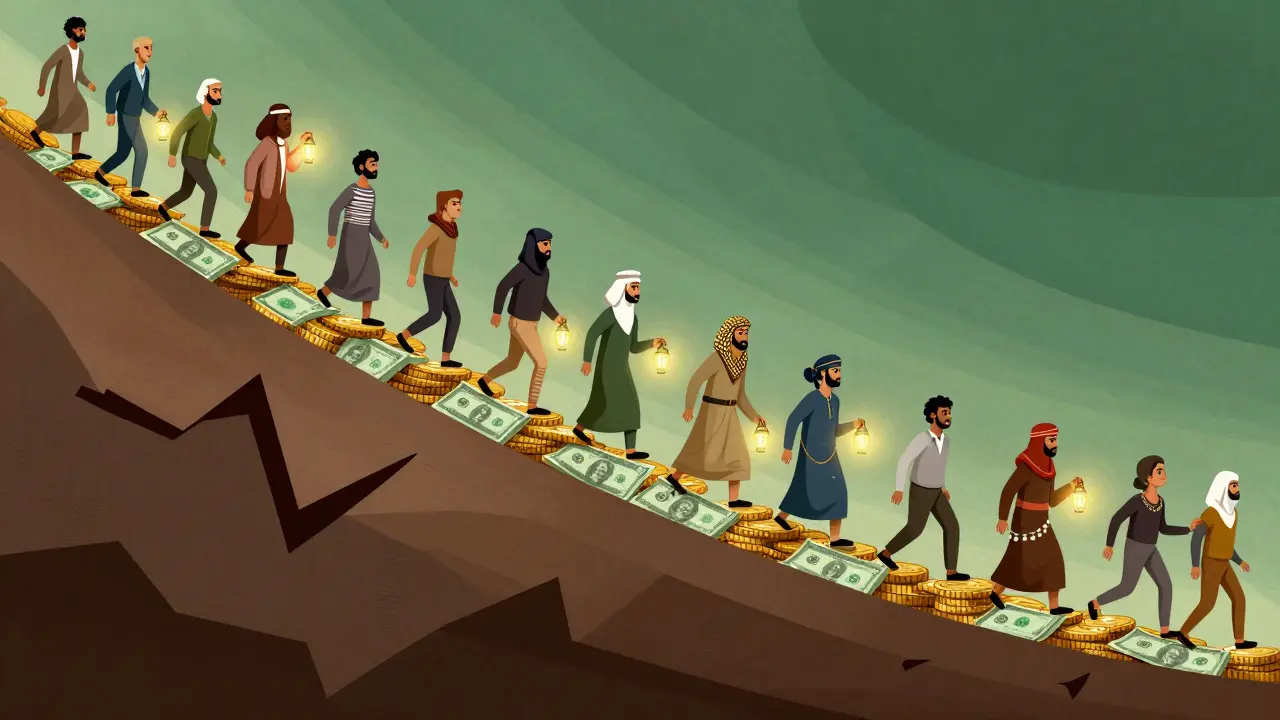
You might ask: why risk jail time or massive fines for digital coins? The answer is economic survival. Egypt has faced significant macroeconomic challenges in recent years, including high inflation and currency devaluation.
In 2024 and 2025, the Egyptian Pound (EGP) experienced sharp depreciation against the US Dollar. For many citizens, saving money in local banks means watching its purchasing power vanish. Bitcoin and Tether (USDT) offer an alternative store of value. USDT, a stablecoin pegged to the US Dollar, is particularly popular because it offers dollar-like stability without the volatility of Bitcoin.
Additionally, remittances play a huge role. Millions of Egyptians work abroad and send money home. Traditional channels like Western Union or bank wires charge high fees and offer poor exchange rates. Sending USDT via blockchain networks costs fractions of a cent and takes minutes. Recipients can then sell the USDT locally via P2P markets at better rates than official banks offer. This creates a parallel economy that operates outside state control.
The Enforcement Challenge
The Egyptian government knows about these activities. So why hasn’t it stopped them? The short answer: it’s incredibly difficult.
Blockchain transactions are pseudonymous. While every transaction is recorded publicly, linking a wallet address to a specific person requires significant investigative effort. When a user buys Bitcoin via P2P, they use their own bank account to send EGP. Banks monitor for suspicious activity, but distinguishing between a legitimate gift to a friend and a crypto purchase is nearly impossible without deep forensic analysis.
Furthermore, enforcement is selective. The CBE focuses heavily on institutional players-banks, fintech companies, and large merchants-to prevent systemic risk. Targeting individual retail users is resource-intensive and politically sensitive. Arresting everyday citizens for trying to protect their savings during an economic crisis could spark public unrest. Thus, while the law remains strict, enforcement often turns a blind eye to small-scale personal holdings.
| Method | Legality | Risk Level | Cost | Anonymity |
|---|---|---|---|---|
| Centralized Exchange (e.g., Coinbase) | Illegal | High (Account Freeze) | Low | Low (KYC Required) |
| P2P Platforms (Binance, Bybit) | Gray Area | Medium | Medium (Spread Fees) | Medium |
| Crypto ATMs | Non-Existent | N/A | N/A | N/A |
| OTC Dealers (Local) | Illegal | Very High (Scams) | High | High |
Future Outlook: Will the Ban Lift?
There are whispers of change. Reports in 2025 suggested that Egyptian officials were considering legislation to license cryptocurrency companies under strict supervision. However, as of May 2026, no such framework exists. The current political climate prioritizes monetary sovereignty and capital controls.
For now, the "3 million holders" figure likely represents a mix of active traders, passive savers, and those who bought once and forgot. Many may have sold after price dips, while others continue to accumulate slowly. Without official data, this number remains an estimate based on on-chain analytics and P2P volume trends.
The situation highlights a global trend: when governments ban technology that addresses genuine economic needs, black markets emerge. Egypt’s case shows that while laws can restrict formal adoption, they cannot easily erase demand. As long as inflation erodes savings and remittance costs remain high, Egyptians will find ways to access the open financial system provided by blockchain.
Is it safe to buy crypto in Egypt?
It carries significant legal and financial risks. Legally, you are violating Banking Law No. 194. Financially, P2P trades carry counterparty risk-sellers might reverse bank transfers or buyers might fail to release crypto. Always use reputable P2P platforms with escrow services and check seller ratings carefully.
Can my bank freeze my account for crypto trading?
Yes. Egyptian banks are instructed to monitor for suspicious transactions. If your account shows frequent transfers to individuals linked to crypto trading, the bank may flag your account, request documentation, or freeze funds pending investigation.
What is the most popular crypto in Egypt?
Bitcoin (BTC) is the most recognized asset due to its brand recognition. However, Tether (USDT) is arguably more widely used for daily transactions and savings because it maintains a stable value relative to the US Dollar, protecting users from both crypto volatility and EGP devaluation.
Will Egypt legalize crypto soon?
There is no confirmed timeline. While some officials have hinted at regulated frameworks, the Central Bank of Egypt currently maintains a hardline stance. Any legalization would likely come with strict licensing requirements and capital controls to prevent currency outflows.
How do I withdraw crypto to my Egyptian bank account?
You cannot withdraw directly from a crypto exchange to an Egyptian bank. You must use P2P platforms. Sell your crypto for USDT or BTC to a local merchant, who will send EGP to your bank account via Fawry, Vodafone Cash, or direct bank transfer. Ensure you follow the platform's instructions precisely to avoid scams.